English
 French
 Spanish
 Italian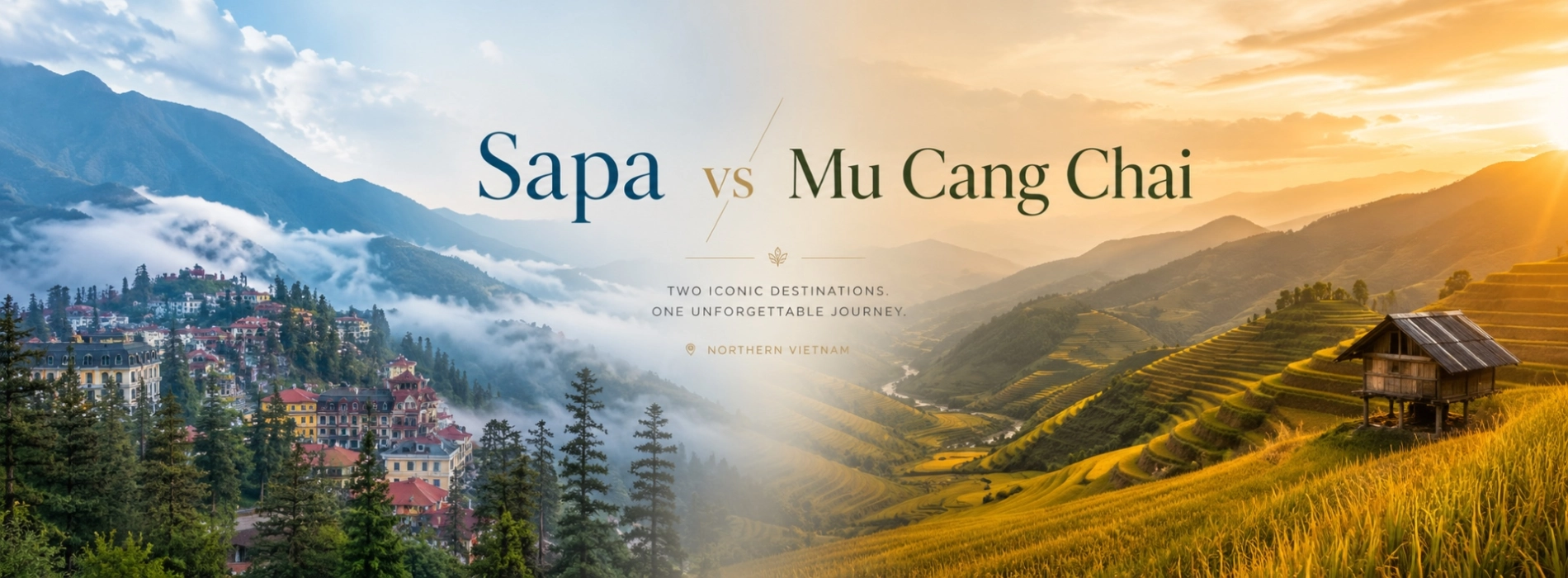
Sapa and Mu Cang Chai are two famous tourist destinations in Northern Vietnam.
Sapa, located in Lao Cai province about 320 km from Hanoi, enjoys a cool climate year-round, making it an ideal place to visit at any time. Moreover, this misty town attracts visitors with its diverse activities, ranging from trekking to the highest mountain in Southeast Asia to taking a train ride through the romantic Muong Hoa Valley.
.jpg)
Sapa vs Mu Cang Chai
As for Mu Cang Chai, located in Yen Bai province about 300 km from Hanoi, this destination is less known by tourists compared to Sapa. It is home to some of the most stunning and splendid rice terraces in Vietnam, perfect for capturing stunning photos. Here, you can also explore the daily life of the ethnic groups and their agricultural and economic activities.
Planning a trip to Northern Vietnam often leads to one beautiful question: Mu Cang Chai or Sapa? Both destinations are famous for dramatic mountains, rice terraces, ethnic culture, and cool highland air. Yet they offer very different travel experiences.
Mu Cang Chai is quiet, rustic, and deeply authentic. It is best known for its spectacular terraced rice fields, peaceful villages, and off-the-beaten-path atmosphere. Sapa, meanwhile, is more accessible, more developed, and more active, with famous attractions like Fansipan, Muong Hoa Valley, ethnic villages, markets, cafés, and a wider choice of hotels.
So, which one is better for your trip? The answer depends on your travel style.
|
Factor |
Mu Cang Chai |
Sapa |
|---|---|---|
|
Best for |
Peaceful scenery, photography, authentic local life |
Easy travel, trekking, culture, comfort |
|
Atmosphere |
Quiet, remote, less touristy |
Lively, popular, more developed |
|
Landscape |
Golden rice terraces, mountain passes, rural villages |
Valleys, rice fields, Fansipan, waterfalls |
|
Accessibility |
More challenging road journey |
Easier to reach with more transport options |
|
Accommodation |
Simple homestays, guesthouses, eco-lodges |
Homestays, hotels, resorts, luxury stays |
|
Best time |
May to June and September to October |
Year-round, best in spring and autumn |
Mu Cang Chai is located in Yen Bai Province, about 300 km from Hanoi. Although the distance is not much shorter than Sapa, the journey can feel more challenging because of winding mountain roads and fewer transport options. Most travelers reach Mu Cang Chai by private car, motorbike, or coach.
.jpg)
Location of Sapa and Mu Cang Chai
Sapa is in Lao Cai Province, in the northwest of Vietnam. It is also around 315 to 376 km from Hanoi, depending on the route, but it is generally easier to reach. Travelers can choose sleeper buses, limousine vans, trains to Lao Cai, or private cars. This makes Sapa a more convenient choice for first-time visitors or travelers who prefer a smoother journey.
Choose Sapa if: you want easier transportation and a more comfortable travel setup.
Choose Mu Cang Chai if: you do not mind a longer mountain road in exchange for quieter landscapes.
Want to explore beyond the usual trails? Check out another incredible trekking destination in Vietnam.
Both Mu Cang Chai and Sapa are famous for rice terraces, but the feeling is different.
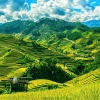
Mu Cang Chai feels raw and cinematic. Its terraced fields are often described as some of the most beautiful in Vietnam, especially around La Pan Tan, Che Cu Nha, De Xu Phinh, and Mam Xoi Hill. During harvest season, the whole valley turns golden, creating one of the most photogenic landscapes in Northern Vietnam.
.jpg)
Overview of Sapa and Mu Cang Chai
Sapa offers a more varied mountain landscape. You can see rice terraces in Muong Hoa Valley, misty hills, waterfalls, villages, and the famous Fansipan Mountain, known as the “Roof of Indochina.” Sapa’s scenery is more diverse and easier to explore with guided tours, cable cars, and marked trekking routes.
The best time to visit Mu Cang Chai is usually May to June for the water-pouring season and September to October for the golden rice harvest. These are the moments when the terraces are at their most beautiful. Outside these months, the scenery can still be peaceful, but it may not have the same dramatic visual impact.
.jpg)
Flower season in Sapa and Mu Cang Chai
Sapa is more flexible. Spring brings peach and plum blossoms, summer offers green rice fields, autumn is perfect for golden harvest views, and winter can be misty and cold. Because Sapa has more activities and tourism services, it is easier to visit year-round.
Mu Cang Chai is ideal for travelers who want a slower and more authentic experience. The area is home to several ethnic groups, with Hmong communities playing a major role in local culture. Visitors can see traditional farming, weaving, indigo dyeing, local markets, and daily village life that still feels close to nature.
.jpg)
Traditional customs in Sapa and Mu Cang Chai
Sapa is more diverse and more tourist-friendly. It is home to ethnic groups such as Hmong, Dao, Tay, Giay, and others. Popular villages include Cat Cat, Ta Van, Ta Phin, Lao Chai, and Y Linh Ho. Here, travelers can experience homestays, local food, traditional crafts, folk performances, and colorful markets.
Mu Cang Chai is perfect for scenic drives, photography, village walks, light trekking, and exploring mountain passes. Khau Pha Pass is one of the area’s most famous highlights, and adventurous travelers may enjoy paragliding over the rice terraces during the right season.
.jpg)
Activities in Sapa and Mu Cang Chai
Sapa offers more structured activities. You can trek through Muong Hoa Valley, visit ethnic villages, take the cable car to Fansipan, explore Ham Rong Mountain, visit Silver Waterfall and Love Waterfall, or enjoy Sapa town’s cafés, markets, and evening atmosphere.
Experience the natural beauty of Northern Vietnam with these unforgettable mountain destinations and panoramic views.
Choose Mu Cang Chai if you want peaceful landscapes, golden rice terraces, fewer tourists, authentic villages, and a deeper connection with nature. It is best for photographers, nature lovers, and travelers who enjoy quiet destinations.
Choose Sapa if you want convenience, cultural variety, comfortable hotels, trekking routes, famous attractions, and more travel services. It is better for first-time visitors, families, groups, and travelers who prefer a balance of nature and comfort.
Food in both places reflects the flavors of Northern Vietnam, with dishes such as grilled meats, stream fish, sticky rice, bamboo-tube rice, local vegetables, free-range chicken, black pork, and mountain herbs.
Food in Mu Cang Chai feels rustic, simple, and home-cooked. Meals are often served in homestays or local restaurants, giving travelers a closer taste of mountain life.
A local specialty worth trying is Tu Le green rice, known for its soft texture and gentle fragrance.
Sapa has more food variety than Mu Cang Chai. You can find local dishes such as thang co, chestnut cakes, grilled pork, hotpot, as well as international food in town.
It is a better choice if you want more restaurant options and a wider range of dining experiences.
Accommodation in Mu Cang Chai is usually simple and close to local life. Common options include homestays, guesthouses, stilt houses, and a few eco-lodge options.
Choose Mu Cang Chai if you enjoy simple stays, local meals, and a peaceful atmosphere.
Sapa has a much wider range of accommodation. You can find everything from budget homestays to boutique hotels and luxury resorts.
Choose Sapa if you want more comfort, restaurants, hotel options, and travel services.
Yes. If you have enough time, visiting both Mu Cang Chai and Sapa is a great idea. Mu Cang Chai gives you the raw beauty of Vietnam’s rice terraces, while Sapa offers a richer mix of mountain culture, famous landmarks, and travel convenience.
For a short and easy trip, choose Sapa. For a quieter and more scenic escape, choose Mu Cang Chai. For the best highland journey, combine both and experience the full beauty of Vietnam’s northern mountains.
Experience the charm of Northern Vietnam through our carefully crafted tours