English
 French
 Spanish
 Italian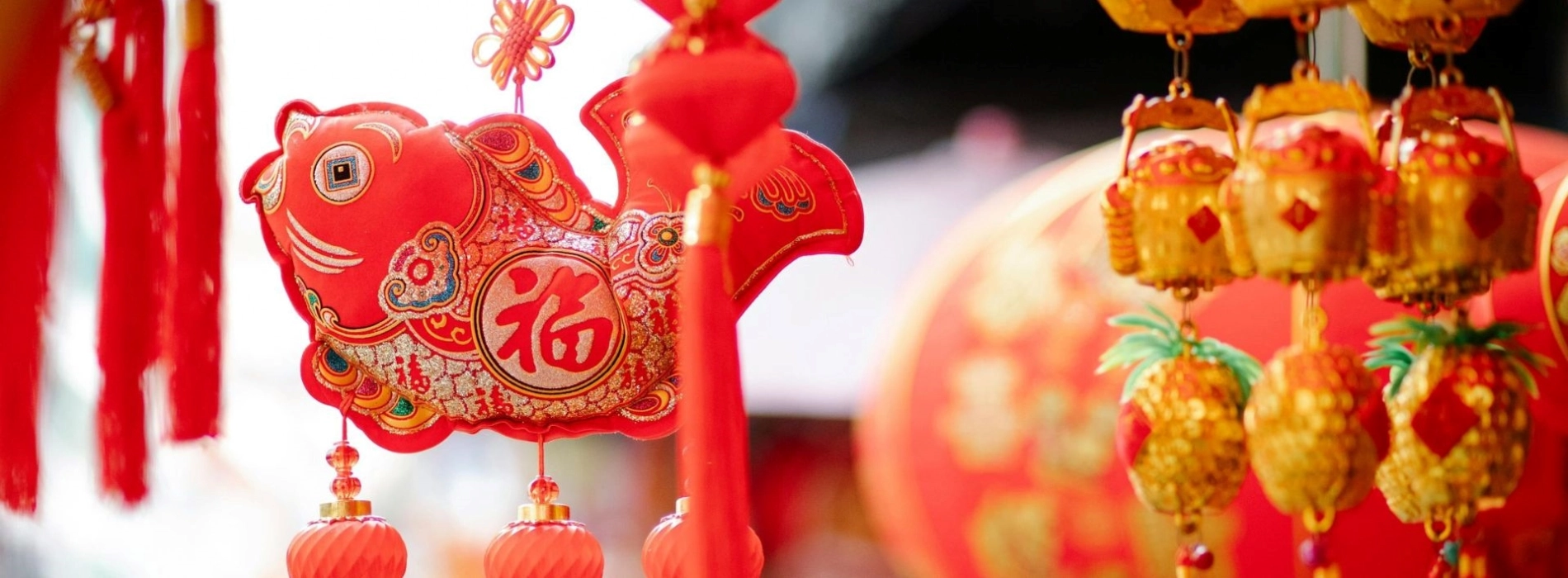
If you find yourself in Malaysia between late January and February, you’re in for a sensory explosion. While many countries celebrate the Lunar New Year, the Malaysian Chinese New Year (Tahun Baru Cina) experience is a unique blend of cross-cultural festivities you won't find anywhere else.
Chinese New Year is part of a broader lunisolar New Year tradition shared across many countries in Asia. You may recognize its close counterparts in other countries, such as Tet Nguyen Dan in Vietnam, Seollal in Korea, Losar in Tibet, Tsagaan Sar in Mongolia, and Shōgatsu in Japan. This year, the Lunar New Year 2026 falls on Tuesday, February 17.
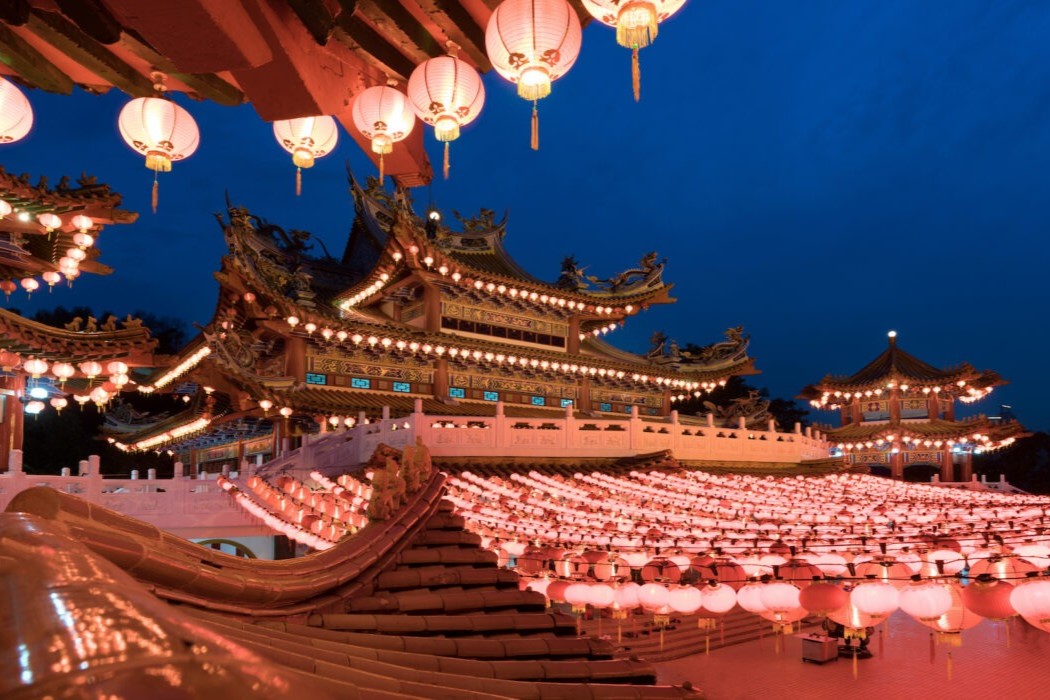
Lunar New Year in Malaysia is known as Chinese New Year and is celebrated by the Chinese community
In China, early forms of the celebration were linked to the end of the autumn harvest in the ancient solar calendar. By the time of the Han dynasty, the Chinese Lunar New Year’s Day celebration had been formally recognised, along with traditions such as ancestor worship, family reunions, and the exchange of special greetings.
As Chinese communities migrated to Southeast Asia, they brought their traditions with them. In Malaysia, the Chinese New Year gradually evolved its own distinct character. Today, the celebrations reflect centuries of cultural exchange between Chinese, Malay, and Indian communities.
Making up roughly 22% of the population, the Chinese community in Malaysia is diverse and consists mainly of Hokkien, Cantonese, Hakka, and Teochew groups. This diversity means the celebrations of the New Year are not a monolith. Instead, you’ll find a fascinating mix of dialects, cuisines, and distinct clan traditions that have evolved over centuries in the Malay Peninsula.
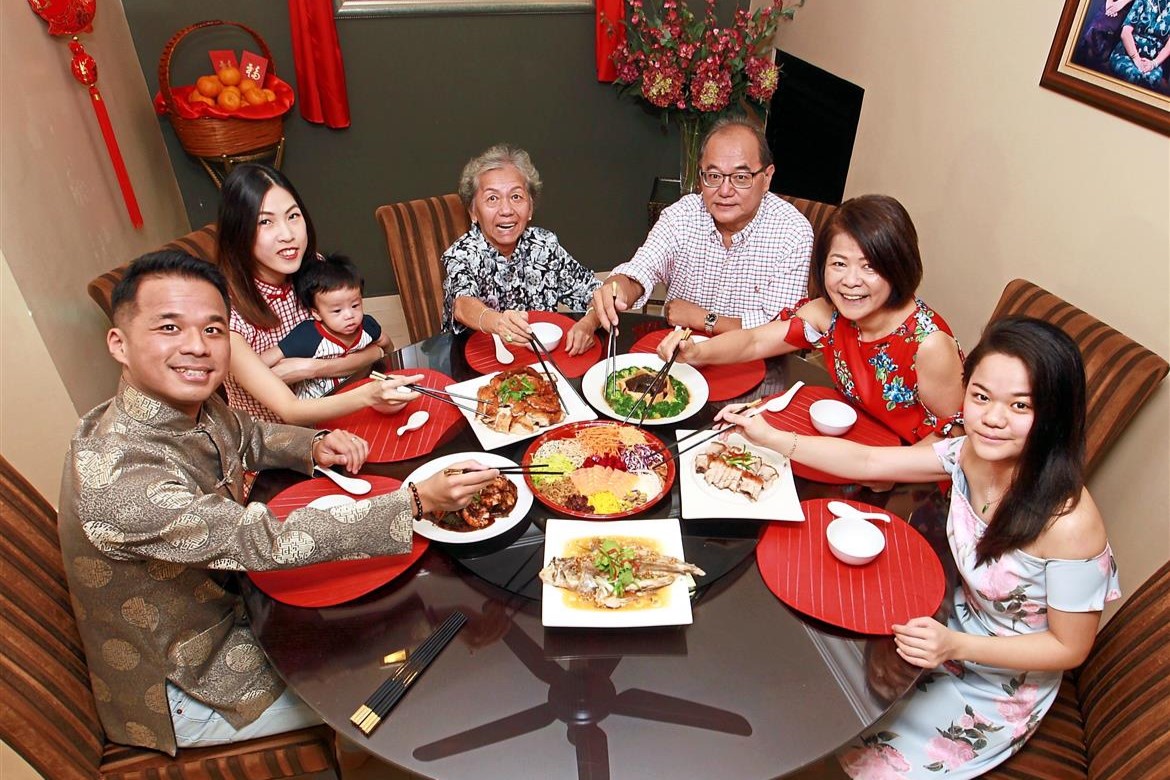
For the Chinese Malaysian community, the New Year is a homecoming
Cities during this time often grow quiet as people balik kampung, or return to their hometowns, while festive hubs transform into seas of lanterns, bustling night markets, and the thunder of lion dance drums.
Chinese New Year in Malaysia is not just a two-day holiday. Officially, the first two days are public holidays, but in reality, the celebration stretches on for fifteen days.
Malaysia in February is a time when shops close early, families travel home from near and far, and the streets fill with red decorations, firecrackers, and the comforting aroma of home-cooked food.
If there is one place that captures the spirit of the season, it is George Town in Penang. As night falls, the famous Kek Lok Si Temple lights up the hillside with thousands of glowing lights. People come not only to pray, but also to walk around and take in the festive yet spiritual atmosphere.
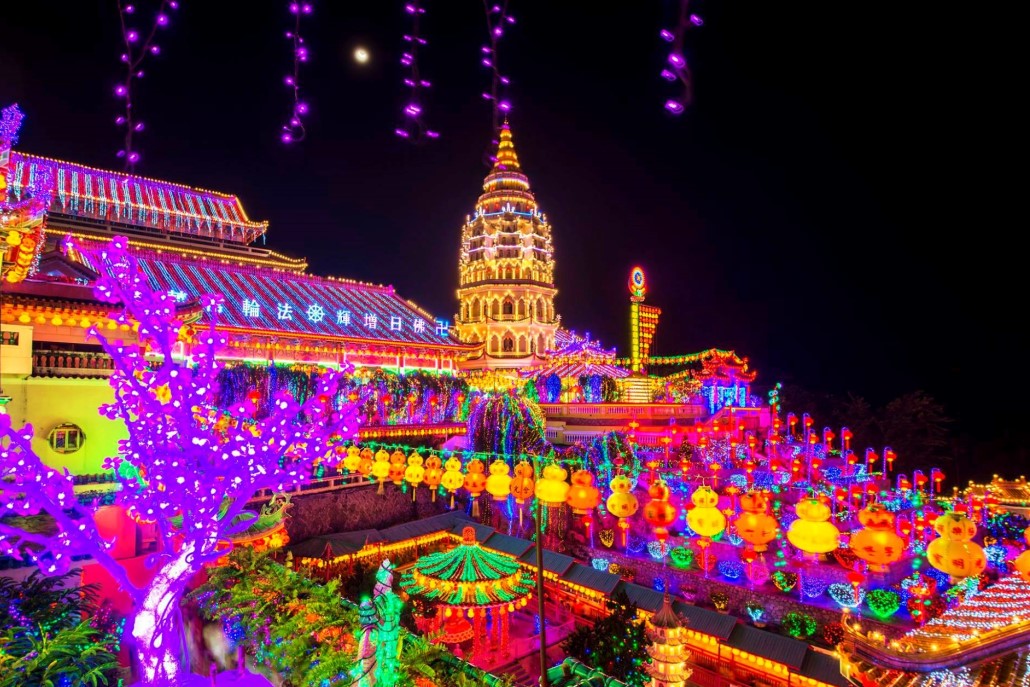
Kek Lok Si Temple
One of the most distinctive things about celebrating Chinese New Year in Malaysia is the open house tradition. Families open their doors to friends, neighbours, and sometimes complete strangers.
Coming to Malaysia in February, you don’t need to share the same background or religion to be part of the celebrations. Guests are offered snacks, sweets, and mandarin oranges, along with casual conversation and well-wishes for the new year.
You may also like: West Coast Malaysia 10 Days Tour
The ninth day of Chinese New Year is especially important for the Hokkien community, as it marks the birthday of the Jade Emperor. Large sugarcane stalks are displayed outside homes and temples as symbols of protection and gratitude. Fireworks and firecrackers go off well past midnight, filling neighbourhoods with smoke and noise.
The final night of the celebration is known as Chap Goh Mei, which also coincides with the Lantern Festival. In coastal cities and towns, people gather near rivers and the sea.
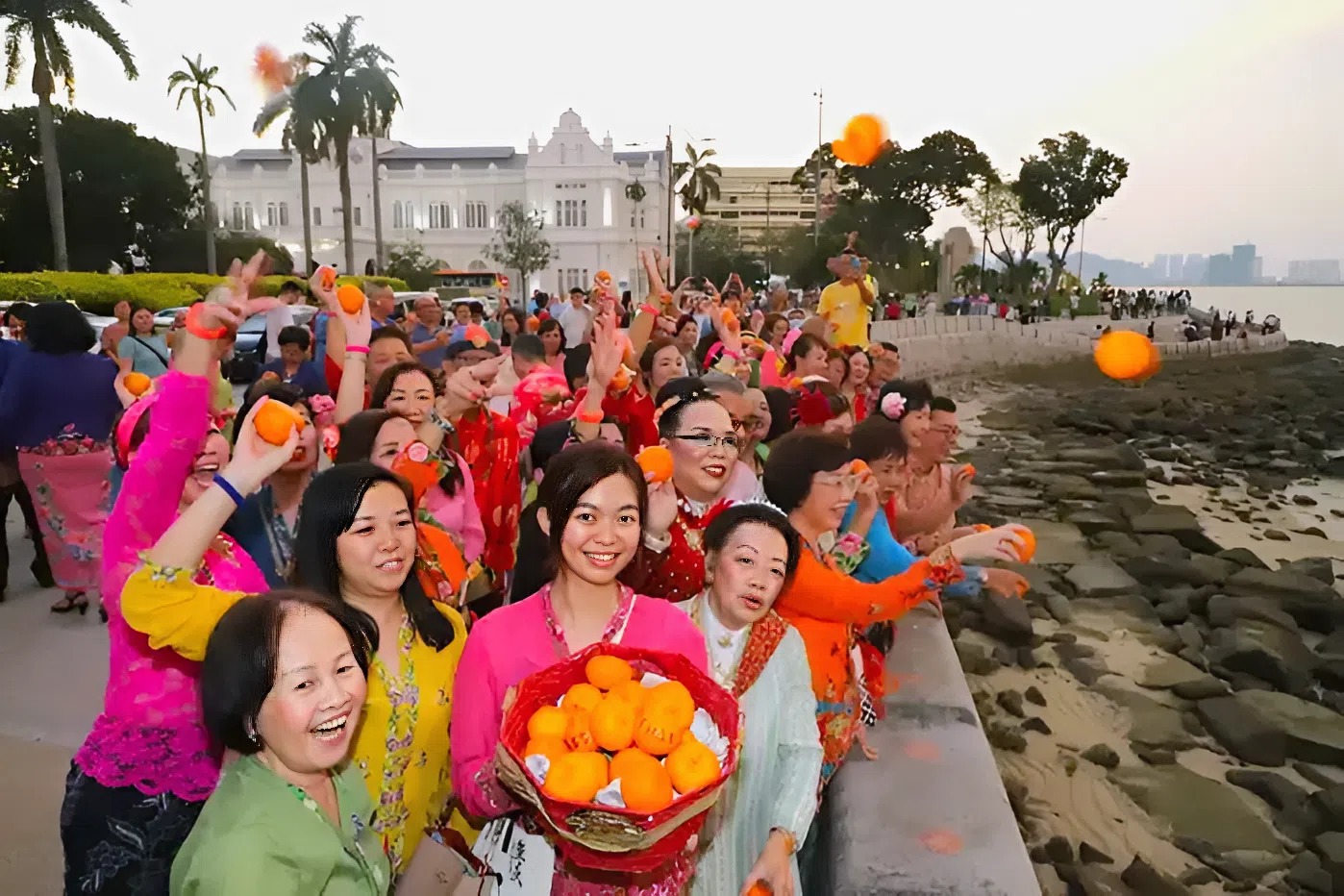
Women throwing mandarin oranges into the water during the celebration
There is a long-standing tradition where single women write their names or phone numbers on mandarin oranges and throw them into the water, hoping to find love or at least a good story to tell. Whether taken seriously or playfully, it adds a romantic note to the end of the fifteen-day celebration.
Chinese New Year in Malaysia is as much about food and movement as it is about symbolism. Many of the most memorable moments happen around a table or right in the middle of a crowded street.
You really cannot experience the Chinese New Year in Malaysia without yee sang. This colourful raw fish salad is brought to the table already arranged like a work of art, with shredded vegetables, pickled ginger, sauces, and slices of fish. Once everyone is standing, the ritual begins.
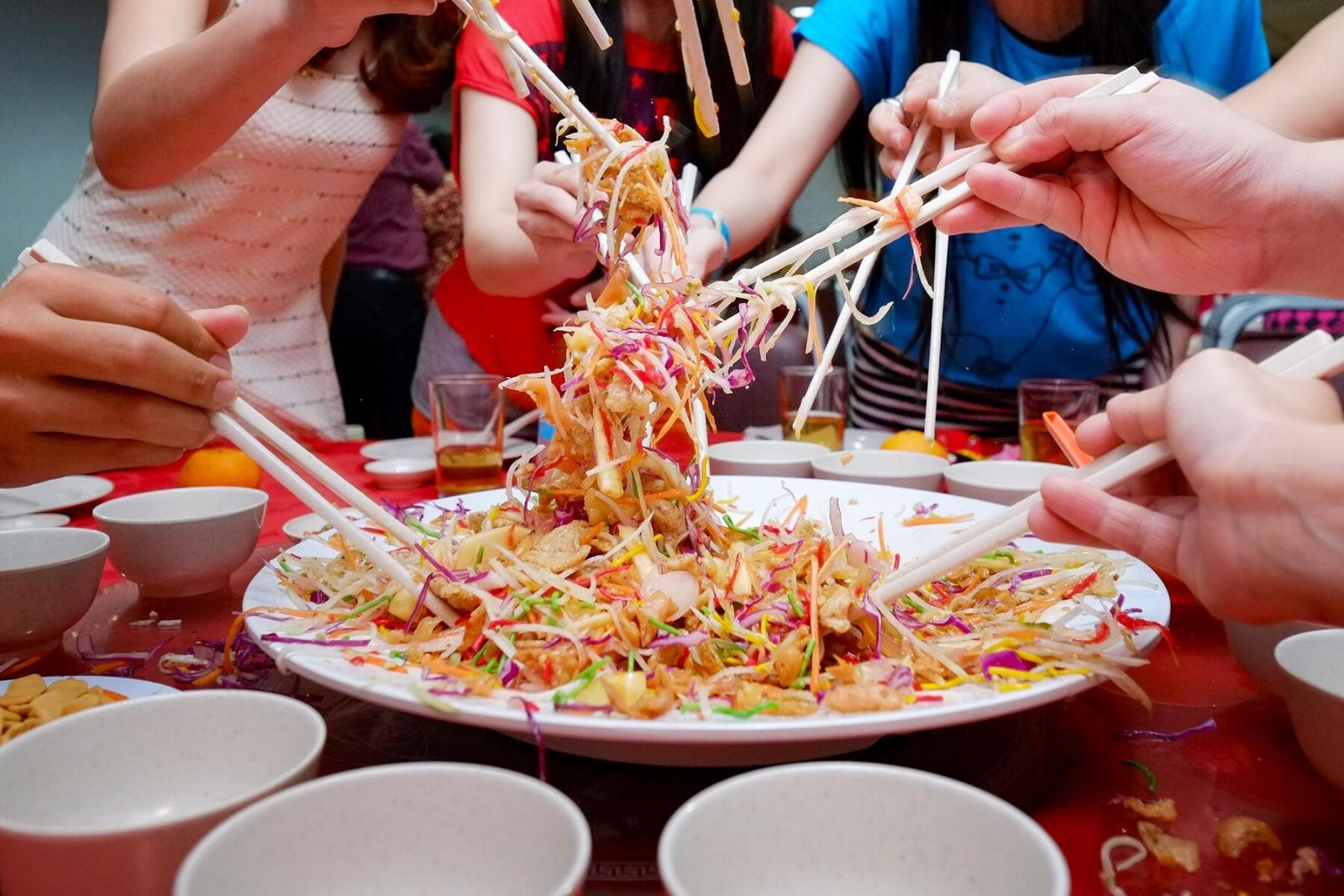
The tossing of Yee Sang
Using chopsticks, everyone tosses the ingredients high into the air while shouting wishes for wealth, health, success, and happiness. It is loud, chaotic, and slightly ridiculous in the best way. The messier the table and the higher the toss, the better the luck is supposed to be for the year ahead.
Lion and dragon dances are a highlight of the season, especially in Malaysia, where many troupes are internationally recognised and regularly win world championships. These aren’t just ceremonial performances, as they can get pretty intense and even nerve-racking at times.
In acrobatic lion dances, performers jump between towering metal stilts while drums pound in the background, as crowds fill the streets and temples, cheering at every bold move.
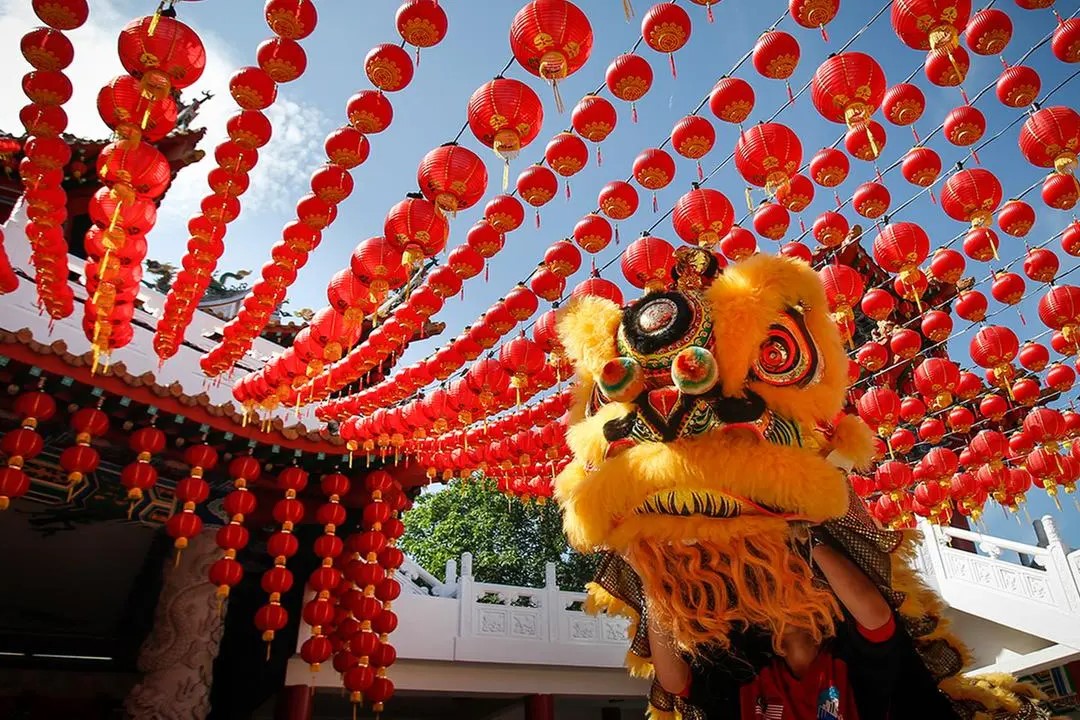
Lion dance in Malaysia
Ang pau, or red envelopes, are another essential part of the Chinese New Year in Malaysia. If you are married, there is no escaping this tradition. You are expected to give red envelopes filled with lucky money to youngsters. It is less about the amount and more about the gesture.
Q: Is everything closed during Chinese New Year?
Major malls and tourist attractions usually stay open, but many independent Chinese-owned shops and hawker stalls will close for the first 3 to 5 days, so you’d have to plan your meals accordingly.
Q: What should I wear coming to Malaysia in February?
Bright colors, especially red, are favored because they symbolize good luck. While all black or all white outfits are traditionally associated with mourning, this is no longer strictly observed in modern times.
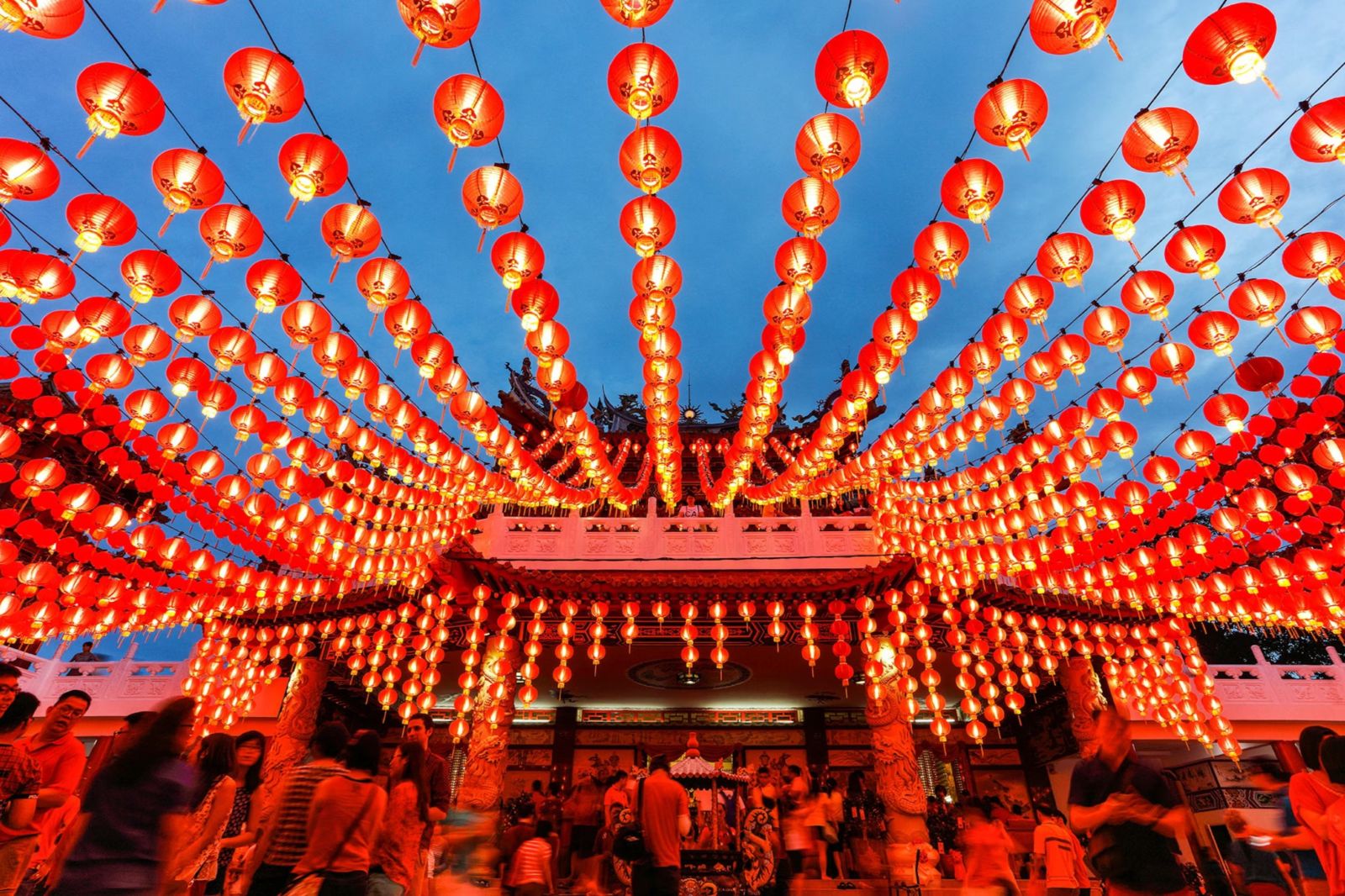
Red is the primary color of the New Year celebration
Q: Can tourists join the celebrations?
Absolutely! Most temples welcome visitors, and public "Open Houses" are specifically designed for the community and tourists to mingle.
Chinese New Year in Malaysia is more than just a religious or ethnic festival, but rather a national celebration of renewal and unity. Witnessing everything from orange-throwing in Penang to the joyful chaos of a Yee Sang toss in Kuala Lumpur is an experience that will leave you with a full stomach and a happy heart.
Visiting Malaysia during this time? Check out some of our Malaysia tours for inspiration!