English
 French
 Spanish
 Italian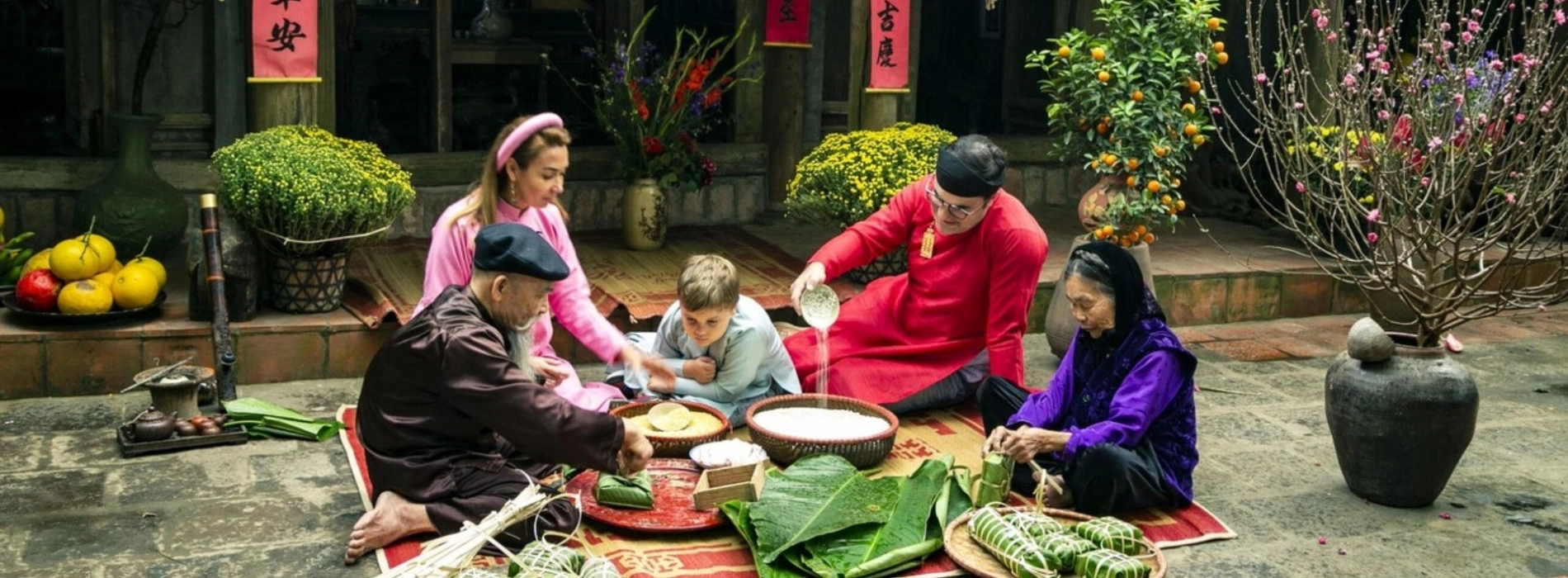
Traveling during local holidays is always a fantastic way to experience a culture's true heart, and Vietnam is no exception. With Tet holiday just around the corner, it's the perfect time to dive into what makes this festival so special, and what you should keep in mind if you're planning a visit during this season.
Tet holiday is Vietnam’s celebration of the Lunar New Year. While similar traditions are observed across Asia, such as the Spring Festival in China and Taiwan, Seollal in Korea, Shōgatsu in Japan, and Tsagaan Sar in Mongolia, each culture brings its own unique flavor to the festivities.
The origin of this celebration can be traced back to agricultural communities in Asia. These communities observed the moon to understand tidal cycles and the sun to mark the passage of the year, allowing them to plan their farming activities and secure food resources. Over time, this led to the practice of celebrating the beginning of a new agricultural cycle with festivals and rituals.
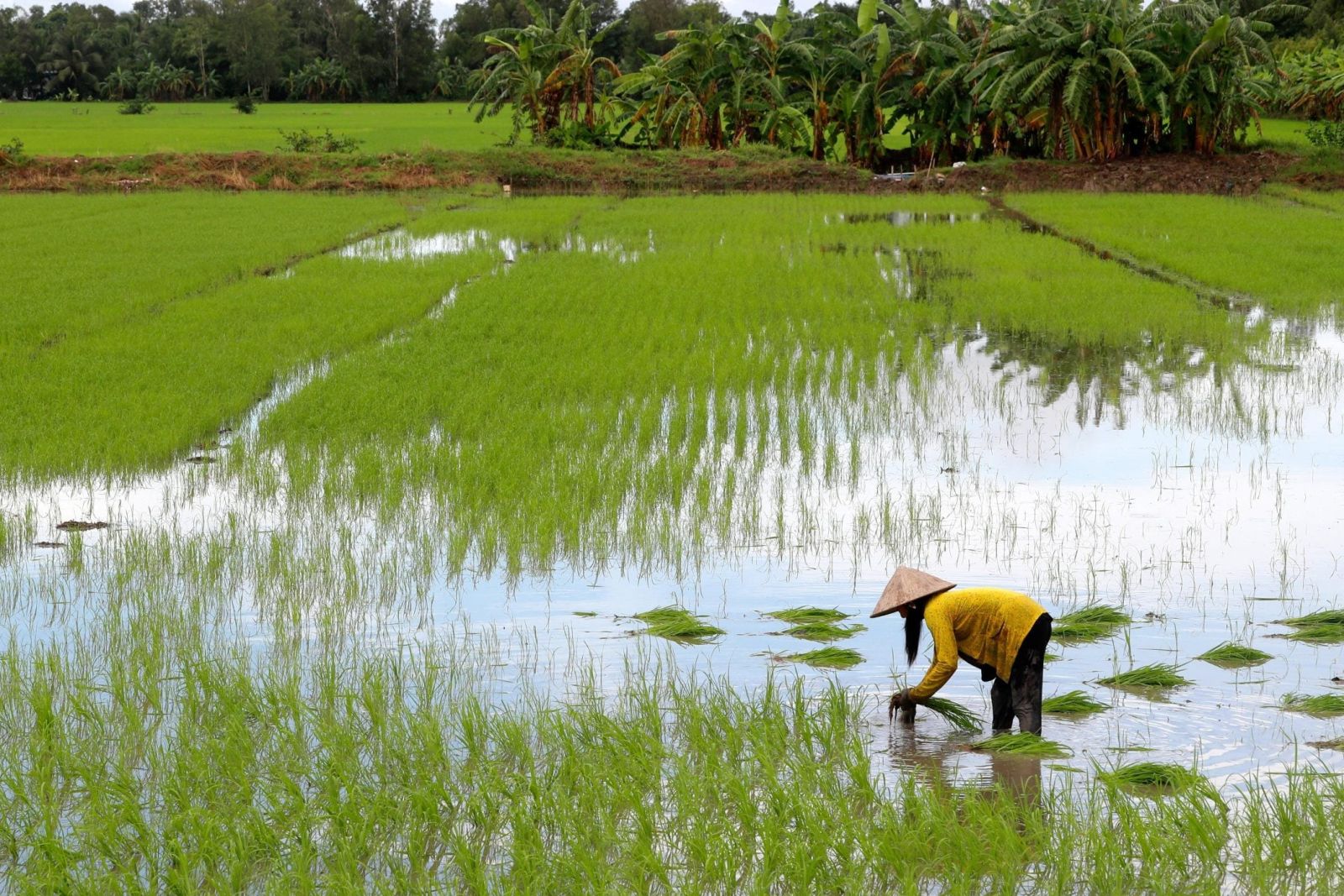
The New Year celebration originated from the agricultural lifestyles of early communities
In Vietnam, the Lunar New Year, or Tet holiday, is widely considered the most significant celebration of the year. The buildup to the festival is a busy time, as families prepare by deep-cleaning their homes and shopping for ritual offerings, decorative plants and flowers, home decor, and an abundance of festive food and drinks.
At its heart, Tet is a season for family reunions. Those living far from home make every effort to return for the holidays to cook together, share traditional meals, and join their loved ones in visiting relatives, friends, and neighbors.
In 2026, the first day of the Lunar New Year falls on February 17th. The official public holiday in Vietnam will last for five days, starting one day before Tet and continuing for four days after. This means the break runs from Monday, February 16th (the 29th day of the last lunar month) through Friday, February 20th (the 4th day of the first lunar month).
In the days leading up to New Year’s Eve (giao thua), families observe several spiritual rituals and traditional Vietnamese practices. These include the Full Moon of the last lunar month, the Kitchen Guardians’ Day (Ong Cong, Ong Tao), and the meticulous cleaning of the ancestral altar. Families also host a year-end dinner (Tat Nien) to get together.
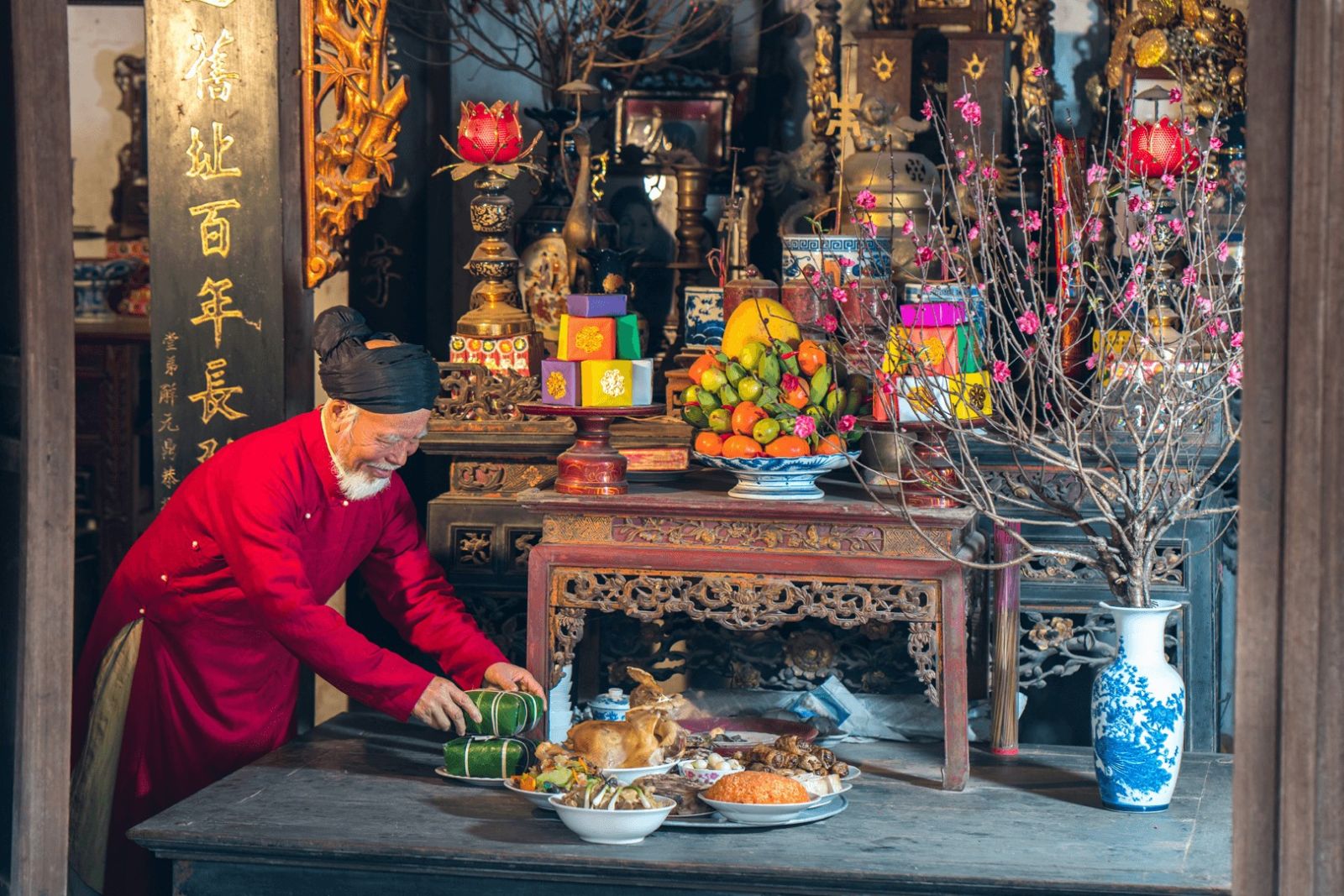
The worship of the Kitchen Gods (Ong Cong, Ong Tao)
The Tet holiday preparations are extensive: families come together to go Tet shopping, deep-clean and decorate their homes, and arrange the five-fruit tray (mam ngu qua). Houses are often adorned with Tet paintings and red lanterns or calligraphy banners (cau doi).
Once the clock strikes midnight and the New Year’s Eve celebrations conclude, people begin to venture out from their homes. The heart of the holiday lies in the first three days of the New Lunar Year, which are filled with specific customs and visits.
A key tradition here is the "First Footing" (xong dat). It is believed that the very first person to enter a home during the New Year determines the family’s luck for the months to follow. Because of this, families are incredibly selective about who they invite over first; they often look for someone whose zodiac sign is spiritually compatible with the head of the household.
The first steps a family takes outside their home are also significant, a practice known as the “First Departure” (xuat hanh). People are very particular about the time and direction they travel when leaving the house for the first time. It is believed that choosing the right direction for this initial journey sets the tone for the entire year, so many plan their first destination of the day with great care.
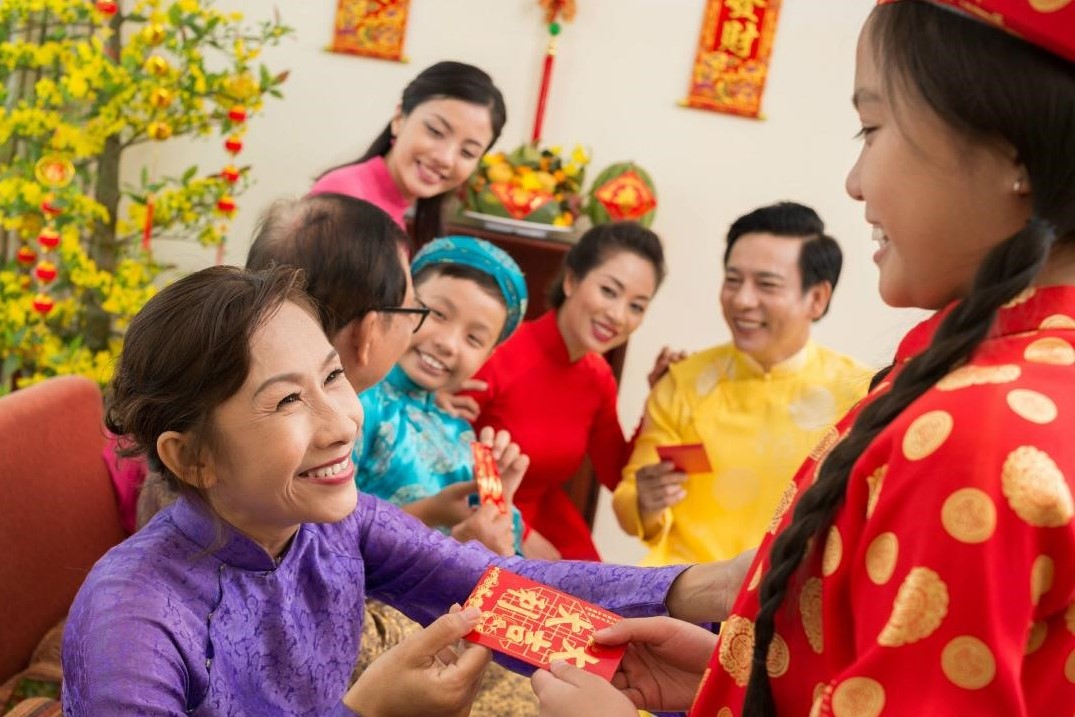
Giving out lucky money to children during the Tet holiday
Another hallmark of the Tet holiday is the tradition of li xi, or giving lucky money. Following long-standing tradition, elders give red envelopes to children to celebrate their "new age" (“mung tuoi” money). This is more than just a gift; it’s a gesture of good luck and a heartfelt wish for the children to grow up healthy, stay well-behaved, and excel in their studies in the coming year.
Travel Tip: Bringing small-denomination “lucky money” (such as crisp $2 bills in red envelopes) for children you meet is a nice gesture that’s always appreciated.
Traveling to Vietnam during Tet is a nice choice if you’re looking for a deep cultural experience, but it might not be for you if you’re strictly after relaxation or convenience.
In the weeks leading up to the Tet holiday, the energy is everywhere. The streets are packed with flower markets, decorations, and people shopping to festive music. There’s no shortage of things to do, either, since you’ll run into everything from live concerts to traditional fairs and art exhibits.
That being said, many local shops, restaurants, and markets close down for at least the first three days of the New Year. While this isn't as extreme as it was ten years ago, thanks to the growth of the tourism industry, it’s still something you need to plan for. These closures are most noticeable on the actual days of Tet (starting around February 17th).
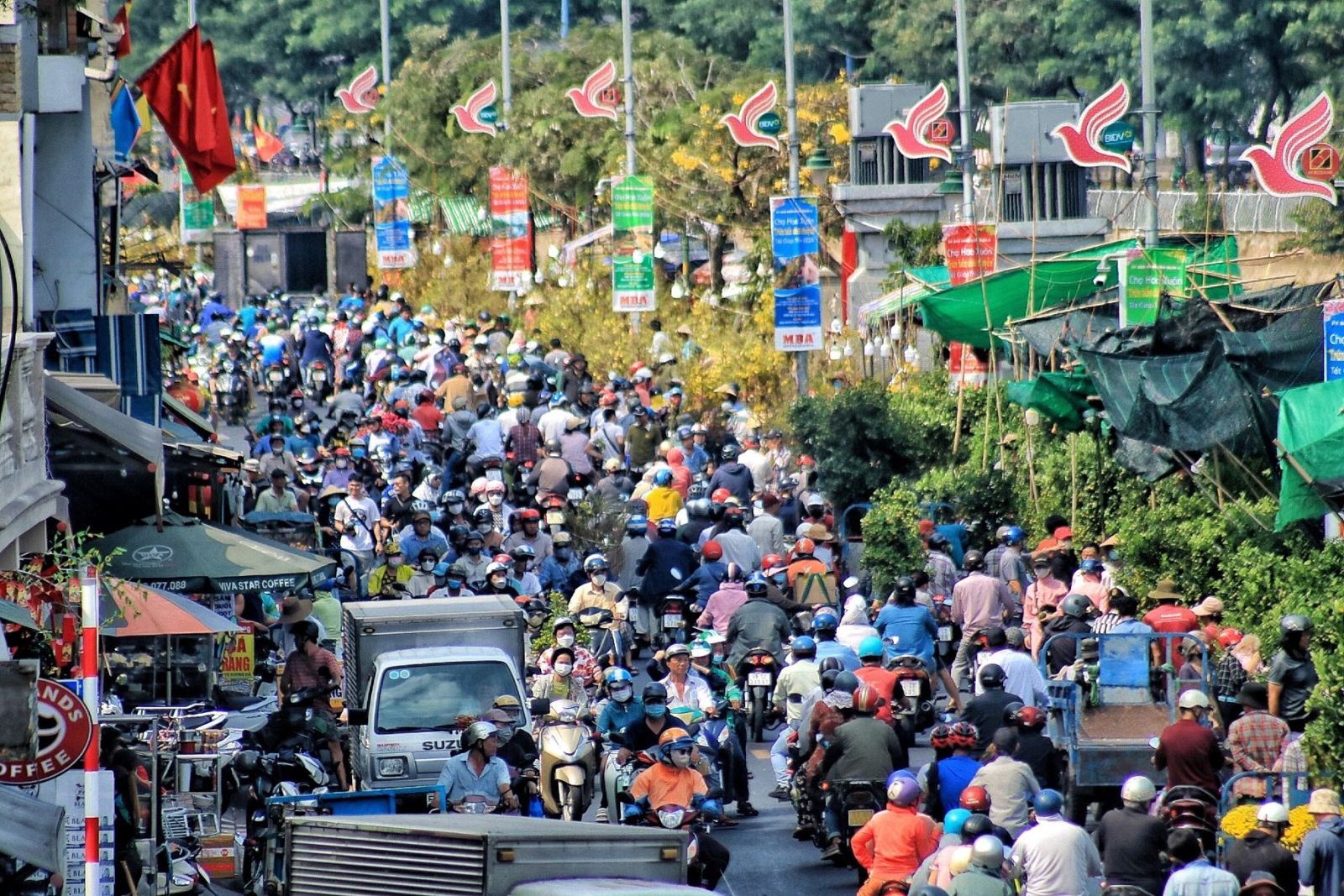
The logistics of traveling during this time can be a real headache
You’re also looking at a "Great Migration" scenario, where millions of people head from the big cities back to their hometowns. Flights, trains, and buses sell out months in advance, and prices for any remaining seats can double or triple. On the actual day of Tet (Feb 17), don't expect many Grab drivers to be working, and be ready for higher fares.
Speaking of costs, "Tet surcharges" are standard practice. Expect to pay a bit extra for everything from hotels and transport to food and entrance fees. Many attractions and tours will also operate at reduced capacity, and service can be hit-or-miss, as staff are often distracted or unavailable because, naturally, they’d rather be home with their families.
Keep in mind that Tet is primarily a family-oriented holiday, not a massive public party. Most people leave the cities and head back to their hometowns to be with their relatives. Because of this, the typical tourist experience can be pretty limited.
Travel Tip: If you really want to experience the Tet festivities, the best strategy is to arrive a week or two before New Year’s Eve to soak up the atmosphere. Once New Year’s Eve actually hits, you might want to head somewhere else to avoid the closures and logistical hurdles.
If you're planning to be in Vietnam for the Tet holiday, your best bet is to either stick to the major cities or stay at high-end hotels and resorts, as they’re the most likely to stay fully operational. Alternatively, visiting a rural homestay before Tet is a great move, as you might even get an invite to join in on the family celebrations.
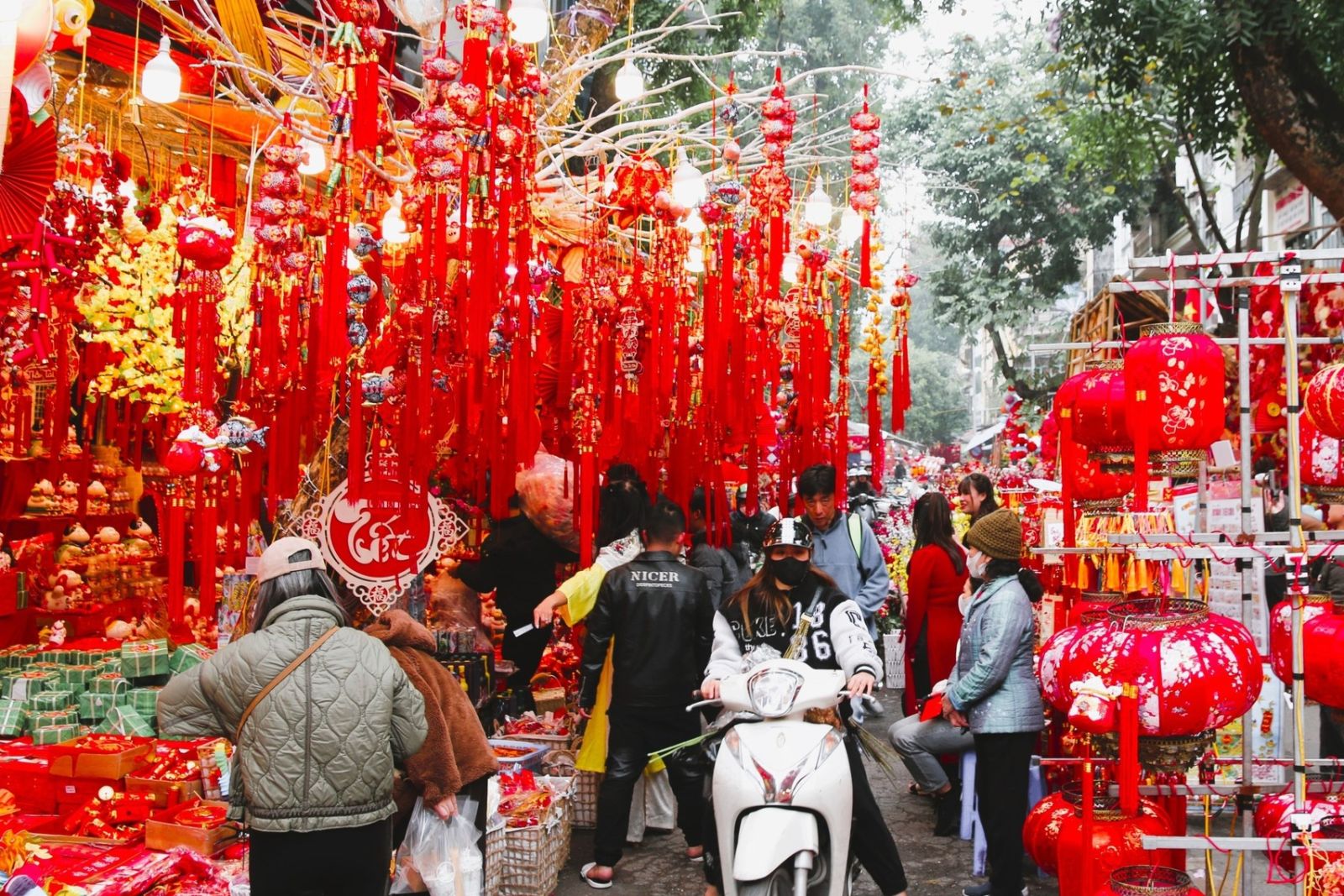
Since transportation is usually a mess during this time, try to avoid traveling between cities
For most travelers, our advice on timing is pretty straightforward. Visiting during the pre-Tet preparations (late January to early February) is the way to go if you want to see the country at its most lively and festive. After Lunar New Year’s Eve, go in expecting a slower pace of life and fewer organized activities.
If you're looking at the tail end of the holiday, the few days after Tet (around February 20–23) are much quieter, but things are mostly back up and running. Most major tours, like cruises in Ha Long Bay, will be operating as usual by then.
You may also like: Which destinations are best for Vietnam tours during the Tet holiday?
While big cities still function at a basic level, your options will be limited. Major hubs like Hanoi and Saigon can feel strangely quiet or even deserted during the Tet holiday as residents head back to their home provinces to visit family.
While the cities are lively on New Year’s Eve, they quickly pivot to a "ghost town" vibe that some find charming, and others find unsettling. In Hanoi, the Old Quarter remains the most active area, largely thanks to foreign-run hostels, making it a decent spot for slow-paced sightseeing. However, don't expect much in the way of shopping or dining variety; while you'll find enough open to get by, business hours are anything but reliable.
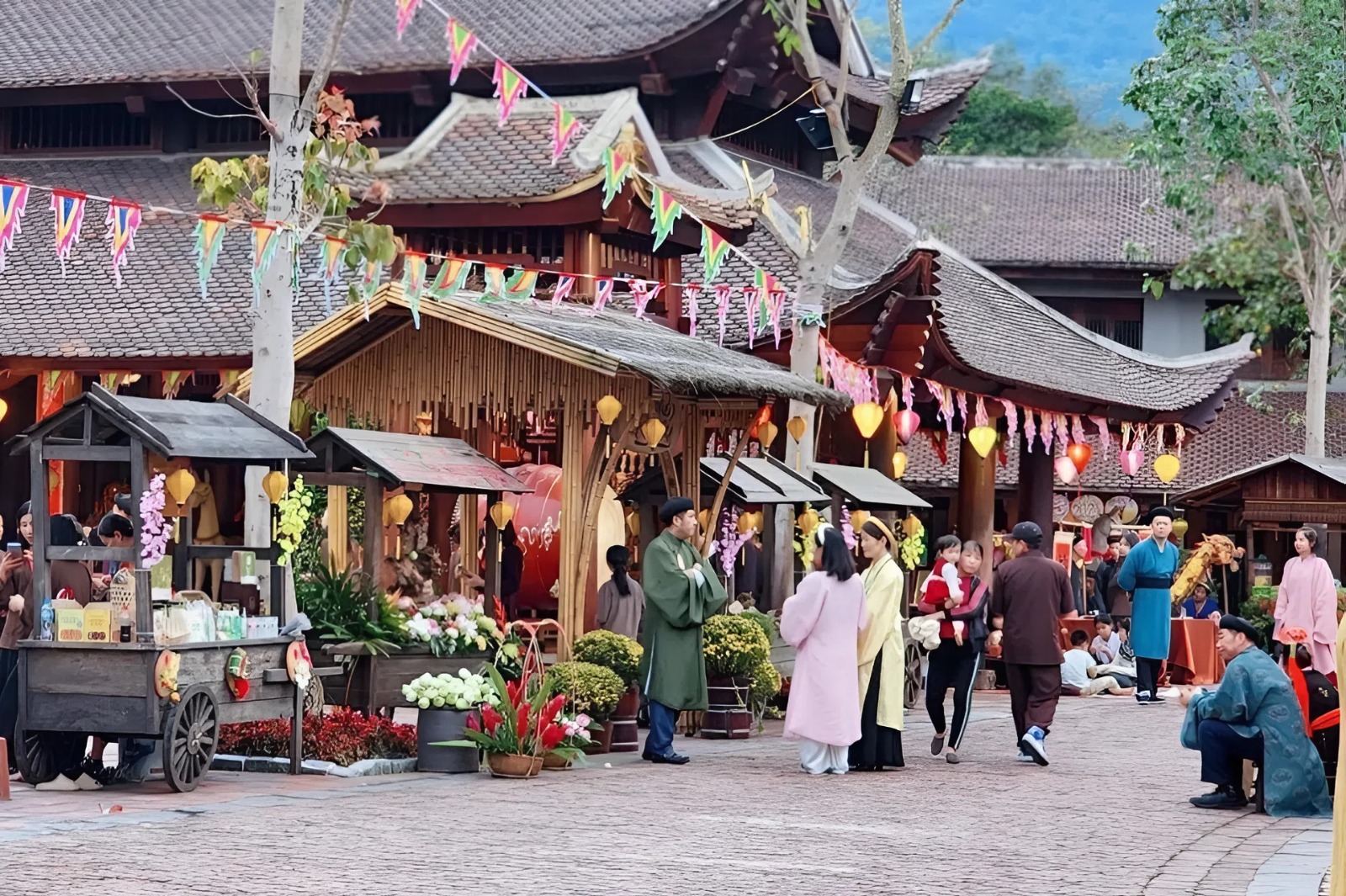
Tet holiday in Quang Ninh Province
Ha Long City gets very quiet during Tet, and finding an open restaurant can be a struggle. Despite the limited services, some travelers actually prefer the calm and find the lack of crowds worth the trade-off.
Travel Tip: While bay cruises usually keep running, operations often scale back on the first day of the holiday, so you’ll definitely want to double-check with your operator before booking.
Hoi An and Da Nang tend to stay more functional during the Tet holiday than Hanoi. Hoi An, in particular, feels a bit closer to normal, with a decent number of holiday events and lanterns keeping the atmosphere alive.
Beach spots like Phu Quoc, Nha Trang, and even Ninh Binh get very crowded and significantly more expensive during Tet, as they are top choices for locals traveling over the break. Whether these spots are "worth it" really comes down to your tolerance for crowds rather than the value for money.
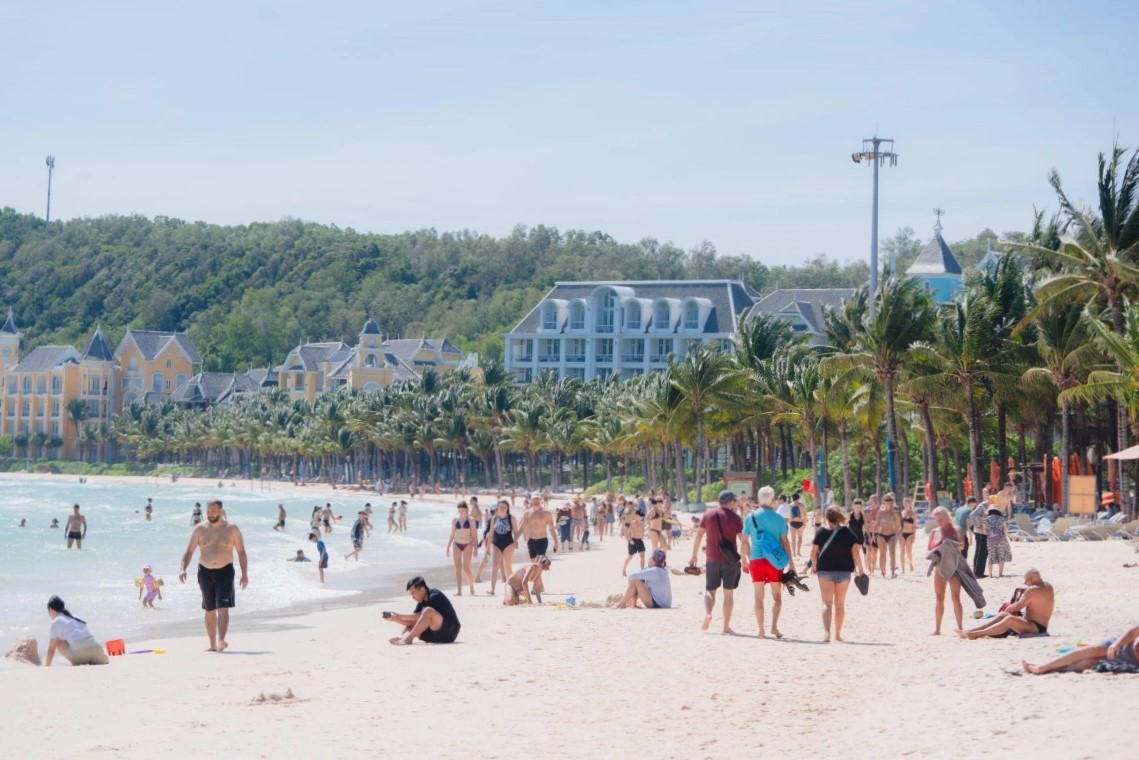
Most restaurants, tours, and activities in Phu Quoc stay open throughout the holiday
Phu Quoc, specifically, is usually fine to visit during the Tet holiday because it’s such a major tourist hub. However, because so many Vietnamese families head there for their own vacations, the island feels very busy rather than peaceful. You should expect higher hotel rates and limited availability if you don't book well in advance.
Travel Tip: If shopping is your main priority, the Tet holiday isn't the best time to visit Vietnam. You’re better off postponing until around 22–23 February, when services and prices mostly return to normal, if you’re looking for a smooth shopping experience.
It’s a tradition in Vietnam to have multiple firework displays at midnight on New Year’s Eve. If you don’t mind massive crowds, heading to city centers, especially the walking streets, is a lot of fun. You’ll find countdowns, live music, performances, and plenty of street food and drinks.
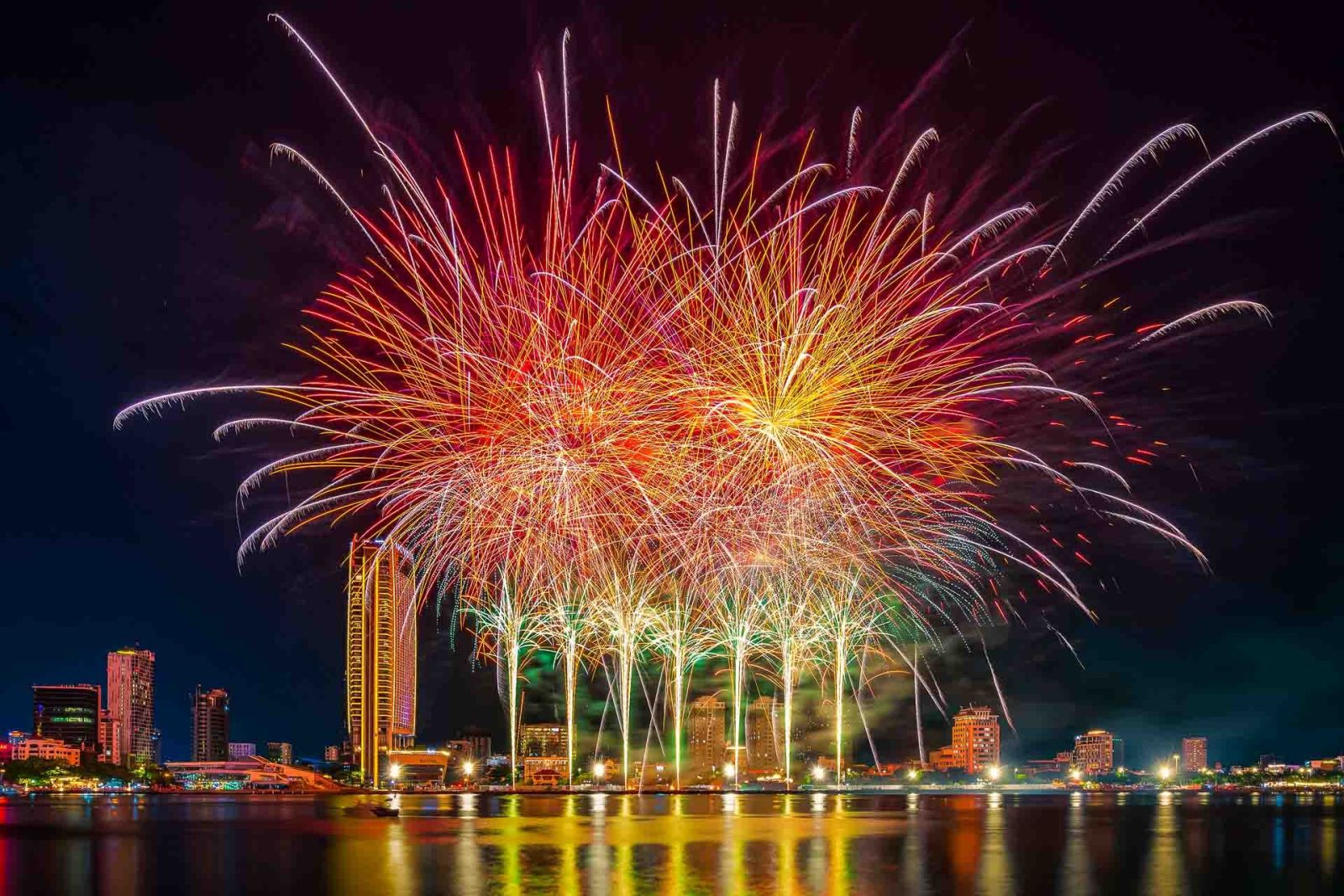
New Year fireworks show in Danang
Visiting temples and pagodas is a major Tet holiday tradition for Vietnamese people. While the famous spots get incredibly crowded, you can always head to smaller local temples. These are usually much more peaceful, offering a calm atmosphere and the scent of incense without the overwhelming crowds.
If the opportunity comes up, joining a local family for a traditional Tet holiday meal is well worth it. Being part of the whole process, hitting the markets for ingredients, helping with the cooking, and finally sitting down to eat, is a great way to see how the holiday actually works. Just a heads-up: these meals often involve some drinking, so don't plan on driving yourself afterward. Safety first!
Tet holiday is a deeply significant time for the people of Vietnam. For travelers, it’s a unique opportunity to see a different side of the country that is more grounded and spiritual. If that sounds like something you’d enjoy, it’s worth planning a trip around the holiday.
If you’re still looking for inspiration for your next trip, feel free to check out our list of Vietnam tours to get started!