English
 French
 Spanish
 Italian
Cho Lon
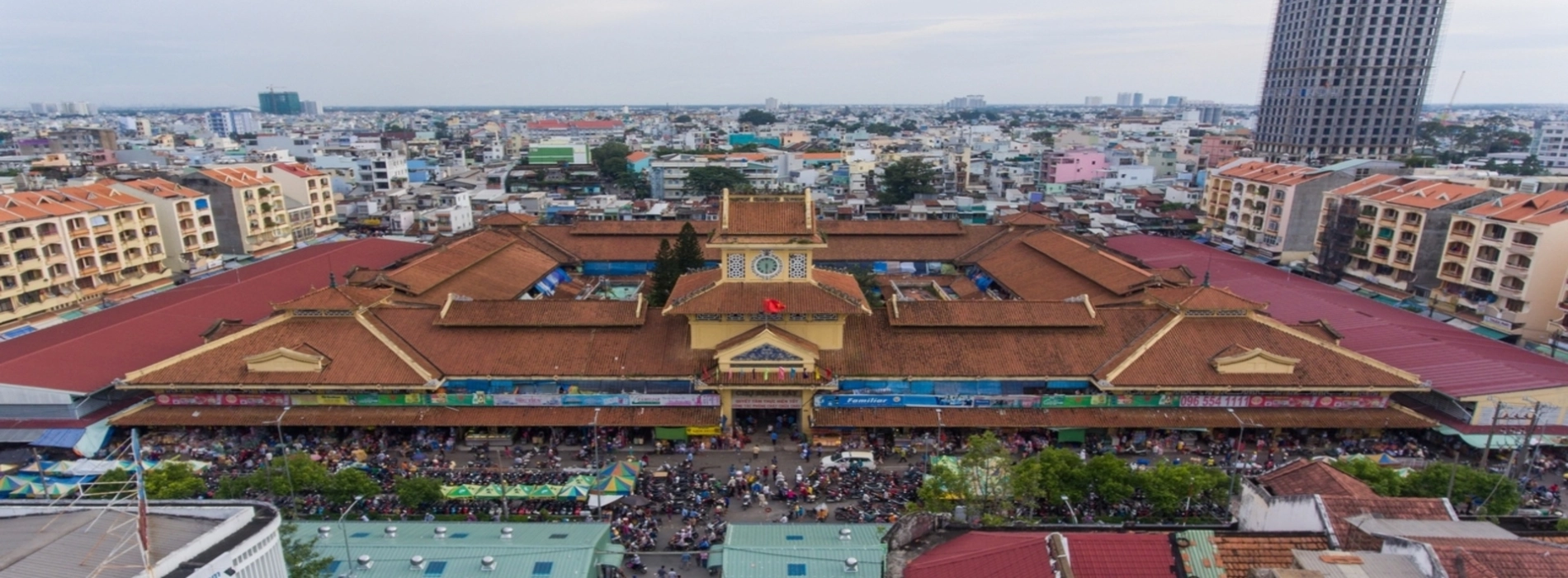
Today, there’s a ward called Cho Lon, but in the minds of many, the whole southern part of modern-day Ho Chi Minh City is still known by this name. This name has been tied to the city for a long time, playing a part in shaping the magnificent, modern city we see today.
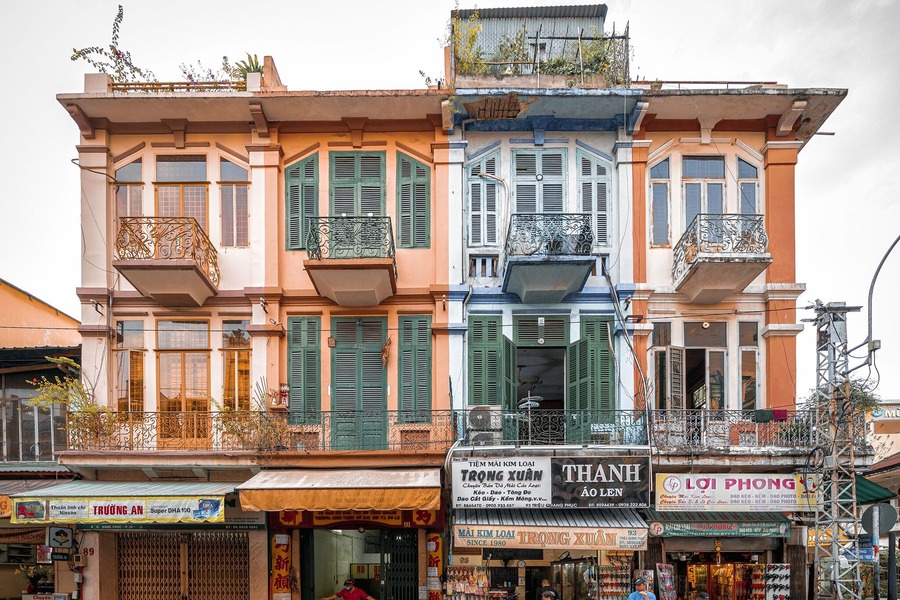
A charming old street lined with ancient houses in Cho Lon. Photo: Saigoneer
The quarter is also well-known for a large Hoa community. By area, it’s considered the largest Chinatown in the world. When you visit, you’ll be impressed by the distinct Chinese-Vietnamese culture that stands out from every other part of the city. Let’s kick off this exciting journey together with Asia King Travel!
Cho Lon literally means “big market”, it comes from the comparison between the markets of the Chinese, which was larger than the markets of the Vietnamese. In the 17th and 18th centuries, Chinese immigrants who did not submit to the Qing dynasty migrated to southern Vietnam. They began establishing markets, and their trading activities gradually formed a bustling urban area.

Cho Lon in the 20th century. Photo: Collective
In 1865, the city of Cho Lon was officially established. At that time, there were two separate cities: Cho Lon - home to a majority of Chinese residents and Saigon - where the Vietnamese and French colonists lived. By around 1930, urban expansion caused the two cities to gradually merge, forming the Saigon–Cho Lon metropolitan area. In 1956, the city was renamed Saigon, and the name “Cho Lon” disappeared from official use.
The former Cho Lon area in the past was mainly located in Districts 5 and 6, stretching northward into parts of Districts 10 and 11. The total area covers about 10 square kilometers. Since the administrative change in 2025, a part of District 5 has become Cho Lon Ward.
There are many routes to get to Cho Lon. If you’re coming from Tan Son Nhat Airport, the Truong Chinh – Ly Thuong Kiet route is the shortest. It’s best to grab a taxi or use a ride-hailing app on your phone if you’re not familiar with the roads. Try to avoid traveling between 7–8 AM and 5–6 PM during rush hour, as traffic jams are common at those times.
Suggested for you: Sai Gon Tour 1 day: Sai Gon River Cruise
This is the “big market” that made the name Cho Lon. The market covers an area of 25,000 square meters and serves as a major wholesale hub, distributing goods across the region. Its architecture is also highly artistic, with roof tiles designed to resemble those of traditional East Asian temples. The market itself has been officially recognized as an architectural heritage site of the city.
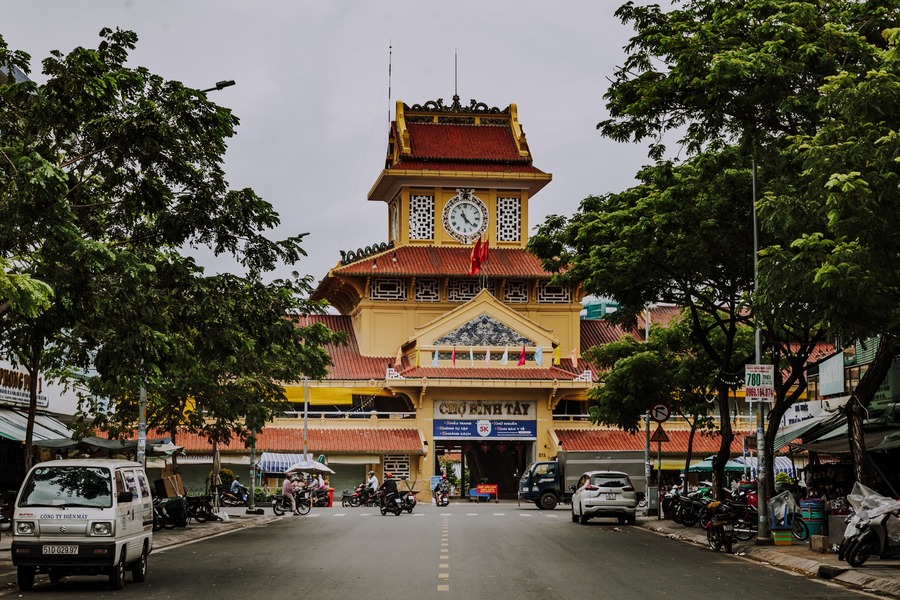
Up to now, Binh Tay Market is still the largest wholesale market in Ho Chi Minh City. Photo: VisitHCMC
Inside the market, you can shop to your heart’s content with countless goods on offer, the most popular being dried seafood. Since it’s a wholesale market, prices are generally cheaper than average. You’ll also find stalls selling Chinese snacks like braised offal (pha lau) and tofu pudding (tao pho), perfect for taking a break and enjoying a tasty treat.
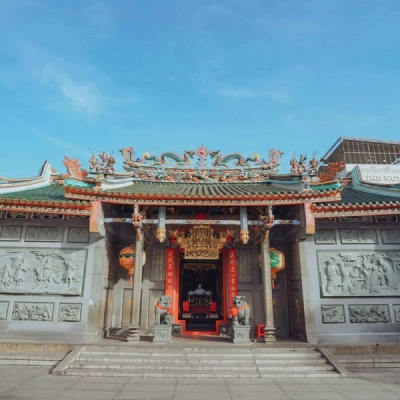
Throughout the area, there are many temples and other structures that vividly showcase Chinese culture. They often feature vibrant colors and intricate carvings depicting Chinese legends or dedicated to deity worship. These places are barely deserted, often filled with visitors and the swirling smoke of incense.
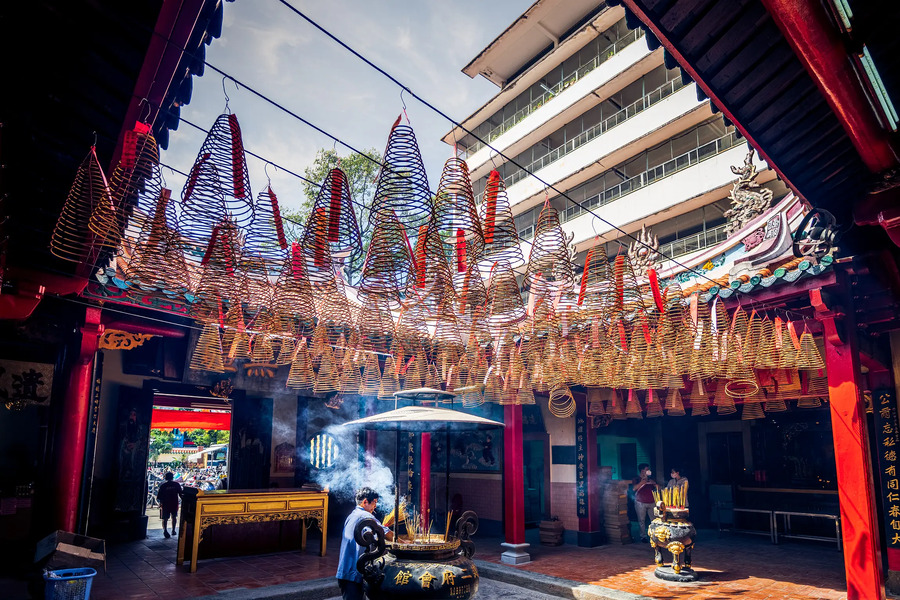
Religious sites are always visited by many who come to pray. Photo: Saigoneer
More than that, Cho Lon has some distinctive streets. Hai Thuong Lan Ong Street is famous for its traditional Chinese medicine shops, and even today, the road is lined with old houses showcasing classic architecture and the traditional lifestyle of the Hoa people. Luong Nhu Hoc Street lights up brilliantly during festivals, with colorful lanterns hanging everywhere.
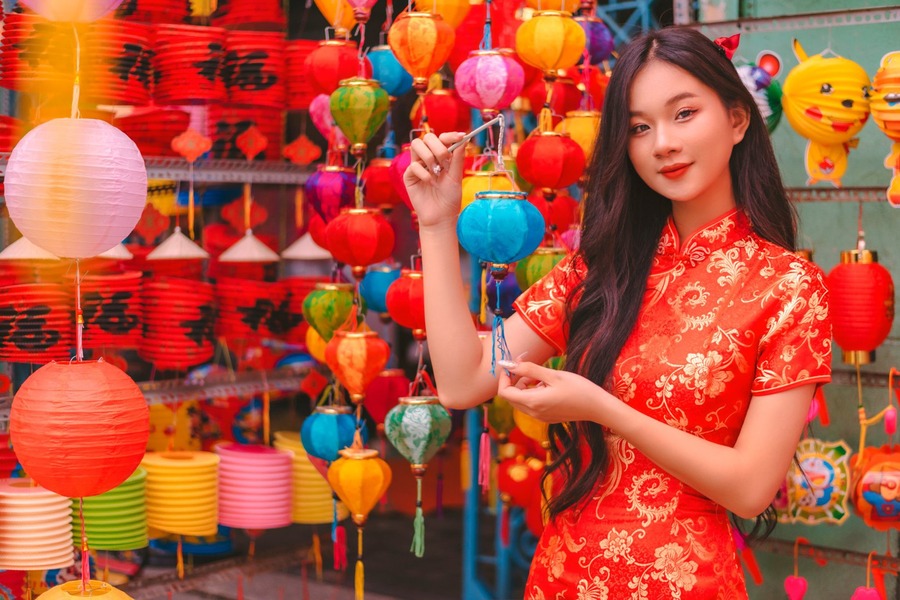
Luong Nhu Hoc Street – the Lantern Street that draws crowds for sightseeing and photos every Lunar New Year and Mid-Autumn Festival. Photo: CafeF
Nhieu Tam and Nghia Thuc streets are known as Jewelry Street, home to 55 households working in the jewelry trade. Along these streets, several stops have been set up for visitors to explore, shop, and learn more about the craft of jewelry making.
And if you’re looking for a peaceful spot, away from the city’s hustle and bustle, head to Hao Si Phuong. This narrow alley, lined with charming old houses, looks like it’s been lifted straight out of a 20th-century Hong Kong movie.
Alongside the growth of the Hoa community, Chinese cuisine has also become popular and is now an essential part of Cho Lon. As you wander the streets, you’ll surely come across dim sum, from humble street stalls to upscale restaurants. Inside each small dim sum bite is a burst of ingredients and flavors. Paired with soy sauce and dipping sauces, every bite is a little surprise waiting to delight you.
Pha lau is made from chicken or pig offal. To prepare this dish, the meat is thoroughly cleaned and deodorized, then cut into pieces and marinated with many spices. It’s usually served as a stew or enjoyed with a banh mi. As long as you’re open to trying it, you’ll likely end up loving this unique dish.
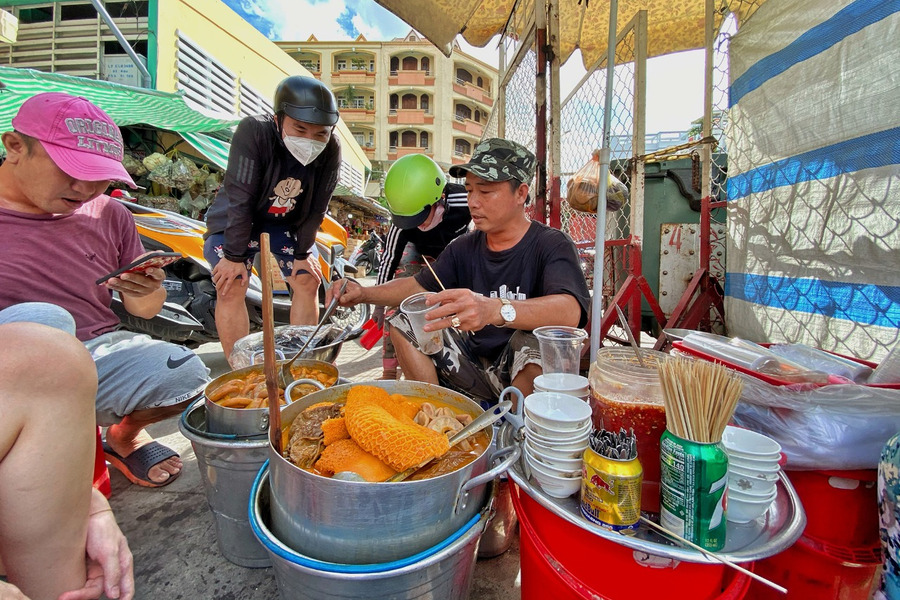
Pha lau is a humble yet popular local favorite. Photo: aFamily
When you enjoy hand-pulled noodles, you also get a little bonus: a kung fu-style performance by the chef as they work the dough. The chef skillfully kneads and stretches the dough to create dozens of thin, even strands without breaking them. Since the noodles are made fresh on the spot, they’re always wonderfully chewy and silky, and their freshness makes them a dish you’ll never tire of.
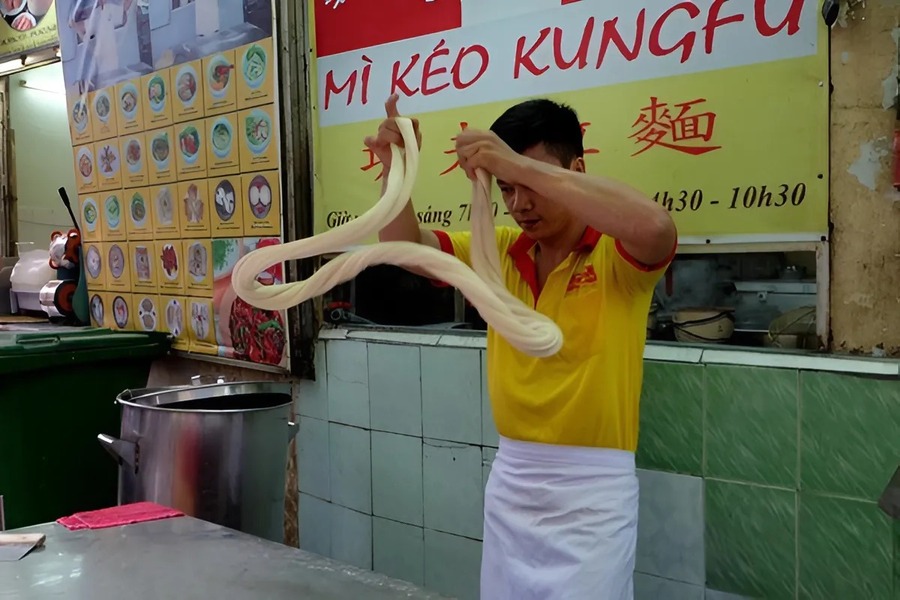
Most customers can’t help but marvel at this impressive kungfu performance. Photo: Kenh14
The Hoa people have a unique way of brewing coffee: they use a cloth strainer (often called a “cloth filter”) to repeatedly filter the coffee, then pour it into a clay pot to maintain the temperature. In terms of flavor, cloth-filter coffee is quite different from traditional Vietnamese drip coffee.
The result is usually rich and aromatic, with a slightly creamy, smoky taste. Sipping on a cup of cloth filer coffee in the early morning, slowly watching the flow of people pass by, has become a cherished daily ritual for Cho Lon locals over the years.
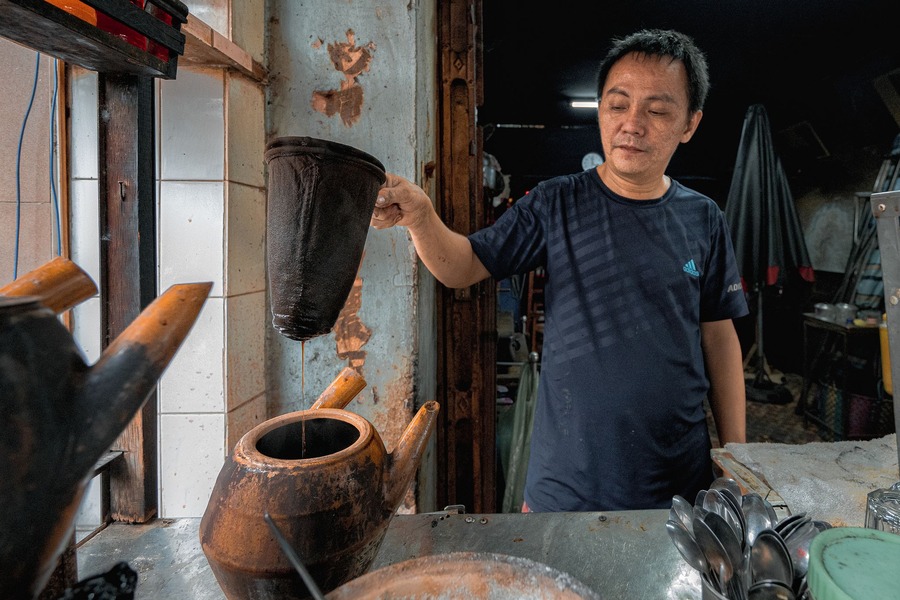
Only true coffee connoisseurs know about cloth-filter coffee. Photo: Saigoneer
Cho Lon is a standout quarter of Ho Chi Minh City, preserving the rich history and culture of the Hoa people. Blending tradition and modernity, this is truly a destination you can’t miss. Get in touch with Asia King Travel and start planning your journey to explore this magnificent city today!
Suggested for you: Ho Chi Minh Tour 2 hours: Exploring Ho Chi Minh City on foot