Hau Dong – Exploring Vietnam’s Unique Spiritual Tradition
By Thanh Tâm · Published · Updated
Table of contents
Vietnam is a land of rich folk beliefs, and Hau Dong is one of the most unique and mysterious spiritual cultures. When mentioning Hau Dong, people easily think of colorful ceremonies, vibrant music and sacred rituals that anyone who has witnessed them once will never forget. But few people know that behind those ceremonies is a belief imbued with philosophy of life and respect for sacred saints.
If you are someone who likes to explore indigenous culture or are learning about the profound spiritual values of the Vietnamese people, let's delve into the mysterious world of Hau Dong!
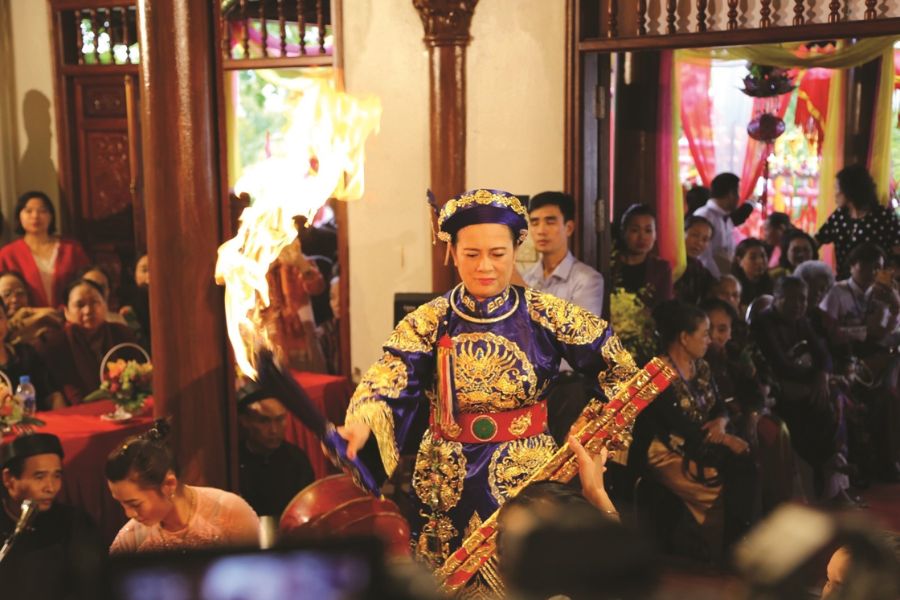
Hau Dong is one of the most unique and mystical spiritual practices. Source: Thoi bao ngan hang
What is Hau Dong?
Hau Dong, also known as Len Dong, is a ritual in the Vietnamese Tam Phu Mother Goddess Worship belief system. In 2016, UNESCO recognized it as an Intangible Cultural Heritage of Humanity. This ritual serves as a form of spiritual communication between humans and deities through the medium of a spirit medium (Ong/Ba Dong).
During the ceremony, the medium is believed to enter a trance state (nhap dong), allowing deities to descend and manifest through them. Through this connection, the spirits can bestow blessings, offer protection, dispel misfortune, or assist people in their daily lives. Hau Dong ceremonies typically take place at temples and shrines dedicated to the Mother Goddess and deities within the Four Palaces system (Tu Phu): Heavenly Palace (Thien Phu), Earthly Palace (Dia Phu), Forest Palace (Nhac Phu), and Water Palace (Thoai Phu).

Hau Dong is a ritual in the Vietnamese Tam Phu Mother Goddess Worship belief system. Source: Do tho Duc Hiep
Origins and Development of the Hau Dong Belief
The Hau Dong belief originates from the Mother Goddess Worship - a form of indigenous deity veneration practiced by the Vietnamese people for thousands of years. Over the course of history, this belief system took shape and flourished, especially during the Later Le Dynasty. It was during this time that Mau Lieu Hanh, one of the Four Immortal Saints in Vietnamese folklore, became the central figure of devotion.
Today, Hau Dong is not only a religious practice but also an inseparable part of the spiritual and cultural life in many regions, particularly in Northern Vietnam.

Mau Lieu Hanh. Source: FB Van hoa tin nguong tho mau Viet Nam
Characters worshiped in Hau Dong
The system of gods in Hau Dong belief is quite rich and complex, divided into Four Palaces:
- Thien Phu (Heaven): headed by Mau De Nhat - Mau Thuong Thien.
- Dia Phu (Earth): headed by Mau De Nhi - Mau Thuong Ngan.
- Nhac Phu (Mountain): where saints, princes, girls, boys are worshiped.
- Thoai Phu (Water): headed by Mau De Tam - Mau Thoai.
Each palace has saints with separate functions and powers, trusted by the people to pray for support in work, family and life.

Characters worshiped in Hau Dong. Source: Dong A Danh Hoa
How Does a Hau Dong Ceremony Take Place?
If you ever have the chance to attend a Hau Dong ritual, you will be captivated by its sacred yet lively atmosphere. A ceremony can last for several hours or even an entire day. The most striking elements you will experience are music, vibrant colors, dance, and, most importantly, a profound spiritual connection.
Stages of a Hau Dong Ceremony
Opening the Ritual and Offering Incense
The ceremony begins with the offering of incense and prayers, seeking permission from the deities for the medium (Ong/Ba Dong) to embody the spirits and allow them to descend.

Opening the Ritual and Offering Incense. Source: Dien dan hat van Viet Nam
Spirit Descent and Incarnation of Deities
Once the ritual opens, the deities are believed to descend into the medium, manifesting through different "gia hau" (incarnations of specific deities). Each incarnation is represented by a unique costume, symbolizing their rank, colors, and divine power. For examples:
- Mau Thuong Thien (Heavenly Mother) wears a red robe and a phoenix crown.
- Quan Lon De Nhat (First Marquis) wears a red or yellow robe, exuding authority and power.
- Co Be Thuong Ngan (Little Lady of the Forest) wears a green outfit, gracefully dances with a fan, and bestows blessings.

Each incarnation is represented by a unique costume. Source: 24H
Sacred Dance and Blessing Bestowal
As the deity manifests, the medium performs ritual dances to the rhythm of Chau Van music, expressing the spirit’s might, grace, or kindness. Afterward, they bestow blessings upon attendees, often in the form of money, leaves, salt, or rice—symbols of prosperity and good fortune.

As the deity manifests, the medium performs ritual dances to the rhythm of Chau Van music. Source: Cong Studio
Closing the Ceremony and Giving Thanks
Once all incarnations have been performed, the medium pays respect and offers gratitude to the deities. The atmosphere then shifts back to tranquility and reverence, marking the end of the sacred ritual.

Once all incarnations have been performed, the medium pays respect and offers gratitude to the deities. Source: Tap chi dien tu Van Hoa va Phat Trien
The Role of Chau Van Music in Hau Dong
Chau Van music is an essential element of the Hau Dong ritual. Musicians (cung van) use instruments like the moon lute (dan nguyet), drums (trong), and castanets (phach) while singing hymns that correspond to each gia hau (incarnation of the deity).
This music serves multiple purposes:
- Guiding emotions throughout the ceremony.
- Helping the medium embody the spirits more deeply.
- Acting as a spiritual bridge between the earthly realm and the divine.
The unique melodies of Chau Van - sometimes melancholic and profound, sometimes lively and dynamic - create an enchanting atmosphere unmatched by any other ritual.

Chau Van music is an essential element of the Hau Dong ritual. Source: Hoi Nhat Tam
The Significance of Hau Dong in Vietnamese Life
The Hau Dong belief is not simply a religious activity but also carries deep cultural - social - spiritual values. People come to Hau Dong to pray for peace, health, fortune and comfort in life. In addition, Hau Dong is also a stage to show cultural exchange, from traditional costumes, music, dance, to worship rituals. All create a vivid cultural picture reflecting people's beliefs and aspirations for a good life.

Hau Dong is more than just a religious practice - it embodies cultural, social, and spiritual values. Source: Bao Lao Dong
Controversies and Misconceptions About Hau Dong
Despite being recognized as a cultural heritage, Hau Dong is often misunderstood and misjudged. Some people think that Hau Dong is superstitious, wasteful or ostentatious. However, when we understand its true nature, we will see that this is a ritual with deep humanity, helping people have faith, motivation to live and be good.
In fact, many people who participate in Hau Dong not only pray for wealth, but also vow to do good deeds, help people - in the spirit of "saints helping people".

Despite being recognized as a cultural heritage, Hau Dong is often misunderstood and misjudged. Source: Bo Van hoa The thao va Du lich
You may like: Best Traditional Festivals in Hanoi
Experiencing a Hau Dong Ceremony – Should You Try It?
If you ever have the chance, attending a Hau Dong ceremony at least once can be a fascinating experience. You don’t need to be a believer - just an open mind and a curiosity for Vietnamese folk culture will allow you to appreciate this unique blend of spirituality and artistry.
A small note: Respect and sincerity are key. It’s best to familiarize yourself with basic etiquette before attending to ensure a meaningful and immersive experience.

If you ever have the chance, attending a Hau Dong ceremony at least once can be a fascinating experience. Source: Cong Studio
Conclusion
The Hau Dong belief is a mirror of the Vietnamese soul, where people reconnect with their spiritual roots and express their aspirations for peace and happiness. Beneath the dazzling colors, mesmerizing dances, and captivating music lies a profound spiritual world—one that deepens our appreciation for Vietnam’s rich cultural heritage the more we explore it.
If you truly want to understand Vietnamese culture, don’t miss the chance to experience Hau Dong—one of the most extraordinary and refined legacies left by our ancestors!
You may like: Spring Spiritual Journey - Northern Vietnam's Sacred Festivals