English
 French
 Spanish
 Italian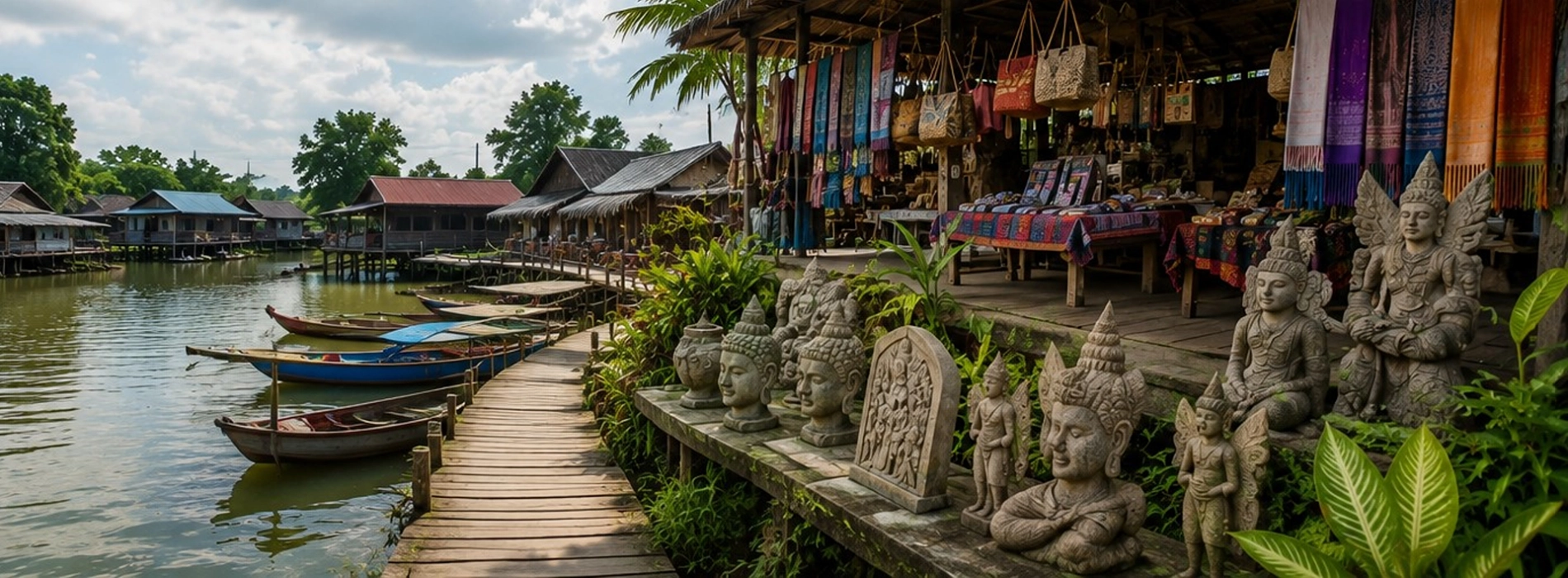
Cambodia's Traditional Craft Villages offer travelers a unique way to discover the country's cultural heritage beyond ancient temples and famous landmarks. Across Cambodia, local artisans continue to preserve traditional skills such as silk weaving, pottery making, silver crafting, and stone carving that have been passed down through generations.
Visiting these villages allows travelers to see authentic Khmer craftsmanship, meet local communities, and learn how handmade products are created using traditional techniques. From colorful silk textiles on peaceful islands to carefully carved stone sculptures inspired by Angkor architecture, Cambodia's traditional craft villages provide meaningful cultural experiences for those who want to explore the country's artistic traditions.
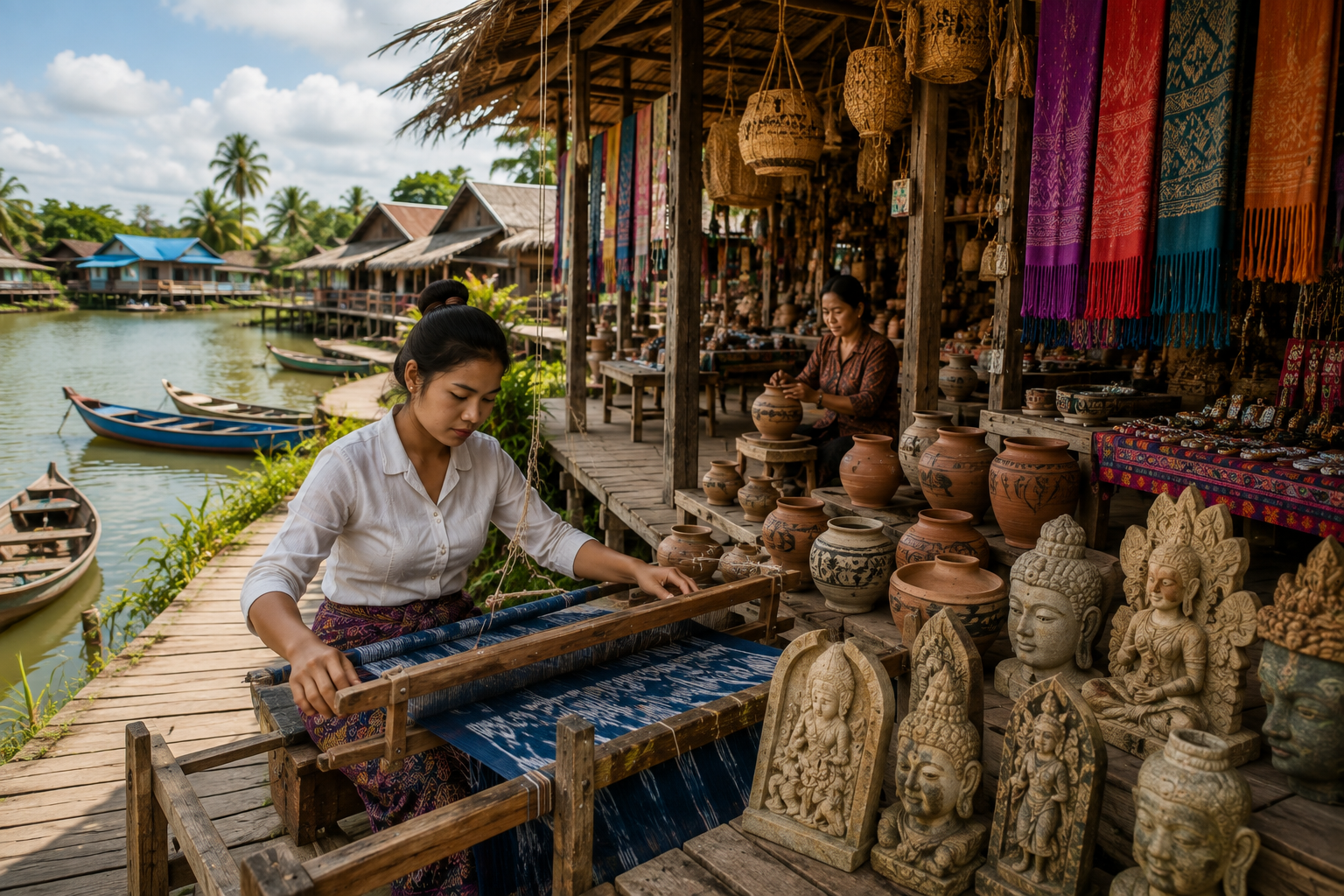 A skilled artisan weaves fabric to make clothes, surrounded by stacks of ceramic ware
Located on Koh Dach Island in the Mekong River, just a short distance from Phnom Penh, Koh Dach Silk Village is one of Cambodia's most famous destinations for traditional silk weaving. The village is often known as "Silk Island" because silk production has been an important part of local life for generations.
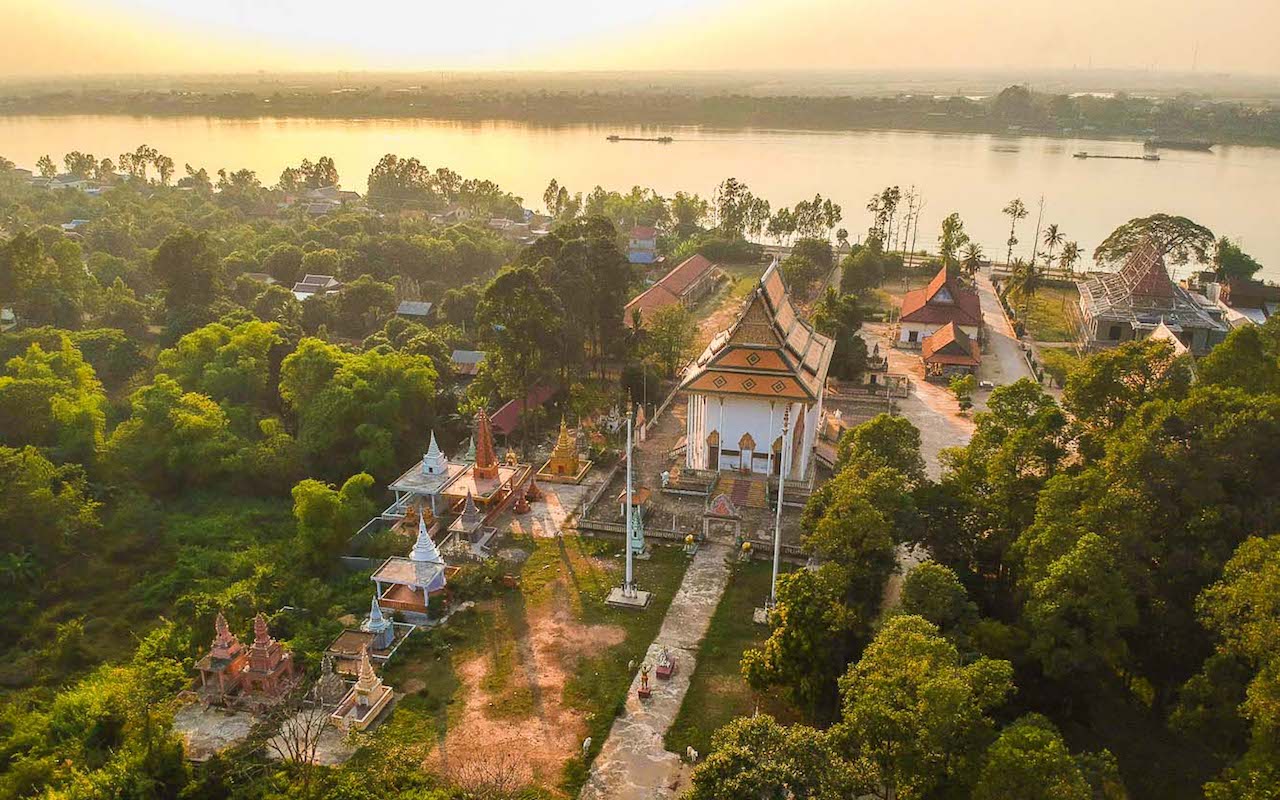
Koh Dach Island
At Koh Dach, visitors can observe the complete silk-making process, from preparing silk threads and dyeing fabrics to weaving complex patterns on traditional wooden looms. Many families still use hand-weaving techniques that have been passed from parents to children for decades.
Cambodian silk is highly valued for its soft texture, vibrant colors, and detailed designs. Many products feature traditional Khmer patterns inspired by nature, religion, and local history. Visitors can purchase handmade scarves, clothing, and home decorations directly from artisan families.
Besides visiting weaving workshops, travelers can enjoy Koh Dach’s peaceful feel.
They can see green landscapes, traditional houses, and rural life. A cycling tour around the island is a popular way to experience local culture while supporting community-based tourism.
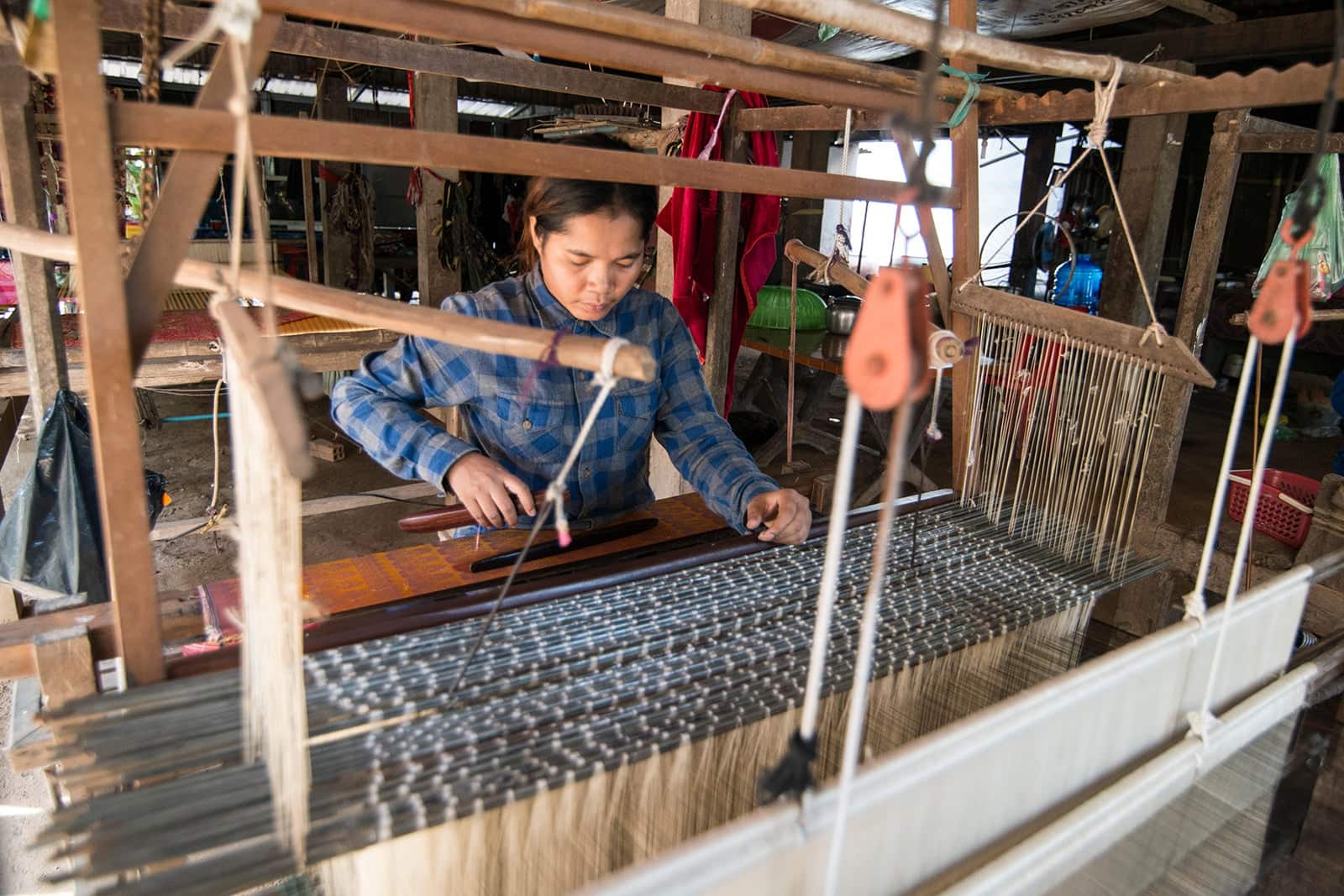
Explore the time-consuming process of silk weaving and see how artisans come to the desired pattern
Located in Kampong Chhnang Province, one of Cambodia's main pottery regions, Kampong Chhnang Pottery Village is famous for its traditional clay craftsmanship. The village name itself reflects its connection with pottery, as "Chhnang" means "pot" in Khmer.
Local artisans have produced clay pots, cooking containers, water jars, and decorative items for generations. Unlike modern factory production, many craftsmen still rely on traditional methods, carefully shaping clay by hand before firing each piece.
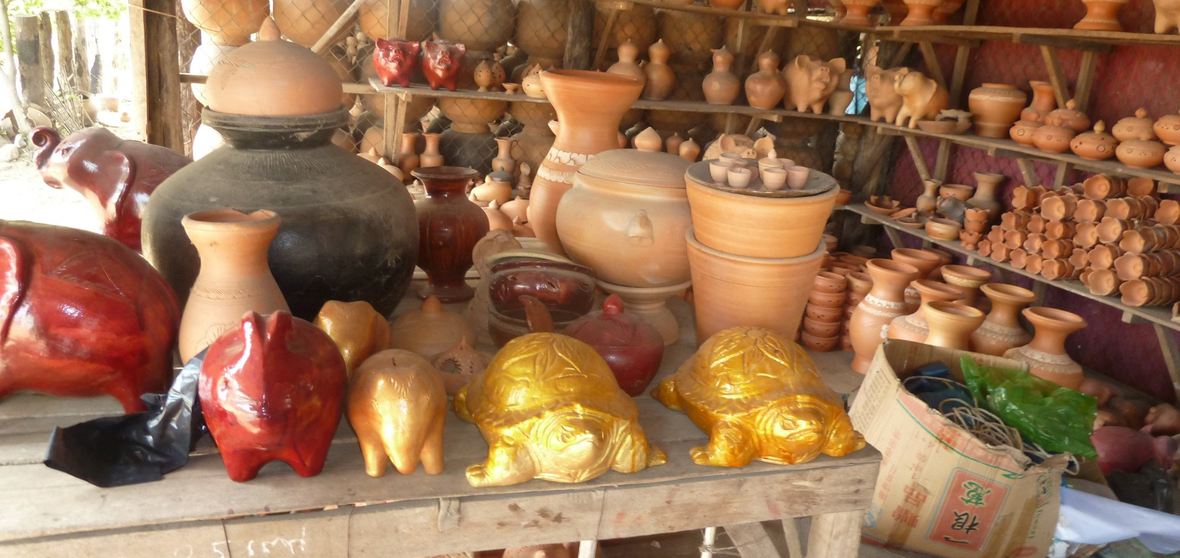
Potteries made by artisans in Kampong Chhnang village
Visitors can watch artisans transform simple clay into beautiful pottery using techniques that have remained almost unchanged for centuries. Some workshops also allow travelers to try making their own pottery, offering a fun and interactive cultural experience.
Kampong Chhnang pottery is not only a traditional craft but also an important part of daily Cambodian life. Many handmade products are still used in rural households, showing the connection between craftsmanship and local traditions.
A visit to this village gives travelers a closer look at rural life in Cambodia. It also supports local artisans who preserve this valuable heritage.
You may also like: Andong Russey Pottery Village
Situated along the Tonle Sap River near Phnom Penh, Koh Chen Village is well known for its traditional silver craftsmanship. The village has a long history of producing handmade silver products, especially decorative items used in Cambodian ceremonies and royal traditions.
Local artisans specialize in creating silver bowls, jewelry, ornaments, and religious objects with detailed patterns and careful finishing. The process requires great skill, including shaping, engraving, polishing, and decorating each piece by hand.
Visitors to Koh Chen can enter small family workshops and watch craftsmen working on their creations. Seeing the patience and precision involved in silver making helps travelers appreciate the value behind each handmade item.
Many products from Koh Chen reflect Khmer artistic styles, featuring traditional symbols and designs inspired by Cambodian culture. Buying straight from local workshops is a great way to support artisan families. It also lets you take home an authentic Cambodian souvenir.
Beyond its craft tradition, Koh Chen also offers a peaceful village atmosphere with traditional wooden houses and views of the surrounding countryside, making it a relaxing cultural stop near Phnom Penh.
.jpg)
Silver from Koh Chen Village
Located near Siem Reap and the Angkor Archaeological Park, Preah Dak Village is known for its skilled stone carving tradition. The village has strong connections with the artistic heritage of the Angkor period, when craftsmen created magnificent stone sculptures for temples and religious sites.
Artisans in Preah Dak continue to produce sandstone carvings, including Buddha statues, temple decorations, traditional sculptures, and architectural details inspired by ancient Khmer designs.
Visitors can observe craftsmen carefully shaping stone using traditional skills combined with modern tools. Each sculpture requires patience, accuracy, and deep knowledge of Khmer artistic styles.
Because of its location near Angkor Wat, Preah Dak is an excellent cultural addition to a temple tour. After exploring the ancient ruins, travelers can visit the village to understand how traditional carving techniques continue to survive today.
The village also offers a chance to meet local artisans and buy handmade stone art. This helps preserve Cambodia's cultural craftsmanship.
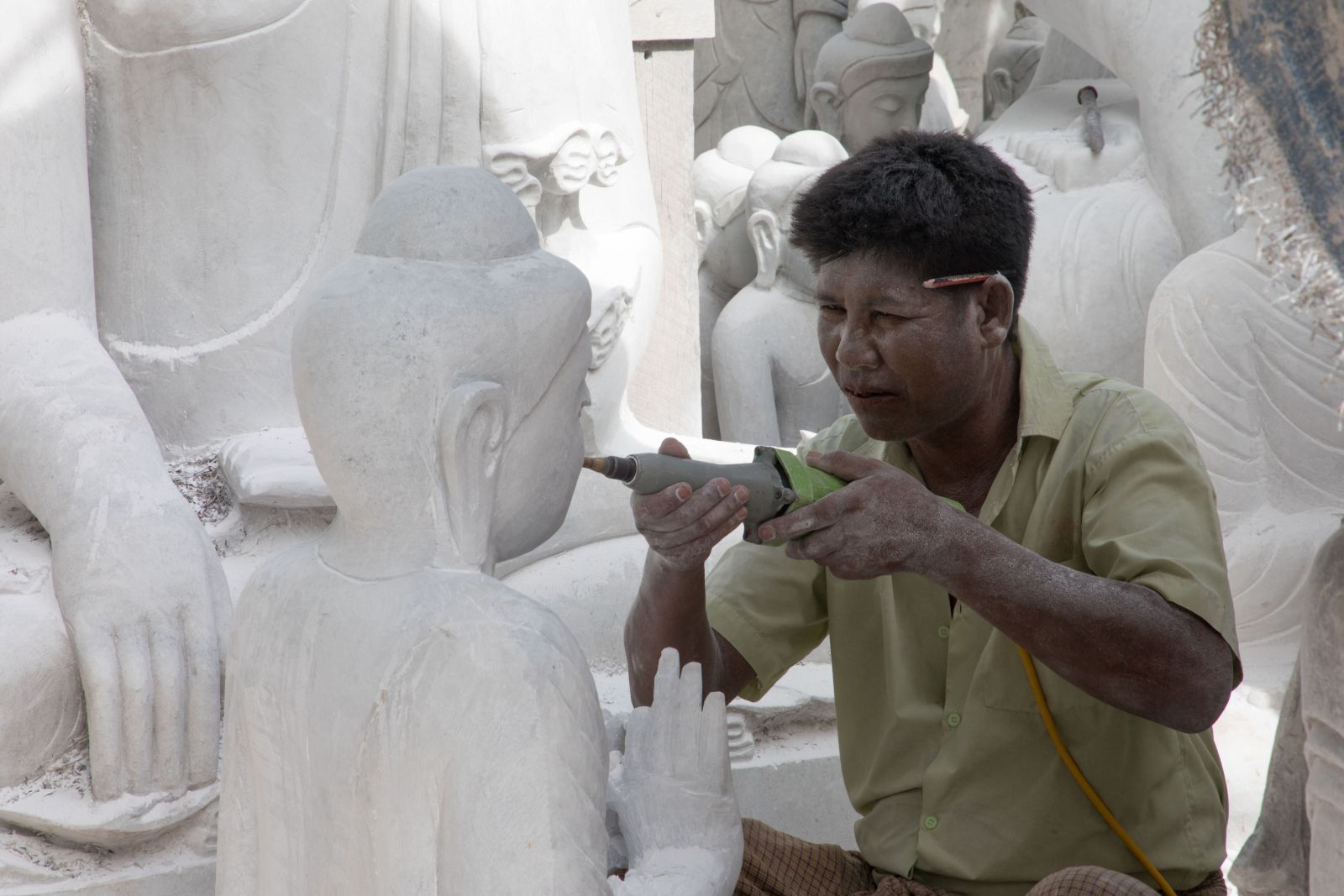
A talented sculptor is working on a marble Buddha statue, focusing on intricate details
You may also like: Cambodia Tour 15 Days: Discover Temples, Culture & Nature
Cambodia has a diverse range of traditional crafts, each reflecting different aspects of Khmer history and culture.
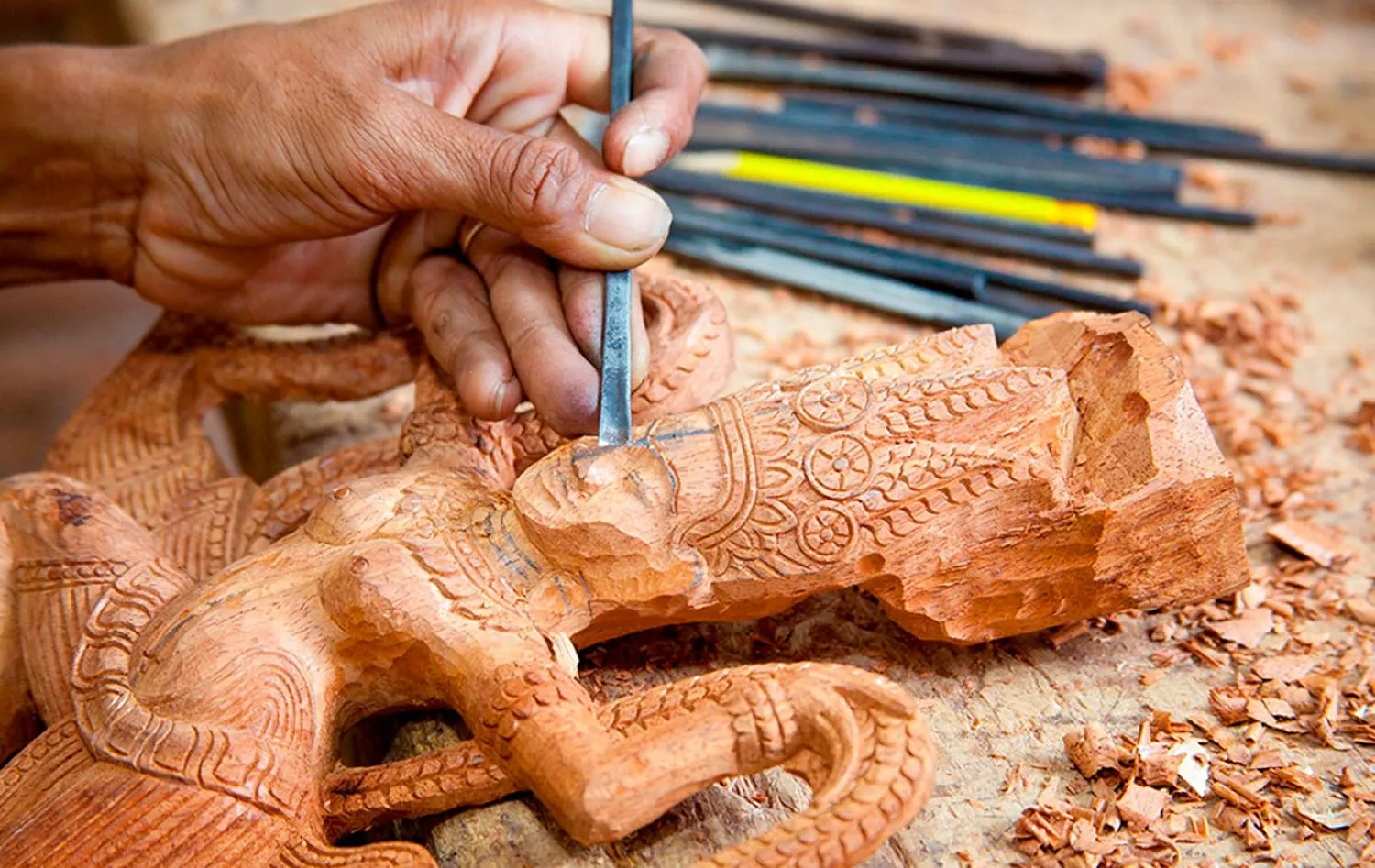
Artisans in Cambodia offers quality handmade products, enriching lives and heritage
Silk weaving is one of the country's most recognized crafts. People admire Cambodian silk products for their quality, unique patterns, and connection to traditional clothing and ceremonies.
Pottery has played an important role in Cambodian daily life for centuries. People traditionally used handmade clay products for cooking, storing water, and household activities.
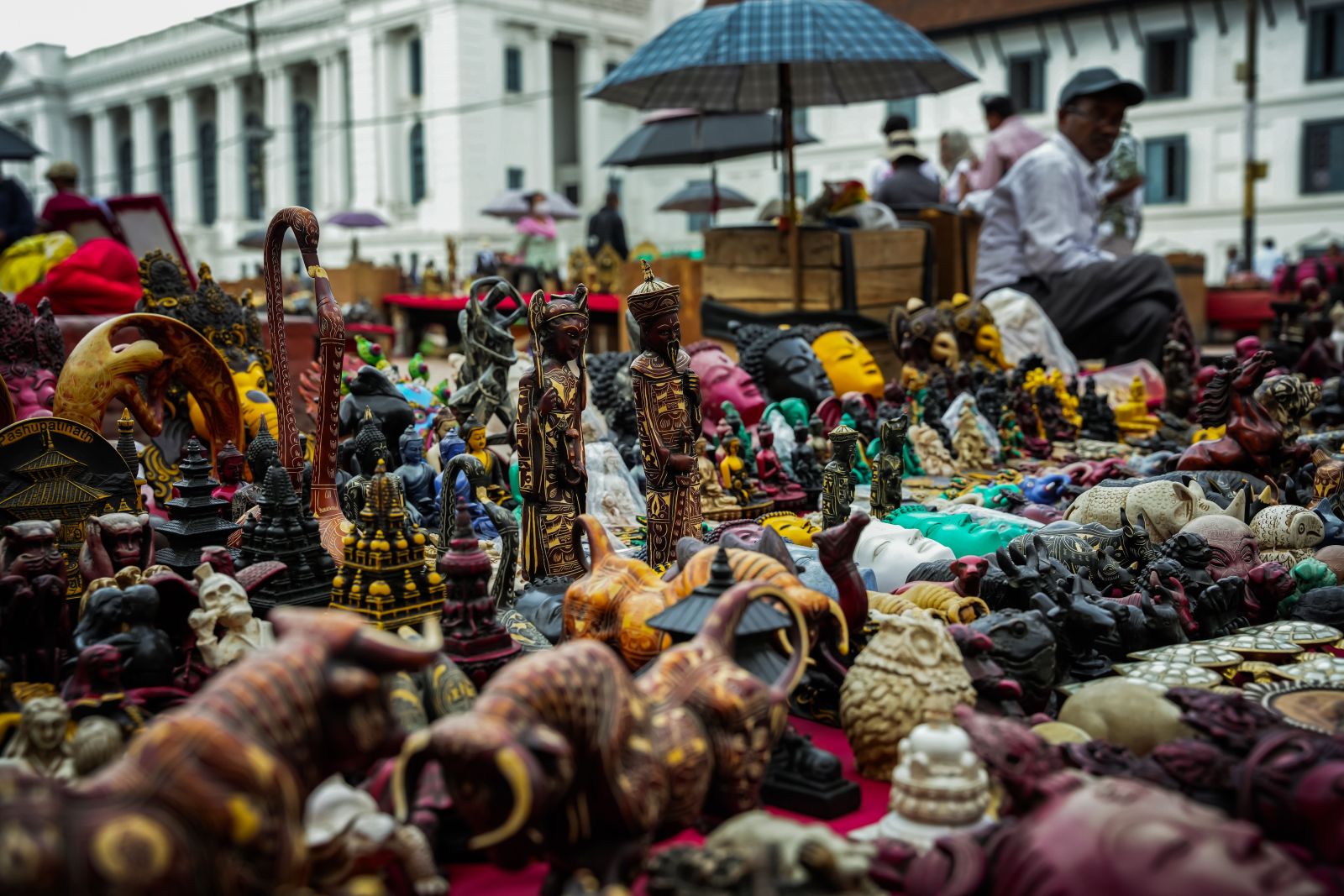
Colorful market stalls display various religious artifacts and handicrafts
Silverwork represents Cambodia's artistic skill and attention to detail. Religious ceremonies, traditional celebrations, and decorative arts connect with many silver products.
Cambodia’s ancient temples closely link to stone carving. Modern artisans continue to preserve techniques inspired by the magnificent sculptures of Angkor.
Other important crafts include wood carving, basket weaving, lacquerware, and krama weaving. Together, these traditions show the creativity and cultural identity of Cambodian communities.
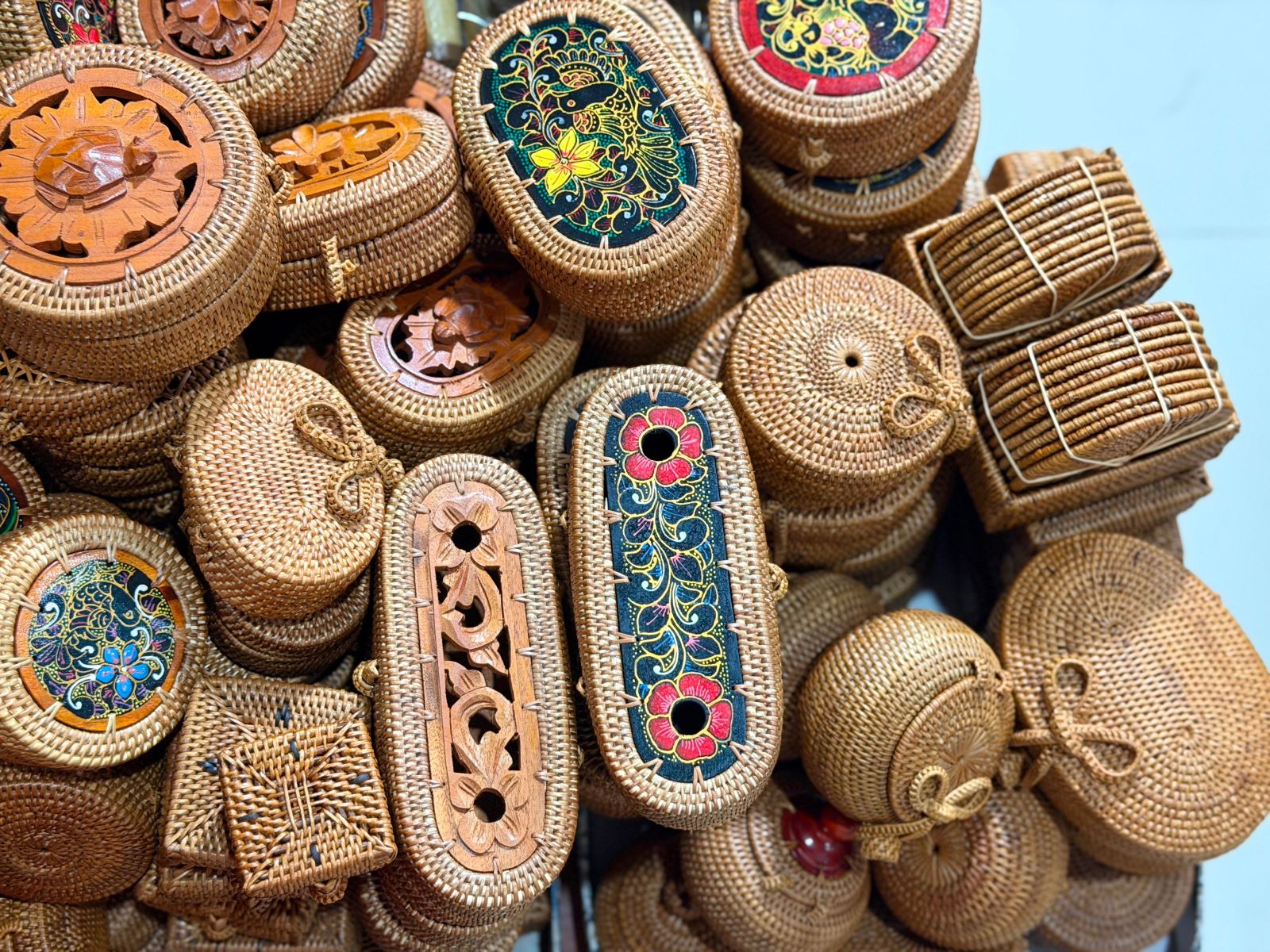
A collection of handcrafted wicker and rattan baskets featuring exquisite woven and painted designs
Exploring Cambodia's traditional craft villages is not only about buying souvenirs. It is an opportunity to connect with local people and understand the stories behind each handmade product.
Many villages allow visitors to watch artisans at work, join simple craft activities, and learn about traditional production methods. These experiences create a deeper appreciation for the time, patience, and skills required to create each item.
Travelers can enjoy rural Cambodia’s peaceful setting, with traditional homes, farmland, local markets, and village life.
Choosing handmade items from local artisans also supports sustainable tourism. It helps preserve Cambodia's traditional crafts for future generations.
You may also like: Cambodia Laos Tour 13 days: Along Mekong River
The best time to visit Cambodia's traditional craft villages is during the dry season from November to April, when the weather is cooler and more comfortable for outdoor activities.
The period from December to February is especially popular because temperatures are pleasant and suitable for exploring villages, cycling routes, and cultural attractions.
The rainy season from May to October offers greener landscapes and fewer visitors. Although short rain showers may occur, many workshops remain open, and travelers can enjoy a quieter experience.
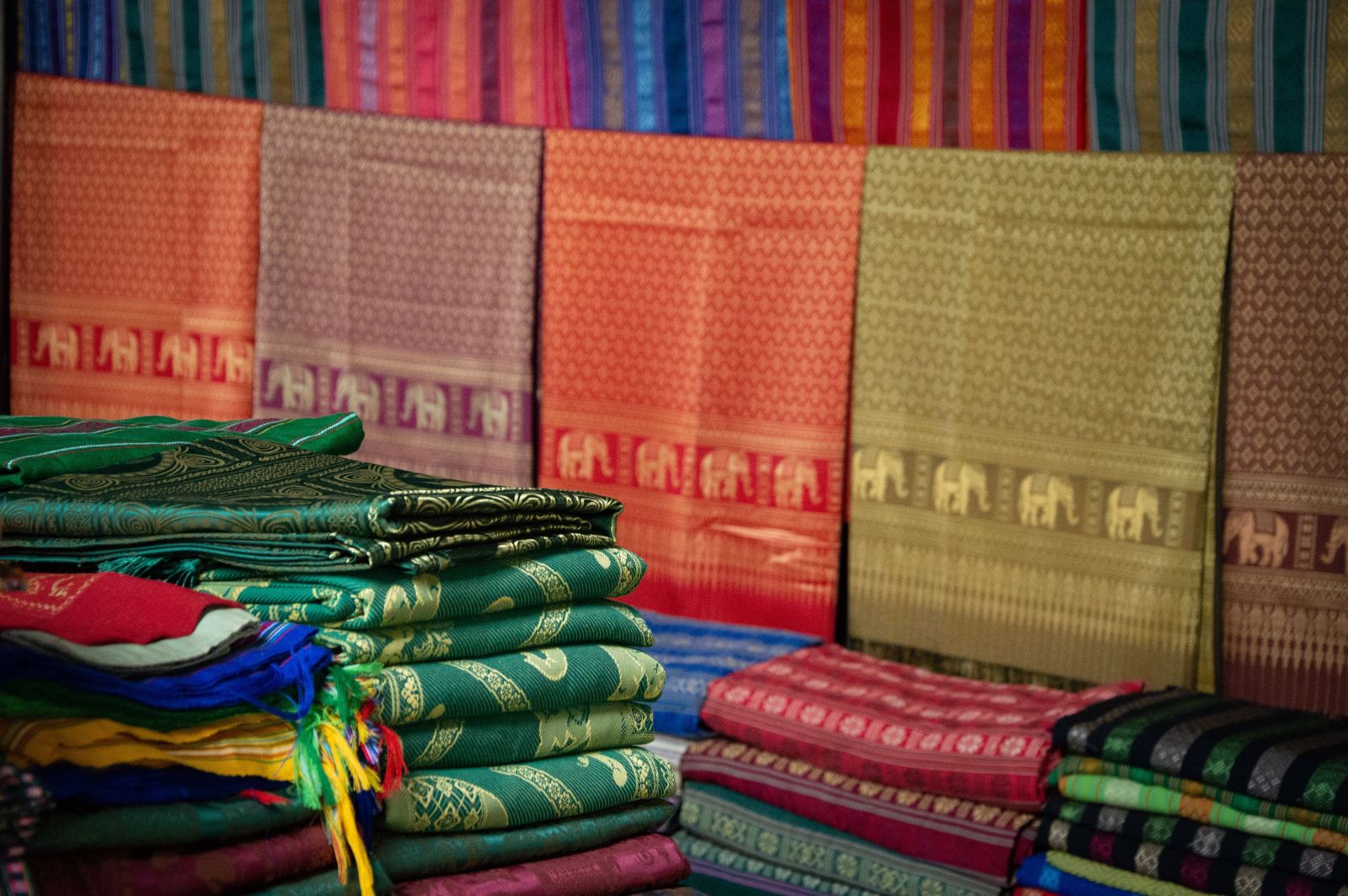
A wide array of colorful fabrics with intricate patterns is on display at a market
What are the most famous traditional craft villages in Cambodia?
Some well-known traditional craft villages are Koh Dach Silk Village and Kampong Chhnang Pottery Village. They also include Koh Chen Silver Village and Preah Dak Stone Carving Village.
What handicrafts can I buy in Cambodia?
Popular Cambodian handicrafts include silk scarves, pottery, silver jewelry, stone sculptures, wooden carvings, lacquerware, and traditional krama textiles.
Can tourists visit Cambodian craft villages?
Yes. Many craft villages welcome visitors and offer demonstrations, workshops, and opportunities to buy handmade products directly from artisans.
Where can I find traditional crafts near Phnom Penh?
Koh Dach Silk Village and Koh Chen Silver Village are two excellent options for travelers staying in Phnom Penh.
Are Cambodian handicrafts good souvenirs?
Yes. Handmade Cambodian crafts are meaningful souvenirs. They reflect local culture, traditional skills, and the stories of artisan communities.
You may also like: Cambodia Luxury Tour 9 Days: Romantic Honeymoon
Exploring Cambodia's Traditional Craft Villages provides travelers with a deeper understanding of the country's living cultural heritage. From the silk weaving traditions of Koh Dach and the pottery skills of Kampong Chhnang, each village shares Khmer creativity. From the silver craft of Koh Chen and the stone carving of Preah Dak, each place tells a unique story.
These artisan communities offer more than beautiful handmade products. They provide authentic encounters with local people and help preserve traditional crafts that have shaped Cambodian culture for generations. For travelers seeking meaningful experiences beyond the temples, visiting Cambodia's traditional craft villages is a memorable way to discover the country's artistic soul.