English
 French
 Spanish
 Italian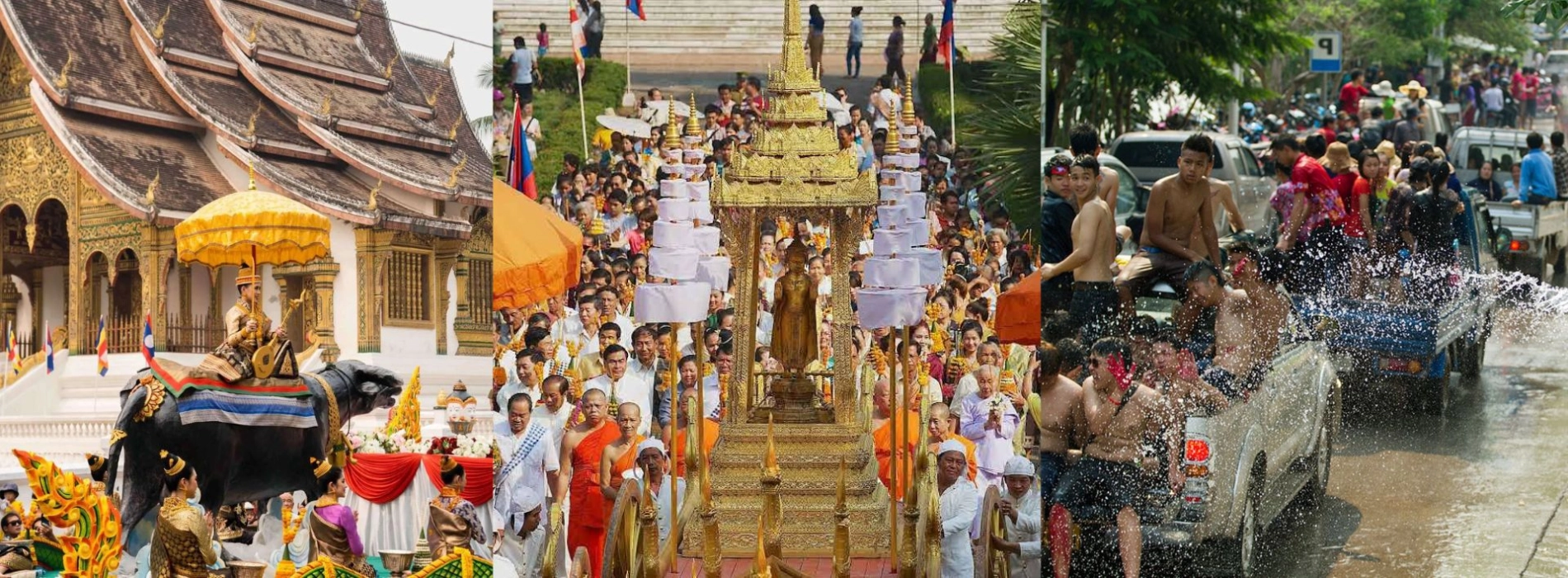
Boun Pi Mai, the Lao New Year, is one of Southeast Asia's most vibrant festivals, blending water fights, temple rituals, and Buddhist tradition. Let's find out the best places to celebrate this beautiful tradition in 2026.
Boun Pi Mai, literally "New Year Festival" in Lao, is the most important celebration in the Lao calendar, rooted in Theravada Buddhist tradition and tied to the solar new year. Marking the end of the dry season and the arrival of the rains, it is a time of purification, renewal, and gratitude that touches every corner of Lao life.
(3).jpg)
Boun Pi Mai in Laos
According to Lao historians, the ancestors of the Lao people were deeply shaped by Indian cultural influence, including the adoption of the Indian calendar system. Ancient Indian astronomers paid particular attention to the moment when daylight grows longer than night, a period they called Watthanasagn, meaning "the time of much shade."
This solar turning point, when the sun rises in the north and the monsoon rains begin, signaled the most fertile and auspicious time of the agricultural year, and it is this tradition that forms the foundation of Boun Pi Mai.
At its heart, the festival is an act of collective blessing. Water, the symbol of purity, life, and good fortune, is poured over Buddha statues, offered to elders, and joyfully splashed among friends and strangers alike. Like its regional cousins, Songkran in Thailand and Khmer New Year in Cambodia, Boun Pi Mai carries the shared spirit of renewal that unites mainland Southeast Asia each April.
In 2026, the Buddhist Era year 2569, the national public holiday runs from April 14–16, with Vientiane Capital and Luang Prabang as the two major centers of festivities.
No city celebrates Boun Pi Mai quite like Luang Prabang. This UNESCO World Heritage city and former royal capital is where ancient ritual and festive energy meet at their most spectacular. In 2026, the official program runs a full 10 days, from April 11 to 20.
(3).jpg)
Boun Pi Mai in Luang Prabang
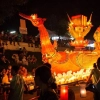
Highlights of Boun Pi Mai here include the elephant procession weaving through the temple peninsula on April 13, the pre-dawn almsgiving with around 300 monks at Wat Sen on New Year's morning, and the breathtaking Naga dragon lantern procession descending from Phousi Hill on the evening of April 16.
The holiest moment comes on April 17, when the sacred Prabang Buddha image is carried in procession to Wat Mai for its ceremonial bathing, followed by a Buddha bathing ceremony at the legendary Pak Ou Caves.
For photographers, Luang Prabang during Boun Pi Mai is simply unmatched. Every procession, ceremony, and candlelit riverbank offers a frame worth keeping.
Travel tip: Book your accommodation at least three months in advance. Riverfront guesthouses and heritage hotels fill up entirely well before April, and options at short notice are slim.
Vientiane offers a different rhythm to Boun Pi Mai. As the national capital, the city comes alive with festive energy across April 14–16, but at a noticeably more relaxed pace than Luang Prabang, making it a great entry point for first-time visitors to Laos.
(3).jpg)
Boun Pi Mai is an important celebration for the Lao people
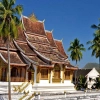
The celebrations fan out across the city's landmark temples: Wat Phra Kaew, Wat Si Muang, and That Luang all draw crowds for Buddha bathing ceremonies and offerings. Come afternoon, the Mekong riverfront transforms into the city's main water fight arena, with street concerts adding to the atmosphere well into the evening.
Practically speaking, Vientiane is also the easiest city to get to and leave from, with the most international flight connections in Laos, making it a natural base for travelers with tighter schedules.
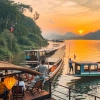
Vang Vieng brings a different energy to Boun Pi Mai. Nestled among dramatic karst limestone peaks along the Nam Song River, this backpacker-favourite town pairs the festive water fight spirit with some of Laos' best outdoor adventures, kayaking, cave tubing, and hot air ballooning, all run through the holiday period.
(3).jpg)
Vang Vieng is a nice place to enjoy Pi Mai Lao
The crowd here skews younger and more international, and the atmosphere is lively without the ceremonial weight of Luang Prabang. If you're already heading south after the main celebrations, Vang Vieng makes a natural and rewarding stopover.
For travelers who prefer their festivals without the crowds, Pakse and the surrounding Champasak province offer a genuinely local Pi Mai experience. Street water fights, temple offerings, and family gatherings unfold here much as they have for generations, unhurried and unpretentious.
(2).jpg)
Champasak is an interesting stop for Pi Mai Lao
The region also gives you a compelling reason to venture beyond the festival itself: Wat Phu, a UNESCO-listed Khmer temple complex set against a forested mountain, is one of the most atmospheric archaeological sites in Southeast Asia and well worth a day trip. If Luang Prabang is Pi Mai at its most spectacular, Pakse is Pi Mai at its most authentic.
For those willing to venture off the tourist trail, celebrating Pi Mai in rural Laos is an experience in a league of its own. Towns like Savannakhet, Oudomxay, and Xayaboury observe the festival on a smaller scale, but with a depth of tradition that busier destinations simply can't replicate.
This is the corner of Pi Mai best suited to slow travelers, cultural enthusiasts, and anyone returning to Laos for a second or third time.
You may also like: A Guide to Lao New Year 2026
If Luang Prabang is your destination of choice, it's best to come prepared. Below is the authoritative 10-day program issued by the Luang Prabang city authorities for the Buddhist Era 2569 (2026) celebrations.
The Prabang is a gold alloy Buddha image standing just under one metre tall, and is considered the most sacred object in Laos. According to tradition, it was cast in Sri Lanka and gifted to the Lao kingdom in the 14th century as a symbol of royal legitimacy and Buddhist protection. So revered is the image that the city of Luang Prabang takes its name from it. During Pi Mai, the Prabang is brought out of the Royal Palace in a formal procession for its annual ceremonial bathing, the holiest ritual of the entire festival.
(2).jpg)
Lao New Year celebrations center around the Prabang Buddha
The Lao New Year is traditionally divided into three distinct days. Sangkhan Luong, falling on April 14 in 2026, marks the last day of the outgoing year, a time for cleaning homes, making temple offerings, and preparing for the transition. Sangkhan Nau on April 15 is a liminal day belonging to neither the old year nor the new, observed with processions and community ceremonies. April 16 is the official first day of the new year, when blessings are exchanged, and the celebration reaches its peak.
In Lao mythology, Nang Sangkhan is the celestial goddess who ushers in the new year, descending from the heavens on the back of a sacred animal. Each year, a young woman is chosen to embody Nang Sangkhan during the festival. She leads the ceremonial processions through Luang Prabang's streets and participates in the official Buddha bathing rituals alongside state leaders. The Miss Nang Sangkhan pageant, held on April 11 and 12 in 2026, is how she will be selected.
Yes. Laos is generally a safe destination for travelers, and Pi Mai is a joyful, welcoming celebration. The main things to be mindful of are practical rather than safety-related: ATMs in Luang Prabang can run dry during peak festival days, so carry enough cash beforehand. On the roads, water throwing can distract both pedestrians and drivers, so exercise extra caution if riding a motorbike. And in temples and during formal ceremonies, dress modestly and keep water splashing to the streets where it belongs.
Boun Pi Mai 2026 offers something for every kind of traveler. The heritage shows, water splashing, and spiritual ceremonies are all once-in-a-lifetime experiences. If you're considering going, start planning now. The festival waits for no one, but it rewards everyone who shows up.
Don't miss out on this spectacular festival! Come join a Laos tour to learn more about this beautiful country.