English
 French
 Spanish
 Italian
Quang Trung Museum
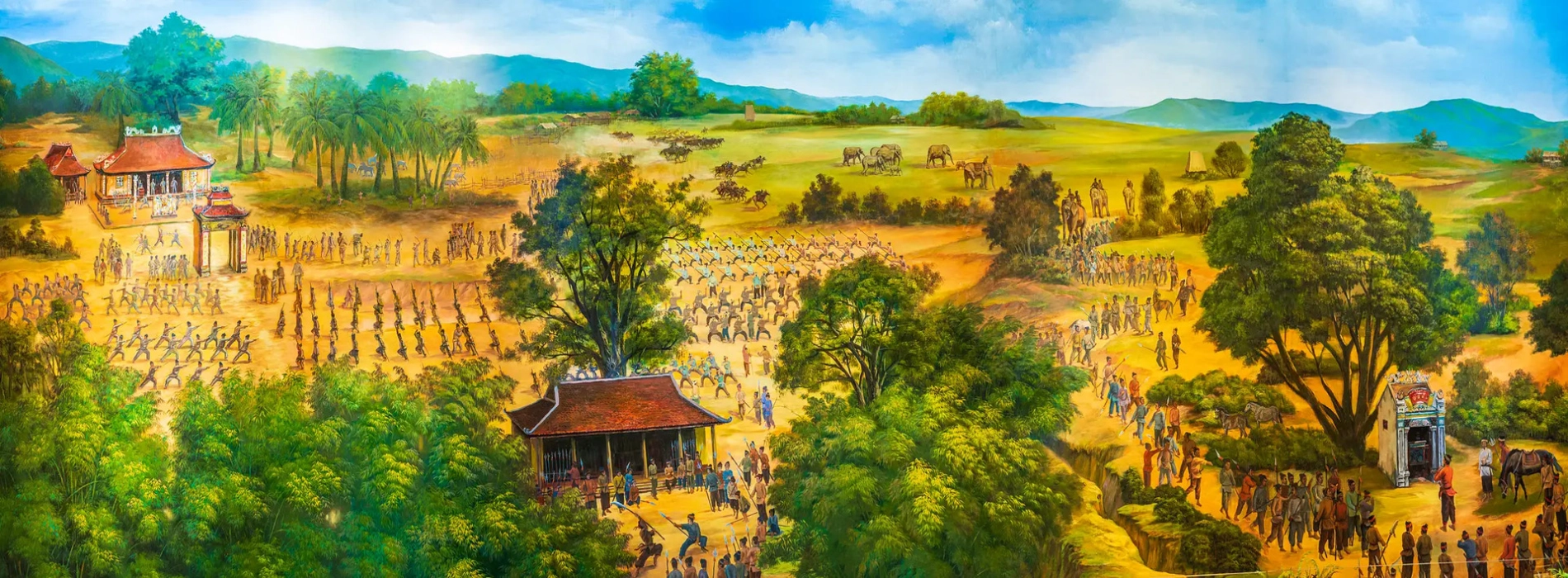
When you ask the people of Binh Dinh what they are most proud of, they will surely tell you about the three Tay Son heroes: Nguyen Nhac, Nguyen Hue, and Nguyen Lu. These three brothers are forever remembered in history for their immortal feats. Among them, Nguyen Hue stands out with the most glorious victories and is eternally revered by the Vietnamese people.
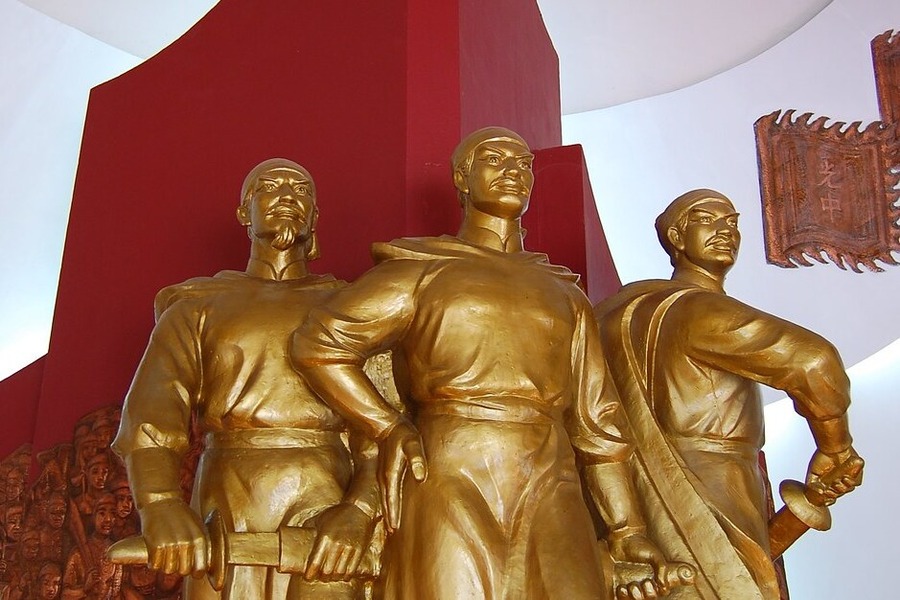
The statues of Nguyen Nhac, Nguyen Hue, and Nguyen Lu on display in the museum. Photo: Flickr / Mr Sun
Quang Trung Museum is named after the imperial title of Nguyen Hue. Today, the museum showcases valuable historical documents and artifacts from the Tay Son dynasty, making it one of Binh Dinh Province’s most famous attractions. Join Asia King Travel as we take you on a visit to this remarkable site in the article below!
Nguyen Hue (1753–1792) was the second of the three Tay Son brothers. Throughout 20 years of warfare, he never lost a single battle. By the end of the Nguyen lords’ reign, court officials had become corrupt, plunging society into chaos. The three brothers rose up in rebellion.
The Tay Son forces were not only known for their string of victories but also their commitment to equality, fairness, refusing to exploit the people, and redistributing wealth from the rich to the poor. By 1777, the rebel forces had taken full control of Central and Southern Vietnam. The eldest brother Nguyen Nhac ascended the throne, marking the beginning of the Tay Son dynasty.
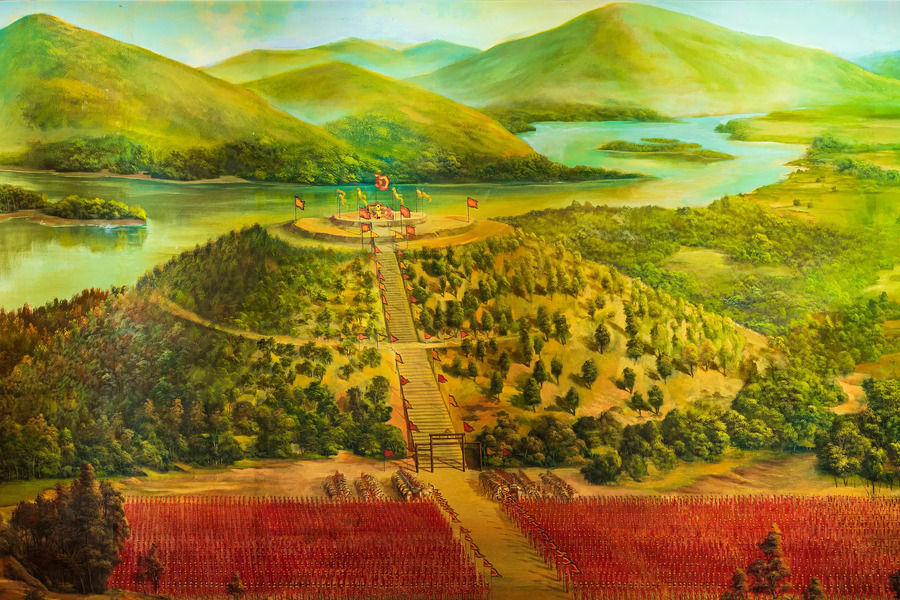
A painting of Nguyen Hue ascending the throne before marching to fight the Qing army. Photo: Saigoneer
The son of the last Nguyen lord, Nguyen Anh (who would later become Emperor Gia Long), sought help from the Siamese army to retake the southern region. Nguyen Hue led his troops and crushed this invading force in just one day at the Battle of Rach Gam – Xoai Mut in 1785!
But he didn’t stop there. Nguyen Hue continued his march north, overthrowing the Trinh lords and reuniting Vietnam after over 200 years of civil war. Just when peace seemed within reach, King Le Chieu Thong called on the Qing dynasty for help to strengthen his grip on power. The Qing seized this as an opportunity to invade Vietnam. And so, once again, the fate of the nation was placed in the hands of Nguyen Hue.
In 1788, he ascended the throne, taking the imperial title Emperor Quang Trung, and immediately set out on campaign. As he marched, he recruited troops and advanced with lightning speed. At the start of 1789, he promised that they would celebrate victory by the 7th day of the Lunar New Year. But he missed that date, because his army had already wiped out 200,000 Qing forces by the 5th (in just 6 days)!
Quang Trung Museum is built on the old foundation of the Tay Son brothers’ home, located in Phu Phong Town, Binh Dinh Province, about 45 km from Quy Nhon City. The museum was constructed in 1978, covering an area of 15 hectares. Right next to the museum stands Tay Son Three Heroes Temple. This entire site has been recognized as a Special National Site.
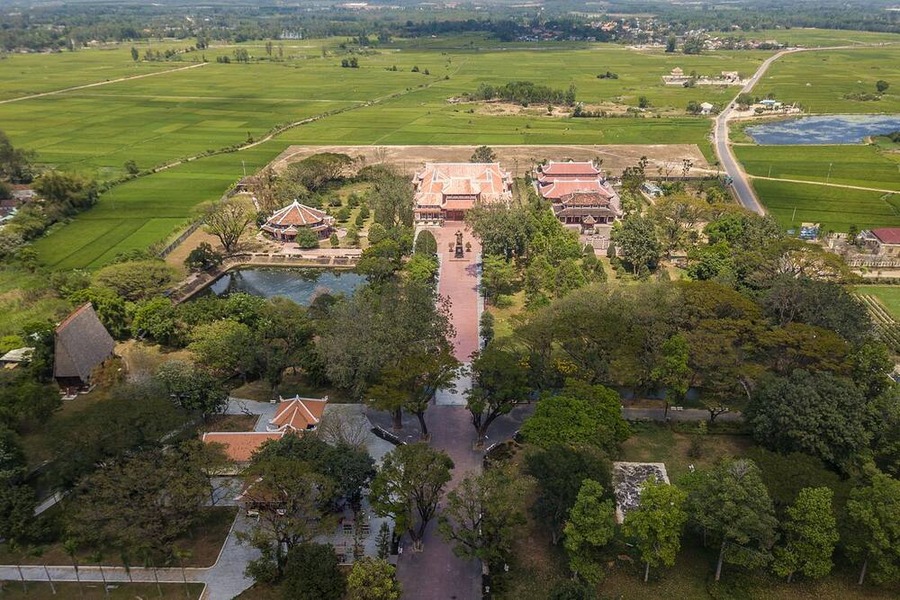
Quang Trung Museum is located in the countryside of Binh Dinh Province. Photo: XanhSM
Catch a domestic flight to Phu Cat Airport. From there, it’s only about 20 km to the museum. Just follow National Highway 19B westward, and you’ll arrive at the site. You can also travel by road via the national highway, but keep in mind that Binh Dinh is quite a distance from Vietnam’s major cities.
Suggested for you: Quy Nhon Tour 2 Days: Explore Central Coast City
Every year on the 5th day of the Lunar New Year, the museum hosts Dong Da Festival to commemorate Quang Trung’s most glorious victory over the Qing army. Activities such as battle reenactments, traditional martial arts performances, boat races, and more draw large crowds of visitors. You’ll feel the thrilling, heroic atmosphere, as if you were standing in a real battle.
The current entrance fee for the Quang Trung Museum is VND 50,000/person. Children under 15 years old receive a 50% discount. War veterans, people with disabilities, and children under 6 years old are granted free admission. The museum is open daily from 7:00 AM to 5:00 PM.
Quang Trung Museum features an architectural style that blends modern and ancient elements, designed to resemble an 18th-century Vietnamese communal house. The exhibition hall has nine sections, showcasing over 11,000 artifacts and documents, arranged according to the key stages from the Tay Son Rebellion to the reign of Emperor Quang Trung.
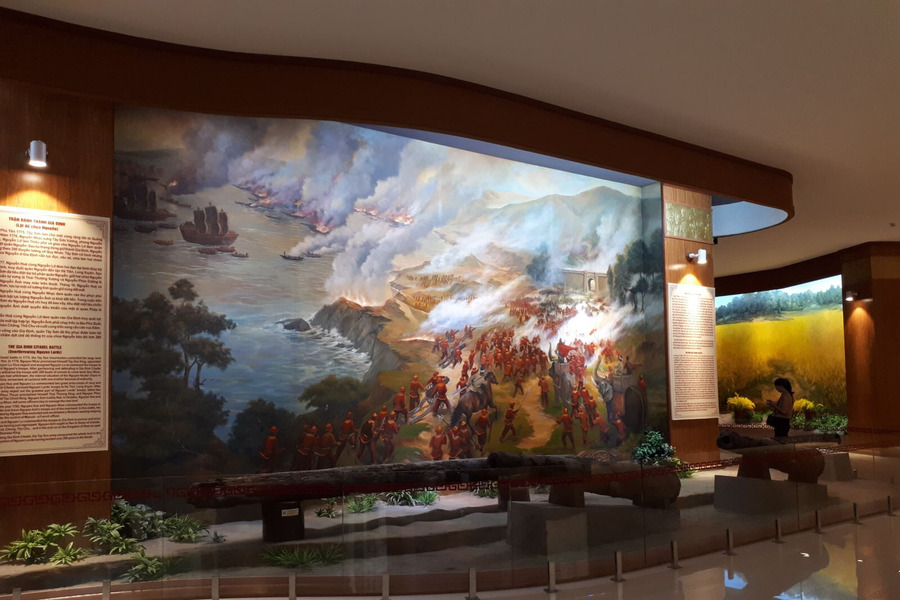
The murals and artifacts are displayed in chronological order. Photo: Quang Ninh Newspaper
The temple dedicated to the Tay Son Three Heroes and their loyal generals is part of the museum complex. Visitors can explore and admire the ceremonial robes of civil and military officials that have been preserved for hundreds of years. Additionally, you can see 18 types of weapons once used by the rebel forces. Along the temple walls, the names, ages, and hometowns of the dynasty’s brave generals and officials are also engraved.
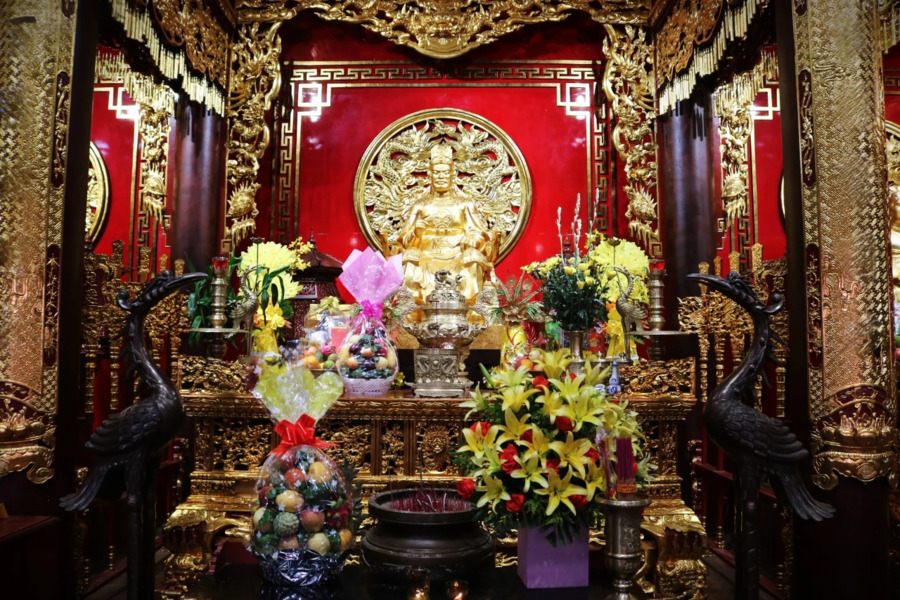
The altar hall of Emperor Quang Trung. Photo: VTC News
The old family garden of Emperor Quang Trung still preserves two precious relics. The well was built with blocks of laterite stone; it was originally the family’s private well but was later restored and turned into the village well.
To the right of the Tay Son Three Heroes Temple stands the ancient tamarind tree, with its massive roots and wide canopy casting shade over an entire corner of the garden. You can sit beneath the tamarind tree, relax in the cool shade, and soak in the peaceful, timeless atmosphere of the Vietnamese countryside.

The ancient tamarind tree provides cool shade for visitors to rest under. Photo: MIA
Martial arts music is a unique art form from the “Land of the Martial Arts” Binh Dinh. During the Tay Son Rebellion, these performances were used to boost the fighting spirit of the entire army. Each martial arts music performance features 12 drums, arranged in a set from largest to smallest. The drummers coordinate with one another to create a powerful, triumphant, and pounding rhythm that fills listeners with a sense of pride and excitement.
After the drum performance, audiences are treated to captivating and graceful martial arts demonstrations, showcasing the true spirit and finesse of Binh Dinh’s martial traditions. The ticket price for watching the performance is paid separately and is not included in the museum’s admission fee.
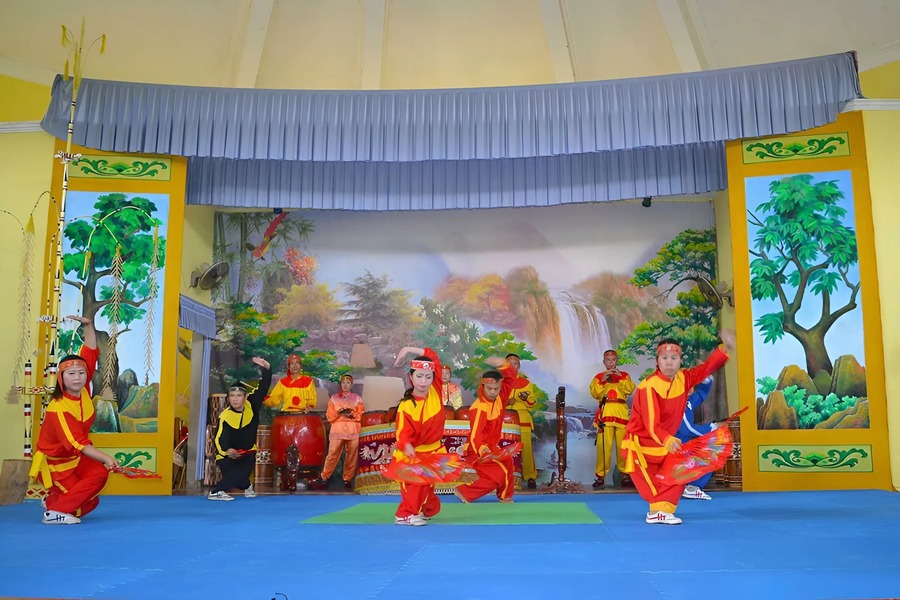
You’ll be captivated by the graceful dance and martial arts movements, synchronized with the sound of the battle drums. Photo: Collective
Quang Trung Museum is a place where you can learn about one of Vietnam’s greatest generals and emperors, while also experiencing the rich local culture of Binh Dinh Province. Get in touch with Asia King Travel today to start planning your own unforgettable trip to Vietnam!
Suggested for you: Quy Nhon Tour 3 Days: South Central Attraction