English
 French
 Spanish
 Italian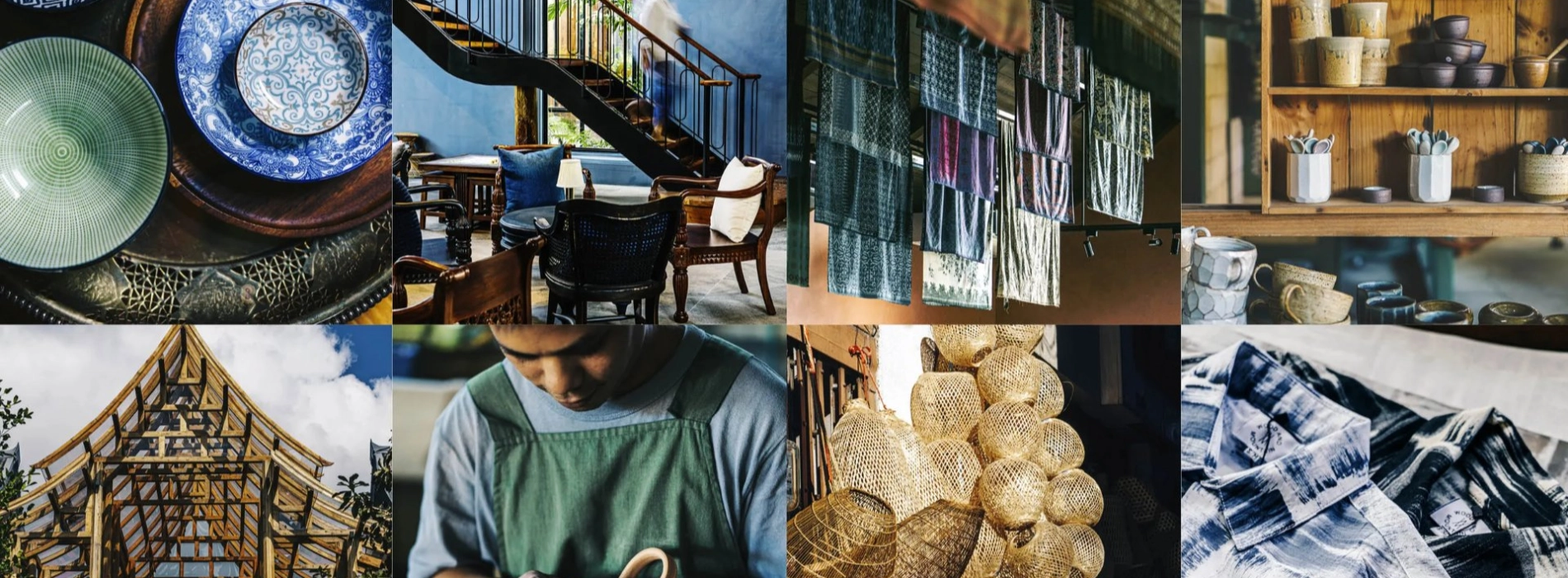
Beyond Thailand’s famous beaches and night markets lies a quieter cultural experience. These traditional craft villages in Thailand invite travelers to step inside working communities, watch generations-old techniques in action, and discover the stories behind monk’s bowls, painted umbrellas, royal ceramics, and indigo textiles.
Most souvenirs sold in Thailand's night markets are mass-produced, and there's nothing wrong with that for a quick gift. But traditional craft villages in Thailand offer something different: a chance to watch an object take shape under someone's hands, in a workshop that's often been in the same family for generations. The conversation that happens while you watch - even through gestures and a few shared words - tends to stay with travelers longer than the object itself.
These villages also tend to be small and quiet by design. Most are still residential communities first, with workshops built into family homes rather than staged for tour buses. That's part of the appeal, but it also means visiting respectfully, without expecting a polished retail experience at every stop.
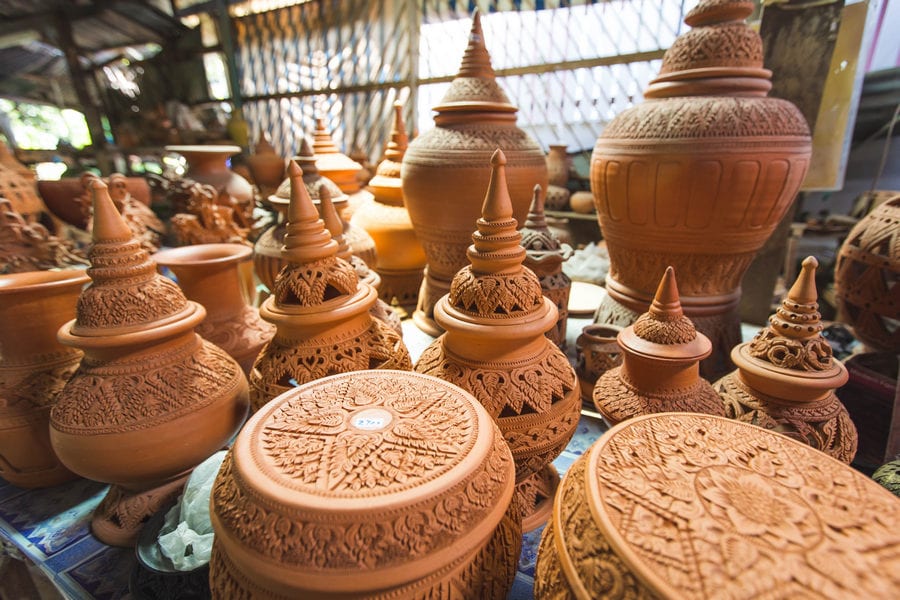
Pottery in Thailand
Tucked behind Wat Saket in central Bangkok, Ban Baat is the last neighborhood in the city still hand-forging monk's alms bowls, known locally as "baat." Traditionally, each bowl is built from eight separate strips of metal welded together, a number said to represent the eight paths of Buddhist teaching, then hammered into a smooth, rounded shape over an open charcoal fire.
The craft has shrunk dramatically as cheaper factory-made bowls flooded the market decades ago, and today only a handful of households still practice it. Visitors who walk through the narrow lanes can usually hear the hammering before they see it, and most artisans are used to curious onlookers stopping to watch the shaping and polishing process up close.
.jpg)
Monk's Bowls in Ban Baat village
About nine kilometers east of Chiang Mai sits Bo Sang, a village built around bamboo-framed umbrellas covered in mulberry "saa" paper or silk and finished with intricate hand-painted florals. The frames are split, steamed, and assembled before painters add layers of color freehand, often in a single continuous session per umbrella.
Several workshops along the main road welcome visitors to watch the painting stage specifically, since that's the most visually striking part of the process. If timing allows, the village holds its annual Umbrella Festival every January, when the streets fill with finished umbrellas displayed in long, colorful rows.
.jpg)
Colorful Paper Umbrellas Made and Painted By Hand
In Samut Sakhon province, not far south of Bangkok, the village of Don Kai Dee specializes in Benjarong porcelain - a five-color ceramic ware originally reserved for Thailand's royal court. Each piece starts as plain white porcelain before artisans hand-paint elaborate floral and geometric patterns, often finished with a thin line of real gold.
.jpg)
A show room of ceramics in Don Kai Dee
Because every layer of color has to be fired separately, a single piece can take days to complete from blank to finished product. Workshops here typically let visitors watch the painting stage, where the level of detail under a steady hand becomes obvious within a few minutes of observing.
You may also like: Thailand Tour 11 days: Nice Off-the-beaten-track Experience
Don Koi, in the northeastern province of Sakon Nakhon, is known for "Mor Hom," a deep indigo-dyed cotton fabric tied closely to Isan regional identity. The dye itself comes from fermented indigo leaves, a process that takes days of careful monitoring before cotton thread is repeatedly dipped and dried to build up its signature deep blue color.
.jpg)
Weavers of Don Koi
Many households here still weave on traditional wooden looms set up under their homes, and the dyeing vats themselves are usually visible in open-air courtyards. It's one of the few traditional craft villages in Thailand where the entire process, from raw plant to finished cloth, happens within a short walking distance.
You may also like: Top 10 Famous Thai Drinks to Try
Located near Bo Sang, San Kamphaeng expands the experience beyond one craft. The district is known for silk weaving, wood carving, ceramics, silverwork, and handmade decor.
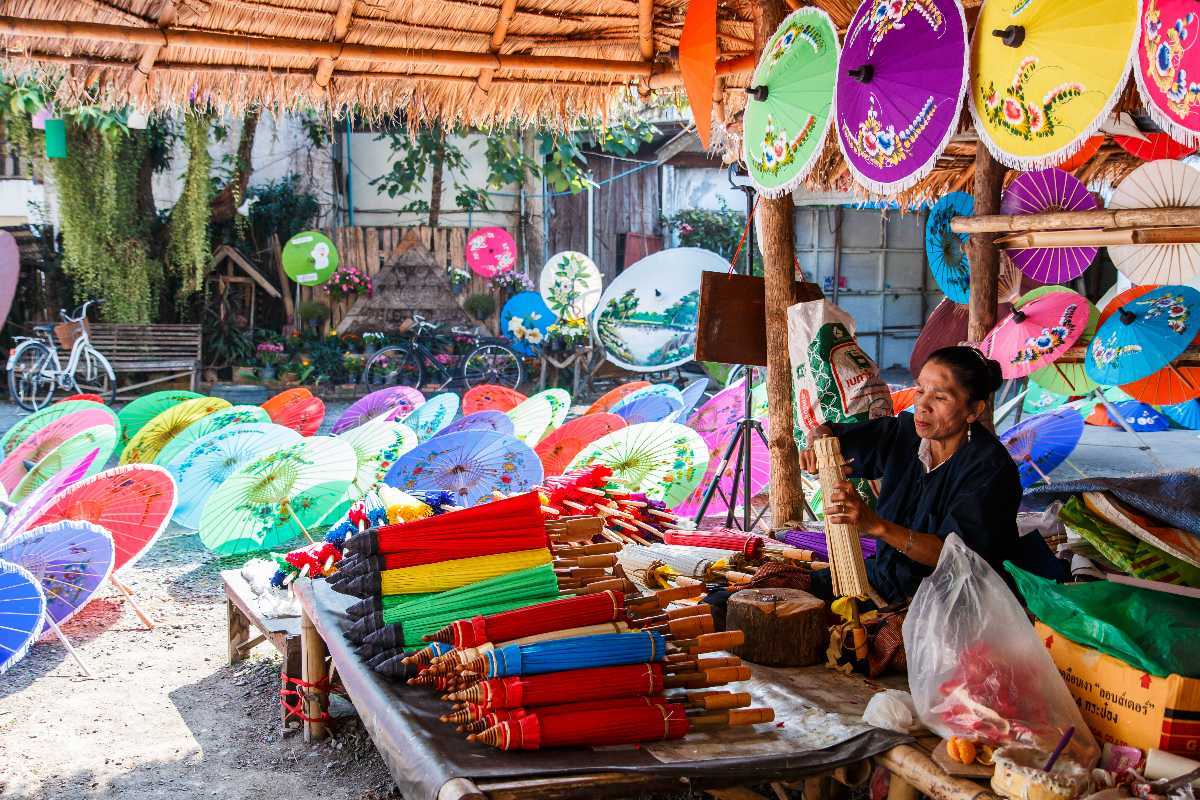
A stall of an artisan with colorful and varied-shape umbrellas in San Kamphaeng
Instead of focusing on shopping, take time to watch artisans work and explore how different traditions continue to evolve.
You may also like: Thailand SIM Card: A Practical Guide for Tourists 2026
These four villages sit in different regions, so visiting all of them realistically means spreading the trip across a broader itinerary rather than a single day out. Ban Baat is reachable on foot or by short taxi ride from most central Bangkok hotels, while Bo Sang is a quick songthaew or taxi ride from downtown Chiang Mai. Don Kai Dee works well as a half-day trip from Bangkok, and Don Koi is best combined with a longer stay in Sakon Nakhon or a wider northeastern Thailand route, since it sits further from the usual tourist circuit.
Mornings consistently work best across all four villages. Artisans tend to start their most involved work early, before the midday heat sets in, so a nine or ten o'clock arrival usually means catching the most active part of the process rather than a quiet workshop on a break. Morning light also makes a noticeable difference for photography, especially in open-air courtyards where shadows shift quickly by early afternoon.
You may also like: Thailand Tour 25 days: A Grand Discovery of Thailand
What are the most famous traditional craft villages in Thailand?
Ban Baat in Bangkok, Bo Sang near Chiang Mai, Don Kai Dee in Samut Sakhon, and Don Koi in Sakon Nakhon are among the most recognized, each preserving a distinct handmade craft that has largely disappeared from mass production elsewhere in the country.
Can visitors buy items directly from the artisans?
Yes, most workshops in these villages sell directly to visitors, often at lower prices than city shops since there's no retail markup. Buying directly also supports the household producing the work, rather than a separate reseller further down the supply chain.
How long does a visit to one craft village usually take?
Plan for one to two hours at most villages, depending on how many workshops you stop at. Don Koi and Bo Sang in particular reward a slower pace, since watching dyeing or painting in progress takes longer than a quick walk-through.
Are these traditional craft villages still active, or mostly for tourism?
They remain genuinely active communities first, not staged attractions. Tourism brings extra income, but the bowls, umbrellas, porcelain, and indigo cloth made here are still sold through ordinary commercial channels, with households relying on these crafts for daily livelihood long before visitors started showing up to watch.
Thailand's traditional craft villages reward travelers who slow down enough to watch a process rather than just buy a finished object. Each one tells a different regional story, from Bangkok's last monk's bowl makers to the indigo vats of Sakon Nakhon, and together they offer a side of the country far removed from beach resorts and shopping malls.
If you'd like one or more of these villages woven into a custom Thailand itinerary, our team is happy to help map out a route that fits your time and interests. Just let us know what you have in mind.