English
 French
 Spanish
 Italian
Khong Chiam
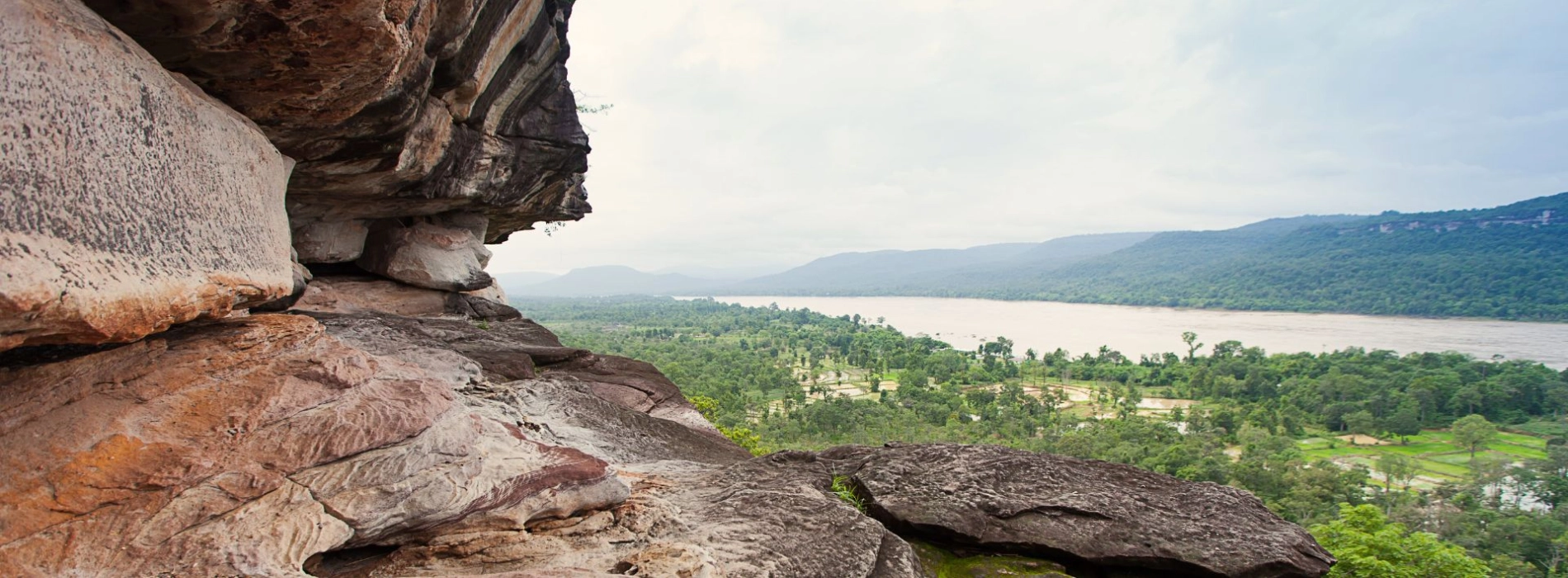
Khong Chiam is a small riverside district in Ubon Ratchathani, located where the Mun River flows into the Mekong along Thailand’s border with Laos. The district is best known for the meeting of the two rivers, while nearby Pha Taem National Park adds sandstone cliffs, forest and prehistoric rock paintings to the landscape. With its riverfront setting and low-key atmosphere, Khong Chiam makes a convenient base for exploring eastern Ubon Ratchathani.
Khong Chiam developed around the rivers that continue to shape life in the district today. The area lies on the eastern edge of Ubon Ratchathani, with the Mekong forming the border with Laos and the Mun River flowing into it nearby. The district was established as a minor district in 1957, became a full district in 1959 and took the name Khong Chiam in 1971.
.jpg)
A peaceful riverside village in Khong Chiam along the Mekong River
The location also explains why rivers are such a visible part of the local landscape. Wat Khong Chiam, close to the river confluence, was founded in 1849 and has changed names as the surrounding settlement developed. Today, the temple and riverside viewpoints remain closely connected with the identity of the town.
November to February is the most comfortable period for exploring Khong Chiam, especially if you plan to spend time at Pha Taem National Park and the riverside viewpoints. The cooler mornings are also a good time to visit the Two Color River before continuing to nearby temples or other outdoor attractions.
.jpg)
Scenic waterfall surrounded by lush greenery in Khong Chiam
March to May can be hot, particularly on the exposed trails and sandstone cliffs around Pha Taem. Start outdoor visits in the morning and keep the middle of the day for lunch, a temple visit or time around the river. The changing water levels can also alter the appearance of the Mun and Mekong, including the contrast seen at the Two Color River.
From June to October, the surrounding forests become greener and the rivers can run with stronger currents. Rain may make some trails slippery or affect visibility from the viewpoints, so check the weather before visiting Pha Taem or other outdoor areas.
For a first visit, November to February offers the easiest conditions for combining Khong Chiam’s riverside sights with Pha Taem and other attractions. If you do travel during the warmer or rainy months, planning outdoor activities around the weather will make the day easier.
Explore more: Issan Tour 9 Days: Trip To Thailand's Northeastern Area
The easiest way to reach Khong Chiam is by private car, rental car or hired transfer from Ubon Ratchathani. The journey is around 84 km, with routes commonly passing through Phibun Mangsahan or Sirindhorn. Most visitors use a car or private transfer, especially when combining the town with Pha Taem and Kaeng Tana.
If you are flying into Ubon Ratchathani, allow roughly 1.5 hours by road to reach Khong Chiam, depending on traffic and your final accommodation.
For travellers coming from Bangkok, the most practical option is usually to travel first to Ubon Ratchathani by air, train or long-distance bus, then continue to Khong Chiam by road.
This also makes Khong Chiam easier to combine with other Ubon Ratchathani attractions rather than treating it as a separate destination.
A car or private transfer is the most convenient option if you want to visit several attractions in one day. Local boats can also be arranged around the Khong Chiam pier, depending on the route and operator. The town itself is small, but Pha Taem and Kaeng Tana require additional road travel.
You may like: How to Plan a Thailand Family Tour Package: A Complete Guide
The Two Color River, or Maenam Song Si, is the sight most closely associated with Khong Chiam. It is located where the Mun River joins the Mekong, creating a meeting point where the two waterways can appear in different shades depending on sediment, water level, sunlight and current.
From the viewpoint around Wat Khong Chiam, you can see the Mun flowing into the Mekong, with the Lao bank visible across the river. Go early in the day if you want softer light and fewer visitors around the viewpoint.
Pha Taem is one of the main reasons to include Khong Chiam in a Ubon Ratchathani itinerary. The park has sandstone cliffs, plateaus, forest and viewpoints overlooking the Mekong. Its best-known feature is a series of prehistoric rock paintings estimated at around 3,000-4,000 years old.
.jpg)
Sunrise view over the Mekong River from the sandstone cliffs of Pha Taem National Park
Within the park, Sao Chaliang is known for its large mushroom-shaped sandstone formations, created by layers of rock, pebbles and fossilised shells. It creates the landscape a geological story as well as a visual one.
Kaeng Tana follows the Mun River through forest and rocky river sections, making it a quieter stop after the more exposed cliffs of Pha Taem. It is often paired with Pak Mun Dam and other eastern Ubon Ratchathani attractions on regional itineraries.
Allow extra time if you want to walk rather than simply stop for photographs. The changing river landscape is part of the attraction, particularly when you are moving between the different viewpoints and natural areas.
Wat Tham Khuha Sawan sits on a hillside overlooking the Mekong area. The temple was established in 1978 by meditation master Luang Pu Kham Khaning Chulamani, and the site includes a cave, Buddhist images and a viewpoint looking towards the river and Laos.
.jpg)
The distinctive white ordination hall of Wat Tham Khuha Sawan overlooking the Mekong
The temple grounds are relatively quiet, with a cave, Buddhist images and views towards the Mekong and Laos. Walk through the temple grounds, take in the view from the cliff edge and leave time to appreciate the quieter atmosphere before continuing to the river or national parks.
Kuay Chab Yuan is a Vietnamese-influenced noodle soup associated with Ubon Ratchathani. It is made with rice noodles, pork and moo yor in a savoury broth, and is commonly enjoyed for breakfast. “It works particularly well as an evening snack when exploring the town after sunset.”
Freshwater fish is one of the natural choices to try in Khong Chiam, where the Mun River meets the Mekong. Local restaurants often prepare whole river fish by grilling or deep-frying it, then serve it with spicy dipping sauces, fresh vegetables or mango salad. Pla buek, the giant Mekong catfish, can also be found at the local morning market. For a riverside meal, sharing a whole grilled fish with steamed rice is a simple way to experience the local flavours.
.jpg)
Freshly grilled river fish served with local dipping sauces and herbs
Som tam is a familiar dish across Thailand, while the Isan version is often made with pla daek, a fermented fish sauce that gives the salad a deeper, savoury flavour. In Khong Chiam, try it with sticky rice, grilled meat or fresh vegetables. If you are new to pla daek, ask for a milder version first, as its flavour can be quite strong.
Sai Krok Isan is a fermented pork sausage commonly found across northeastern Thailand. It is usually grilled until lightly browned and served with chilli, fresh ginger and vegetables to balance its slightly sour flavour. In Khong Chiam, you can find it at local food stalls alongside grilled meats and other casual dishes, often eaten as a quick snack or shared with a meal.
.jpg)
Grilled Sai Krok Isan (Isan-style fermented pork sausage) served with fresh chillies and cabbage
Learn more: Isaan Food Guide: What to Eat in Northeast Thailand
One full day covers the main riverside sights and one or two nearby attractions. An overnight stay gives you more time for Pha Taem and avoids making the return journey to Ubon Ratchathani on the same day.
Yes. Khong Chiam can be visited independently by car, and the main riverside attractions are straightforward to reach. A private vehicle is more useful if you want to combine the town with Pha Taem, Kaeng Tana and more remote viewpoints.
Khong Chiam can work well for families who enjoy nature, rivers and short sightseeing stops. The Two Color River is easy to access, while national park trails require more care. Keep children close to the riverbank and check walking conditions before choosing longer trails.
The riverside area can become busier around popular viewpoints and holidays, but the district generally feels quieter than Thailand's major tourist destinations. Starting early also gives you a more relaxed visit, particularly at the river and outdoor attractions.
Khong Chiam is a compact base for exploring the eastern edge of Ubon Ratchathani, where the Mun meets the Mekong and Pha Taem brings together river scenery, sandstone cliffs and prehistoric rock art. For a longer Ubon Ratchathani itinerary, Asia King Travel can help arrange the route around Khong Chiam and other highlights in northeastern Thailand.