Thailand Laos Tour: A Journey Across Borders and Cultures
By Tu Nam Nguyen · Published · Updated
Table of contents
There’s something magical about traveling through the mainland of Southeast Asia. On a Thailand and Laos Tour, you’ll witness the elegant contrast between Thailand’s modern vibrance and Laos’s laid-back charm. Let Asia King Travel guide you through this captivating journey, where every moment feels timeless, and every encounter feels sincere.
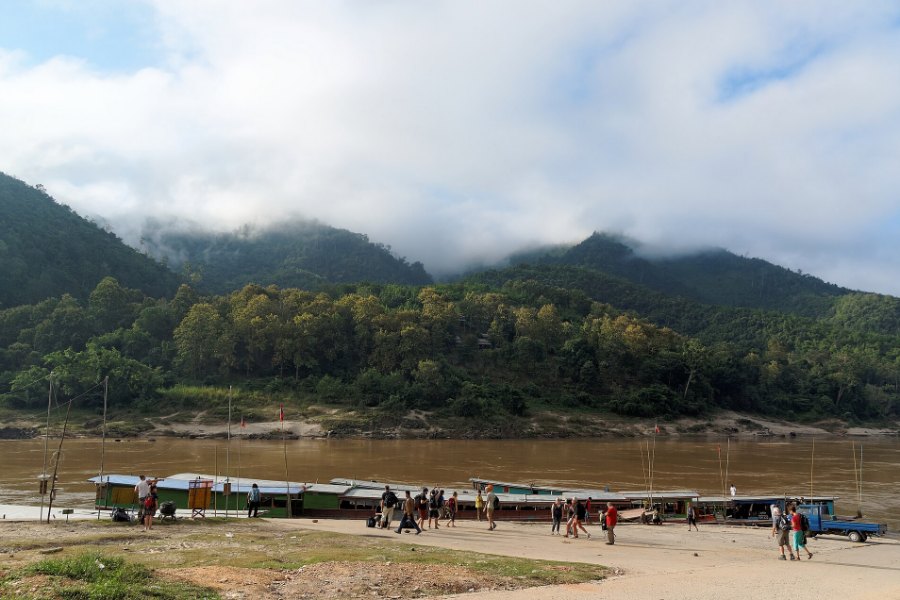
Slow boats docked at Pakbeng, the overnight stop on the Mekong between Huay Xai and Luang Prabang
Plan Your Suitable Thailand Laos Route
When organizing a Thailand Laos tour, the first thing to think about is how long you want to spend there and which direction works best for you. Most travelers spend 10 to 14 days exploring these two neighboring countries, which is just long enough to see the main attractions without feeling rushed.
A popular route is to start in Thailand, beginning in Bangkok, and then move north through Ayutthaya, Chiang Mai, and Chiang Rai. The journey then continues across the Chiang Khong – Huay Xai border into Laos over the Fourth Thai-Lao Friendship Bridge (a short shuttle bus ride, not a boat), then by Mekong slow boat from Huay Xai to Luang Prabang, the heart of Laotian culture.

The Fourth Thai–Lao Friendship Bridge links Chiang Khong in Thailand with Huay Xai in Laos
You can also go the other way, starting in Laos and ending in Thailand, if your international flights land in Luang Prabang or Vientiane. A third option opened in July 2024: the direct overnight train between Bangkok and Vientiane (Khamsavath station), which lets you link the two capitals without flying. In any case, this route blends river life, mountain scenery, and ancient temples at a leisurely Indochina pace.
If you have extra time, extend your journey with a South Thailand tour for tropical beaches and island getaways, or add a North Thailand tour to discover misty hills, ethnic villages, and spiritual temples.
Accommodation and Transport Tips
- Hotels: Choose centrally located boutique hotels or riverside lodges. In Luang Prabang, traditional teak houses converted into cozy stays are highly recommended.
- Transport: Combine short flights with overland drives or Mekong boat cruises for variety. Domestic flights (Bangkok–Chiang Rai) save time.
- Border crossing: The Chiang Khong – Huay Xai bridge (Fourth Friendship Bridge, open 6:00–22:00) is the easiest and most scenic point to cross between Thailand and Laos if you plan to take the slow boat. If you are heading to or from Vientiane, the Nong Khai crossing on the First Friendship Bridge, now served by the direct train, is more practical.
- Guides: Local English-speaking guides enrich your experience with insights into culture, history, and local customs.
- Ride-hailing: Grab works in Thailand. Laos has no Grab; use the local app LOCA in Vientiane and Luang Prabang.
Best Time for a Thailand–Laos Tour
Both Thailand and Laos share a tropical climate, meaning it’s warm year-round, but the dry season (November to February) is the most comfortable time to travel. Skies are clear, the Mekong is calm, and exploring temples or riverfront towns feels pleasant.
March to May is the hot season, and April is the hottest month. In the north of both countries, March and April are also the burning season, when farmers clear fields and smoky haze can hide the views around Chiang Mai, Chiang Rai and Luang Prabang. September and October are greener and quieter, but still carry late-monsoon rain.
November to January is the sweet spot, with enough water for smooth sailing plus dry, cool weather.
Budgeting and Understanding “All-Inclusive” Tours
“All-inclusive” can mean different things depending on the operator, so it’s important to know what’s covered. A standard Thailand Laos tour package usually includes:
- Hotel accommodation (3- to 5-star options)
- Domestic transportation (private cars, flights, trains or boats)
- Most meals (typically breakfast, sometimes lunch or dinner)
- Entry tickets to major attractions
- English-speaking local guides
- Visa support and airport transfers
Usually not included: the Laos visa fee (paid in cash at the border), international flights, travel insurance, tips and drinks. Thailand’s international departure charge rose to 1,120 baht on 20 June 2026, but it is built into your airline ticket.
Budget for a mid-range 10–14 day Thailand Laos itinerary is between USD 1,800 and USD 3,500 per person, depending on comfort level. Luxury private tours with boutique hotels, Mekong cruises, and personalized guides are higher, but worth it for a quality experience.
Getting Between Thailand and Laos: 3 Practical Ways
|
Route |
Time |
Best for |
Know before you go |
|---|---|---|---|
|
Chiang Khong – Huay Xai + slow boat |
2 days on the river |
Scenery, slow travel, northern route |
Boats leave Huay Xai around 9:00–9:30; stay the night before in Chiang Khong or Huay Xai |
|
Bangkok – Vientiane direct train |
About 11.5 hours overnight |
Linking the two capitals without flying |
Train 133 leaves Krung Thep Aphiwat at 21:25, arrives Khamsavath 09:05; book sleepers weeks ahead |
|
Flight |
About 1–1.5 hours |
Short trips |
Bangkok to Luang Prabang or Vientiane; Chiang Mai to Luang Prabang |
Whichever way you cross, Thailand now limits visa-exempt entries by land to twice per calendar year for most nationalities. Air arrivals do not count toward that cap.
Sample Thailand Laos Tour
Here’s a sample 12-day Thailand–Laos itinerary to give you an idea of what a balanced trip could look like:
Day 1–2: Arrive in Bangkok, explore the Grand Palace, Wat Pho, and a Chao Phraya River cruise.
Day 3: Travel to Ayutthaya, tour the ancient temples, overnight train or flight to Chiang Mai.
Day 4–5: Discover Chiang Mai’s Old Town and Doi Suthep Temple.
Day 6: Drive to Chiang Rai, visit the White Temple and Golden Triangle, then continue to Chiang Khong for the night. The slow boat leaves Huay Xai around 9:00–9:30, and travelers report you can no longer reach it in time from Chiang Rai on the morning bus.
Day 7: Cross the Friendship Bridge to Huay Xai early, board the Mekong boat and cruise to Pakbeng (about 6–7 hours). Overnight in Pakbeng.
Day 8: Continue down the Mekong, stopping at the Pak Ou Caves on premium and luxury boats. Arrive in Luang Prabang late afternoon.
Day 9: Explore Luang Prabang: Wat Xieng Thong, the Royal Palace Museum, and sunset from Mount Phousi.
Day 10: Visit Kuang Si Falls and local craft villages.
Day 11: Take the high-speed train to Vientiane (about 2 hours, or stop a night in Vang Vieng on the way), then a city tour including That Luang and Patuxai.
Day 12: Departure, or ride the overnight train back to Bangkok and add an optional extension to South Thailand beaches.
Notable Destinations on a Thailand and Laos Tour
Thailand - The Land of Heritage
At the heart of Bangkok stands the Grand Palace, a dazzling complex of golden spires and ornate halls that once served as the royal residence. Walking through its courtyards feels like stepping into a living museum of Thai artistry.
Just nearby, the porcelain towers of Wat Arun shimmer in soft pastel hues when the sun rises over the Chao Phraya River. The riverside sanctuary captures the tranquil spirit of Bangkok before the city awakens: monks in saffron robes chanting softly, and the gentle flow of boats gliding past.
Heading north, a North Thailand tour unveils the serene side of the country. The modern masterpiece of purity and imagination, Wat Rong Khun (the White Temple), is a striking contrast. There is no temple in Asia like it. The all-white facade makes you easily spot the temple from far away. But when you step closer, you will be surprised by the shimmering porcelain and glasses.

Wat Rong Khun, the White Temple of Chiang Rai
To the border, the Golden Triangle is a unique destination. It’s the border between three countries, but more than that, so many historic tales hide in this place. Standing above the confluence of the Ruak and Mekong Rivers, you can feel that the panoramic view is breathtaking, especially at dusk.
Suggested for you: Thailand Luxury Tour
Laos - The Mekong Flows into Peaceful Life
Crossing into Laos, the serene Pak Ou Caves is a spiritual sanctuary hidden in limestone cliffs. Inside, thousands of Buddha statues, from palm-sized to life-size, rest in quiet meditation. The soft glow of candlelight against ancient stone invites reflection and calm. Public slow boats pass the caves without stopping; premium boats stop, or you can visit on a half-day boat trip from Luang Prabang.
Among the many temples of Luang Prabang, Wat Xieng Thong stands as the crown jewel. Built around 1560 under King Setthathirath, it is not the town’s oldest temple (Wat Visoun is older), but it is the most revered and the finest example of classic Luang Prabang architecture. Although it has stood for centuries and attracts countless travelers, Wat Xieng Thong still preserves its tranquil beauty. The scenery here seems to be wrapped in a calm aura, giving visitors a sense of serenity.
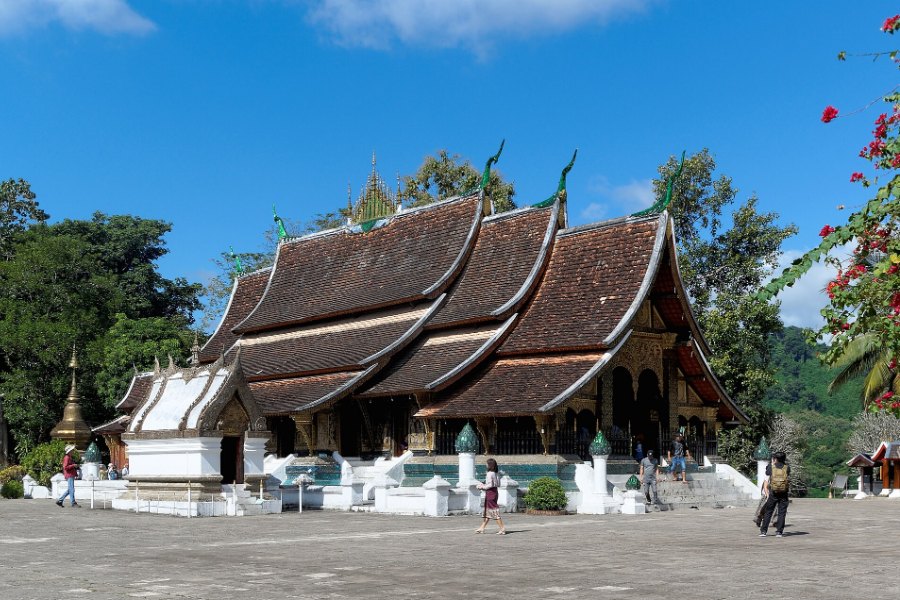
Wat Xieng Thong, the most revered temple in Luang Prabang (Photo: Jakub Hałun, CC BY-SA 4.0)
From Mount Phousi, you’ll see the Nam Khan River winding gracefully with a bridge spanning across it, merging with the mighty Mekong River. On the other side lies the gentle, quiet city of Luang Prabang, and in the distance, you can spot the curved roofs of a few temples peeking through the landscape. Sunset draws a big crowd at the summit; arrive 45 minutes early or go at sunrise instead.
Suggested for you: Laos Luxury Tour
Cultural Experiences in Thailand and Laos Tour
Cruise Along the Mekong River
The Mekong River makes up most of the border between Thailand and Laos, so there’s a certain poetry to traveling by river. Taking a boat trip along the Mekong River without spending some time relaxing on the deck to admire the pristine beauty of nature would truly be a pity.
The two most beautiful moments of a long day are undoubtedly sunrise and sunset. Lying back on the deck, sipping a cocktail or a cup of tea while watching the sky and earth slowly change hues promises to be one of the most enchanting experiences of your journey. Set expectations by boat type: the public slow boat is a crowded, basic two-day ride with simple toilets and a snack bar, while premium and luxury boats offer space, proper meals and village stops.
Along the way, you can visit riverside villages to learn how locals make traditional rice wine, or marvel at thousands of ancient Buddha statues inside the Pak Ou Caves. In addition, the cuisine on board is also traditional Lao dishes made from fresh, high-quality ingredients.
Explore Local Markets and Lao Cuisine
Local markets are more than just places to shop, they’re windows into daily life. In Luang Prabang and Bangkok, the Night Market glows softly under strings of lanterns, inviting travelers to wander through rows of vendors. The air is filled with the aroma of grilled meats, lemongrass, and freshly steamed sticky rice.
Food in the Isan region and Laos tells stories of land and people. They are simple yet balanced in all things. Don’t miss a taste of laap, the iconic dish made with minced meat, lime, chili, and herbs, symbolizing freshness and harmony.
Pair it with sticky rice, eaten with your hands, the way locals do. For something heartier, try or lam, a fragrant stew that is a Luang Prabang specialty, rich with wood ear mushrooms and wild herbs, or sip a cup of strong Lao coffee grown in the highlands of the Bolaven Plateau in southern Laos.
Traditions and Festivals in Thailand and Laos
One of the most enchanting is Pi Mai, the Lao New Year in April (usually 14–16 April). Across the border, Thailand celebrates Songkran (13–15 April) in much the same spirit. Both are peak travel dates, so book trains, boats and hotels well ahead. In October, Luang Prabang’s Boun Lai Heua Fai (fire boat festival) is another beautiful time to visit.
Beyond the festivals, everyday traditions carry their own charm. People still bring fresh flowers to the temple or do alms-giving ceremonies to the monks every morning. You can join them in their traditional customs to absorb all the spirit and meaning. In Luang Prabang, the Tak Bat alms round starts around dawn. Join only if you are sincere: buy sticky rice, never put money in the bowls.

Monks on the morning alms round in Luang Prabang (Photo: shankar s., CC BY 2.0)
Travel Tips for Thailand Laos Tour
- Visa (Thailand): From 15 September 2026, Thailand grants 30 days visa-free (down from 60) to tourists from 60 countries and territories, including the US, UK, Canada, Australia, Japan and all EU states. A one-time extension of up to 30 days is possible at an immigration office. Every traveler must also submit the free TDAC online within 3 days before arrival, and a new one each time you re-enter Thailand from Laos.
- Visa (Laos): Laos offers visa-on-arrival at most entry points, including Huay Xai and Vientiane. Expect about USD 30–42 depending on nationality, payable in cash, plus one passport photo; the stay is 30 days.
- Connectivity: Local SIM cards or eSIMs are cheap and provide reliable 4G coverage; Thailand also has wide 5G. On the slow boat, signal is patchy, and a Thai SIM often works better than a Lao one on the first day.
- Etiquette: Cover shoulders and knees at temples and palaces, and never touch a monk or someone’s head.
FAQ: Thailand Laos Tour, Answered by People Who Have Done It
How does the Chiang Khong – Huay Xai border crossing actually work?
You get stamped out at Thai immigration, pay 25 baht for a 10-minute shuttle bus over the Friendship Bridge, then fill in two forms on the Lao side and wait for your visa. The whole process took about 30 minutes, mostly queuing. The bridge opens 6:00–22:00, there is an ATM next to the visa counter, and having a pen and a spare passport photo saves time.
Is the public slow boat worth it, or should I pay for a premium boat?
Opinions split, and age and comfort matter. About USD 23 for the public boat: repurposed van seats, a mad rush for good seats, and a flooded toilet. On a premium boat (about USD 250) you will have meals, space and a stop at Pak Ou Caves. If you value comfort, choose premium or a luxury cruise.
What should I bring on the slow boat?
A light jacket for cold, foggy mornings on the river, sunscreen, toilet paper or wet wipes, at least 1.5 liters of water, snacks or a baguette from the pier, a power bank and cash. Keep these in a daypack, because big bags go in a pile at the back and are hard to reach.
Should I pre-book my room in Pakbeng?
You don’t have to. Pre-booked guesthouses often include free pickup at the pier, which helps if you arrive late or in the rain.
Is the Bangkok–Vientiane train comfortable?
Second-class seats are convenient, while third-class fan seats draw complaints about dirt and lights left on all night. Book a second-class air-conditioned sleeper, and book early because it is often full.
Is 30 days in Thailand enough for this tour?
For a 10–17 day Thailand–Laos itinerary, yes. The Thai leg rarely exceeds 10 days, and if you re-enter Thailand after Laos, that entry gets a fresh 30-day stamp. Just remember the twice-a-year cap on visa-exempt land entries if you also plan overland trips to Cambodia or Malaysia in the same year.
Conclusion
A Thailand Laos tour captures the very essence of Southeast Asia. Let Asia King Travel craft your tailor-made itinerary that connects Thailand’s modern energy with Laos’s timeless tranquility, so you can experience Indochina at its most authentic and most magical.
Suggested for you: Thailand & Laos Luxury Tour