English
 French
 Spanish
 Italian
Traveling across Asia, including Vietnam, Thailand, Laos, Cambodia, Malaysia, and more, offers ever-changing landscapes, cultures, and experiences, yet staying connected remains a common need for travelers.
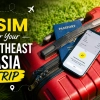
Traveling across Asia brings ever-changing landscapes, cultures, and experiences, yet staying connected remains an essential part of the journey. Reliable mobile data supports everyday travel needs such as navigation, bookings, and communication. For travelers moving between multiple Asian countries, traditional roaming plans or physical SIM cards can feel restrictive, making eSIMs and virtual phone numbers a practical alternative.

Traveling across Asia brings ever-changing landscapes, cultures, and experiences
In recent years, services like eSIM Plus have gained attention among travelers who cross borders frequently or visit several destinations in one trip, helping simplify travel logistics while keeping the focus on the experience itself.
Asia is vast, and travel styles vary widely. Some visitors follow a structured itinerary with pre-booked hotels and transfers, while others prefer flexible routes, changing plans as they go. In both cases, mobile connectivity supports essential travel tasks.
Maps and navigation apps help travelers find accommodations tucked away in small alleys or rural areas. Translation apps assist with communication in regions where English is not widely spoken. Digital tickets, ride-hailing services, and mobile payment apps are now common in many Asian cities. Without reliable data, even simple tasks can become time-consuming.
In parts of Asia, public Wi-Fi is available but inconsistent. Connections may be slow, restricted, or require local phone numbers for access. Depending entirely on Wi-Fi can limit spontaneity and make it harder to respond to changes during a trip.
An eSIM is a digital SIM that can be activated on compatible smartphones and devices without inserting a physical card. Travelers can download a data plan before departure or upon arrival, allowing them to connect to local networks almost immediately.
For Asia travel, eSIMs are particularly useful because many trips involve multiple countries. Instead of buying a new SIM card in each destination, travelers can use regional or multi-country eSIM plans that provide coverage across borders. This approach reduces the need to visit mobile shops, manage multiple SIM cards, or adjust phone settings repeatedly.
eSIMs are not designed to replace local SIM cards in every situation. Some long-term travelers or digital nomads still prefer local plans for extended stays. However, for short- to medium-length trips across several Asian countries, eSIMs offer a flexible alternative.

Understanding eSIM Technology for Asia Travel
While eSIMs mainly focus on mobile data, virtual phone numbers address another aspect of connectivity: communication. Not tied to a physical SIM card or a specific country, virtual phone numbers allow users to receive calls and messages through apps, typically over an internet connection.
For travelers in Asia, virtual phone numbers are especially useful when contacting hotels, tour operators, or transportation services that require a phone number. They enable travelers to maintain a consistent point of contact throughout the journey, even when moving between multiple countries.
In addition, virtual phone numbers help protect privacy. Instead of sharing a personal number widely, travelers can use a virtual number for bookings, short-term communication, or local interactions during their trip.
Virtual phone numbers are most effective when paired with reliable data access, making them a practical tool for communication while traveling in Asia. Messaging apps such as WhatsApp, LINE, and Telegram are widely used across the region, and virtual numbers often integrate smoothly with these platforms.
For travelers joining tours, attending events, or arranging transportation, having a reachable virtual phone number simplifies coordination. It is especially helpful when dealing with local services that require a phone number for confirmations or real-time updates.
Like eSIMs, virtual phone numbers work best in the background, quietly supporting communication during Asia travel without distracting from the overall experience.

Virtual numbers simplify communication in Asia
During eSIM for Asia travel, there are many situations where modern connectivity solutions significantly improve communication while traveling in Asia:
In these situations, eSIMs and virtual phone numbers work quietly in the background, ensuring smooth communication while traveling in Asia and allowing travelers to focus on enjoying their journey.
Several eSIM providers offer plans suitable for travel across Asia. Each has different coverage options, pricing models, and features. The best choice depends on travel routes, length of stay, and data needs rather than brand preference.
eSIM Plus
eSIM Plus provides regional and multi-country plans that can work well for travelers moving between several Asian destinations. Its setup process is often completed before departure, which appeals to travelers who prefer to arrange connectivity in advance.
Airalo
Airalo offers a wide selection of country-specific and regional eSIM plans. Travelers focusing on one or two countries may find its localized options useful, especially for shorter trips.
Nomad
Nomad is known for straightforward pricing and plans designed for international travelers. It is commonly chosen for longer stays where consistent data access is needed.
Holafly
Holafly provides unlimited data plans in certain Asian destinations. This option can suit travelers who rely heavily on navigation, messaging, and online research throughout the day.
Ubigi
Ubigi supports coverage in major Asian cities and transport hubs. It can be a practical option for travelers visiting urban centers with well-developed mobile networks.
Each provider approaches coverage differently, so reviewing supported countries and data limits before traveling is important.

Several eSIM providers offer plans suitable for travel across Asia
Before relying on an eSIM during travel, there are a few practical considerations:
Planning ahead allows travelers to use these tools effectively without focusing on them during the trip.
Seamless connectivity plays a supporting role in modern Asia travel, helping travelers stay confident and flexible without distracting from the journey itself. With reliable access to data and communication, exploring Asia’s cities, landscapes, and local life becomes smoother and more enjoyable.
As travel across Asia continues to evolve, tools like eSIMs and virtual phone numbers are becoming a natural part of trip preparation. When used thoughtfully, they reduce everyday travel frictions and allow travelers to focus on what truly matters - meaningful experiences and cultural discovery with Asia King Travel.